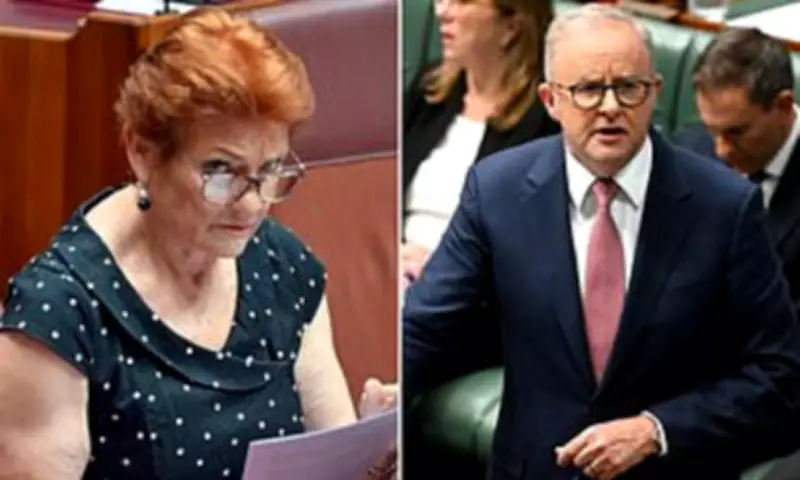
One Nation's Parliamentary Promotion Triggers Substantial Pay Increase for Hanson
The political landscape has shifted with Pauline Hanson's One Nation party achieving official 'minor party' status, a move that has automatically resulted in a significant financial uplift for its leader. This classification, which requires a party to hold at least five seats in the federal parliament, was secured following the defection of Barnaby Joyce in December 2025.
Salary Surge and Parliamentary Comparisons
Consequently, Hanson's annual salary has jumped by 42.5 per cent, rising from $239,000 to $341,000. This new remuneration aligns with that of Greens leader Larissa Waters and represents slightly more than half of the Prime Minister's salary, which is currently set at $622,050. The pay adjustment was an automatic procedural outcome of the party's elevated status.
Staffing Shortfalls and Electoral Prospects
However, the automatic pay rise was not matched by an increase in staff resources. With One Nation poised to potentially win up to four lower house seats in the upcoming South Australian state election, Hanson is urgently calling for her workforce to be doubled. She personally met with Prime Minister Anthony Albanese and Special Minister of State Don Farrell in January to formally request this expansion.

Hanson explained the current predicament, stating, 'Following the 2025 election, two staff each were allocated to me and Malcolm Roberts. No additional staff were appointed when our party gained two more senators. So we've got four senators with only four personal staff. The other senators don't have that personal support, so we've asked for that.' She added that while the Prime Minister and Farrell indicated they would review the matter, no response has been received.
Increased Workload and International Interest
The leader attributes this staffing crisis to the party's surging popularity, noting that One Nation is now polling above the Liberals, positioning it as Australia's second major party behind Labor. 'I've always had numerous meeting requests, but there has been a marked increase, including from ambassadors from countries like New Zealand and the United Arab Emirates who now seek meetings,' Hanson revealed, highlighting the expanded diplomatic and policy demands.
Historical Context and Cross-Party Appeals
The staffing constraints trace back to post-election cuts implemented in May, which affected both the Coalition and Labor. Barnaby Joyce, the sole One Nation MP in the lower house and a former Nationals leader, has also appealed for more personnel. 'I'm expecting a personal staff allocation, but it hasn't been finalised. In the House of Representatives, I'm handling policy work for every portfolio for One Nation,' Joyce stated, emphasising that the workload reflects the party's position as 'the second highest polling party in Australia.'
Precedents and Party Room Ambitions
A One Nation spokesperson pointed to historical precedent, noting that the Greens were granted 11 staff in 2009 when they had five federal parliamentarians, though this occurred before new staffing conditions were established. Beyond staffing, Hanson is advocating for her party to be assigned an official party room. A space previously used by the Greens in federal parliament has become available following their relocation to a newly renovated area, presenting a potential opportunity for One Nation to secure a dedicated parliamentary base.