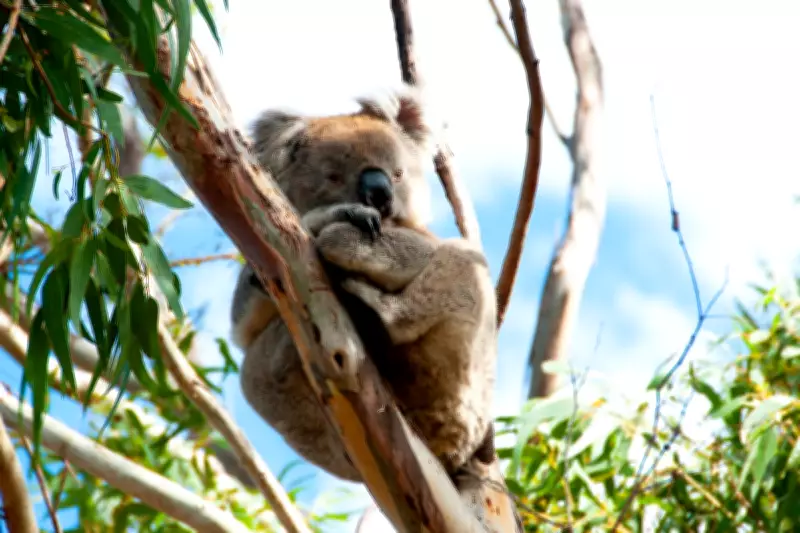
A new species of koala has been identified from fossils that had been hiding in plain sight for over a century. Researchers from the Western Australian Museum and Murdoch University have described Phascolarctos sulcomaxilliaris, a distinct koala species that once lived in Western Australia (WA) until about 28,000 years ago.
A Donation That Sparked Discovery
In 2024, the Western Australian Museum received a donated koala skull collected from Moondyne Cave in Margaret River by avid caver Lindsay Hatcher. The skull had unusual dimples, prompting a detailed investigation. This led to the re-examination of other fossil specimens found in WA caves over the past century.
Distinct Features of the WA Koala
The new species, named Phascolarctos sulcomaxilliaris meaning “grooved maxilla,” is characterised by a deep groove in the cheek region below the eye socket. This feature is much deeper than in modern koalas and likely supported larger muscles for a more mobile upper lip or enhanced smell. The skull is shorter and more robust, with broader teeth, and the skeleton suggests a more slender build.

Four Koala Species Now Known
This discovery brings the total number of known koala species to four that lived in Australia over the last few million years, including the living Phascolarctos cinereus in eastern Australia and the giant Pleistocene koala Phascolarctos stirtoni, nearly twice the size of modern koalas.
Extinction and Climate Change
Uranium-thorium and radiocarbon dating indicate the WA koala went extinct around 28,000 years ago, coinciding with a colder and drier climate that shrank the eucalypt forests of south-west WA. Pollen records show these forests declined dramatically for almost 10,000 years, leading to habitat loss that made extinction inevitable.
Implications for Modern Koalas
The study, published in Royal Society Open Science, highlights the tight bond between koalas and forests. As climate change and deforestation threaten eastern eucalypt forests, understanding past extinctions helps anticipate risks for surviving koala populations. The authors emphasise the need to protect current koala habitats to prevent further losses.
This research was conducted by Kenny Travouillon, Helen Ryan, Kailah Thorn from the Western Australian Museum and Natalie Warburton from Murdoch University. It was first published by The Conversation and is republished under a Creative Commons licence.