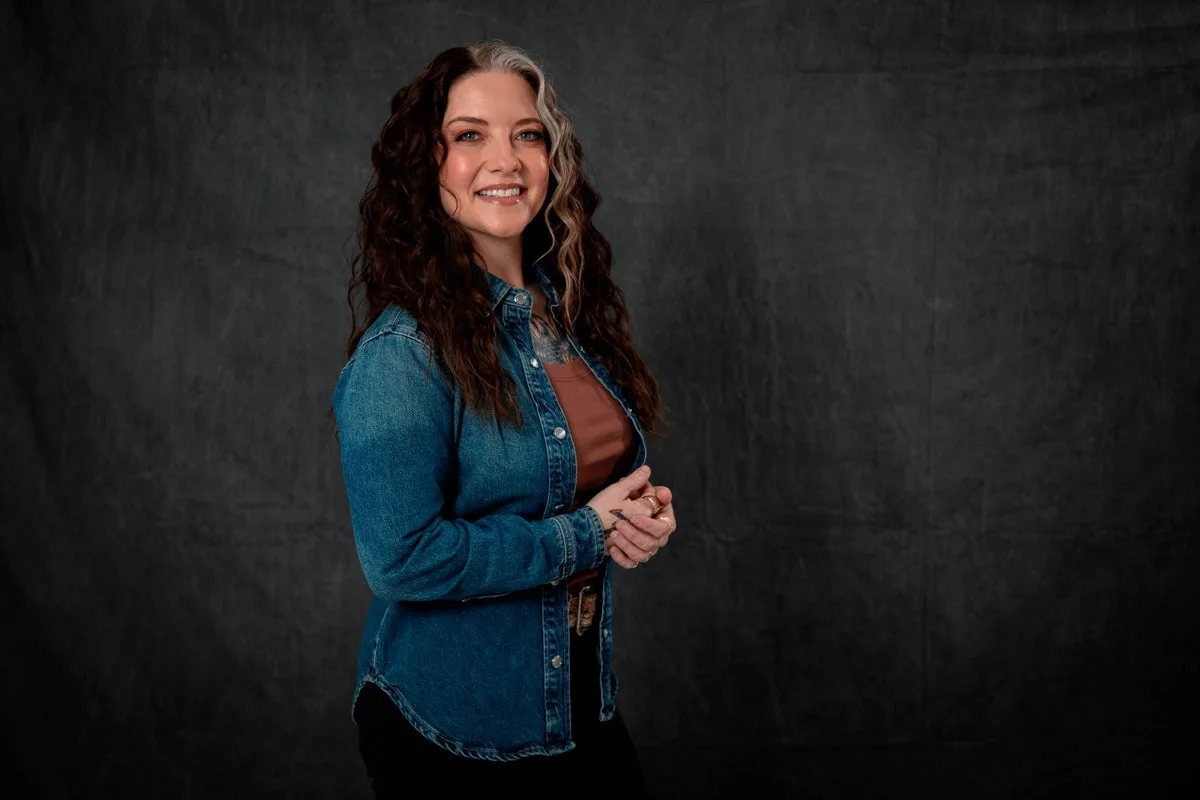
A few years ago, Ashley McBryde fell off a horse. “That's not a figure of speech, sadly,” the country star told The Associated Press. “I was really, really badly hurt, and it was a bad enough injury that there was a chance that I wouldn’t have been able to perform ever again.” It was 2021. She was riding in Montana, and fell, landing on her head. The accident — so severe that she ended up in an emergency room — resulted in a concussion and stitches to her scalp. At the time, she couldn't walk without assistance.
In the years since, McBryde thought about all of the songs she and her band rip through on stage but hadn't yet committed to record. “What if I keep letting them not be on records? What if something had happened and now somebody never hears “Water in the River”? Somebody never hears “Rattlesnake Preacher.” Somebody never hears “Creosote” because I let myself be discouraged in this way or that way from putting those on the record?” And so “Wild” — her new album out Friday, produced by John Osbourne and recorded with her live band Deadhorse — became their home.
Heading into the “Wild”
The live tracks that gave birth to “Wild” are barn burners, a rowdy good time. So, McBryde knew she needed to find a way to strike some balance. She pursued divination practices like reading runes, going to a tarot reader, doing anything and everything she could to have her fifth album reveal itself to her. The answer was in the experimentation, a “playful, curious” writing process with her band. “The more we looked at the songs that we had felt like playing — and doing a good job of delivering — (we found they) were true stories about my life,” she recognized. “It's terrifying to be known.”
But it's also cathartic — as is the realization that “whatever it was that I was going through, I’m not unique. There’s nothing I’ve been through that most of us haven’t been through or are going to go through,” McBryde explains. “It’s not about me, it’s about us.”
Getting deep
McBryde's last album, 2023's “The Devil I Know,” had a rebellious streak to it — as does “Wild” and the bulk of her discography. When critics said something “was too rock, we turned that up. They said something that was too country, then we put a toothpick in its mouth. And I think by the time we got to ‘Wild,’ I didn’t care anymore. It was that level of defiance,” she said. “It's none of my business. My job is to make sure these songs get heard.”
She calls this album her most rock ‘n’ roll — sonically, like what is found on the first four tracks — and emotionally, embodying her fiery spirit on the cutting treatise on domesticity, “Lines in the Carpet,” the heartfelt mission statement of the title track and everywhere in-between. “Does the wild call out to you from a distance?” she starts her first chorus on “Wild.” Then, the revelation: “Do you miss the fire and the freedom? / When there wasn’t anything keeping / You from being wild.”
“There are people out there with natural ability and there are people that dedicate every waking hour to honing their craft. Ashley is both,” Osbourne said in a press statement. “Never settling. Always reaching. The perfect combination of vulnerable and fearless.”
That combination is also evident on the songs that appear to detail her struggles with addiction. McBryde got sober in 2022, the specter of past indiscretions heard on the beery ballad “Bottle Tells Me So” and the gut-wrenching “Behind Bars.”
“I was terrified that I was gonna suck,” she says about songwriting after getting sober. “It’s not like I’d get hammered to write a song, but I would have drinks while writing songs.” And maybe a couple did suck, she guesses, “because they were just from such angry or unsatisfied places.” But she's worked on herself, and now, “these songs are just grown. And I'm glad. I got out of my way.”
It's good advice for anyone, and a central theme of the album. She wants “Wild” to shake something loose, to inspire her listeners to take a chance on themselves. “Let’s say that someone doesn’t get to be what they wanted to be when they grow up. I will shoulder that for you,” McBryde says.
She wants to access that dreamer. “I want that to wake up in you when you hear this record,” she says. Call it catharsis, call it enthusiasm, call it whatever you want. McBryde has her own word for it: “It's a recognition.”