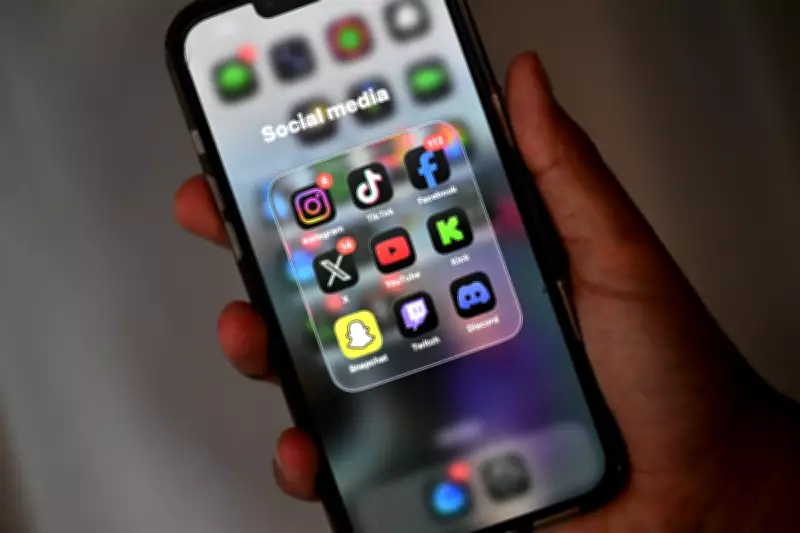
A controversial proposal to ban social media access for children under the age of 16 has been decisively rejected by Members of Parliament following a heated Commons debate. The amendment to the Children's Wellbeing and Schools Bill was defeated by 307 votes to 173, representing a substantial majority of 134 against the measure.
Divergent Views on Online Protection
The proposed age restriction, modelled on similar bans implemented in Australia and France, had garnered significant support from campaigners including actor Hugh Grant and Conservative former minister Lord Nash who introduced the amendment. Proponents argued that parents currently face an "impossible position" in protecting their children from online harms, with some comparing social media platforms to harmful substances that would be strictly regulated in other contexts.
Concerns About Unintended Consequences
However, critics including prominent children's charities like the NSPCC warned that an outright ban could drive teenagers toward unregulated corners of the internet rather than protecting them. Education minister Olivia Bailey emphasized this concern during parliamentary discussions, noting that a blanket prohibition might leave young people unprepared when they eventually gain online access.

The debate revealed significant divisions even within political parties, with Labour MP for Hayes and Harlington John McDonnell rebelling against his party's position to support the Lords amendment. Meanwhile, 107 Labour MPs including North Somerset's Sadik Al-Hassan chose to abstain from the crucial vote.
Government's Alternative Approach
Despite rejecting the immediate ban, the Commons supported a Government initiative to grant additional powers to the Secretary of State. Under this alternative arrangement, Science Secretary Liz Kendall would gain authority to "restrict or ban children of certain ages from accessing social media services and chat bots."
The Government has simultaneously launched a comprehensive consultation to examine multiple aspects of children's online safety. This consultation will investigate whether social media platforms should implement minimum age requirements and whether addictive features such as autoplay functions should be disabled for younger users.
Personal Perspectives in the Debate
During the parliamentary discussion, MP Sadik Al-Hassan drew upon his professional background as a pharmacist to make a compelling analogy. "Parents like me are locked in a daily battle that they simply cannot win alone," he stated, adding that if a pharmaceutical product were causing measurable harm to 78% of users, it would be immediately withdrawn or strictly controlled.
"We have an identifiable source, we have overwhelming evidence of harm, and we have the power to act," Al-Hassan argued, reflecting the frustration many parents feel regarding children's online exposure.
Future Regulatory Possibilities
While the immediate ban has been rejected, the door remains open for future restrictions. The Government's newly acquired powers could enable the Science Secretary to implement various protective measures including limiting children's use of VPNs, restricting access to addictive platform features, and potentially changing the UK's digital age of consent.
Education minister Olivia Bailey summarized the Government's balanced approach: "Many parents and campaign groups have called for an outright ban on social media for under-16s. Others, including children's charities, have warned that a blanket ban could drive children towards less regulated corners of the internet. That is why the Government launched a consultation to seek views to help shape our next steps."
The consultation represents a critical next phase in determining how the UK will address the complex challenge of protecting children in digital environments while avoiding unintended negative consequences that could emerge from overly restrictive measures.