Minnesota Crisis Mirrors US Civil War Simulation as Federal Actions Intensify
As public outrage continues to mount, Immigration and Customs Enforcement (ICE) has significantly escalated its operations in Minnesota, deploying additional agents and employing increasingly aggressive tactics. This unfolding situation bears a striking resemblance to a high-level civil war simulation conducted earlier this year at the University of Pennsylvania's Center for Ethics and the Rule of Law.
Federal Deployment and Alleged Lawlessness
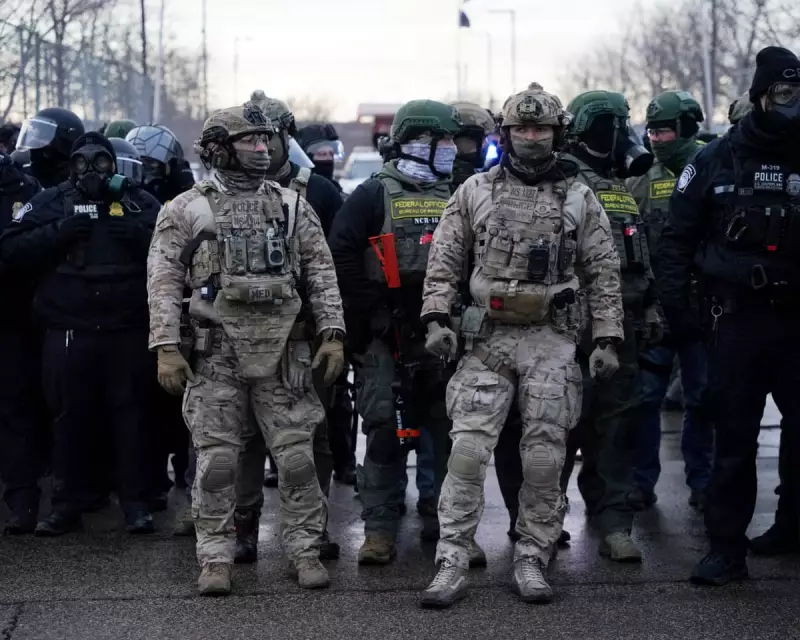
Since early January, approximately 2,000 ICE agents have been stationed in Minnesota under the guise of a fraud investigation. However, reports indicate these largely untrained federal agents have been engaging in what many describe as terror tactics against Minneapolis residents. These actions include illegal and excessive uses of force, often targeting US citizens, prompting a federal judge to attempt imposing limits on the agency's conduct.
The Trump administration has further complicated matters by announcing "absolute immunity" for ICE agents, effectively encouraging what critics call lawless behaviour. Homeland Security Secretary Kristi Noem faces a critical decision: heed the court ruling or risk consequences that experts warn could escalate toward civil conflict.

Recent Incidents and Escalating Violence
In just the past week, several disturbing incidents have occurred:
- ICE agents shot and killed Renee Good, a 37-year-old mother of three, shortly after she returned from dropping her child at school
- Two protesters were blinded after being shot in the face with so-called "less deadly" weapons
- Teargas bombs were fired around a family vehicle carrying six children, sending one child to emergency care with breathing difficulties
- A woman was violently dragged from her car and onto the ground while screaming
- Protesters have been shot in the legs, and thousands have been forcibly taken to detention facilities, separating families and creating legal limbo regardless of immigration status
Rather than investigating this conduct, the Justice Department has opened a criminal investigation into Minnesota Governor Tim Walz and Minneapolis Mayor Jacob Frey, accusing them of conspiring to impede federal agents. Renee Good's widow is also under investigation, prompting six US attorneys in Minnesota to resign in protest.
Military Preparations and Constitutional Concerns
As the situation deteriorates, Governor Walz has placed the Minnesota National Guard on standby to support local law enforcement. Meanwhile, President Trump has threatened to invoke the Insurrection Act, which would grant him sweeping domestic military powers and potentially bypass recent Supreme Court limitations on federal troop deployment for law enforcement.
An additional 1,000 ICE agents have been dispatched to Minnesota, suggesting the administration is essentially using ICE as a specialized paramilitary force to target protesters and suppress dissent. The Pentagon has further escalated preparations by readying the Army's 11th Airborne Division—approximately 1,500 active-duty soldiers—to support the president's threat.
Civil War Simulation Becomes Reality
This scenario closely mirrors an October 2024 tabletop exercise conducted by the Center for Ethics and the Rule of Law at the University of Pennsylvania. In that simulation, a president carried out a highly unpopular law-enforcement operation in Philadelphia and attempted to federalize Pennsylvania's National Guard. When the governor resisted and the guard remained loyal to the state, the president deployed active-duty troops, resulting in armed conflict between state and federal forces.
While the location and specific sequence differ, the core danger identified in the simulation is now emerging: a violent confrontation between state and federal military forces in a major American city.
Key Findings from the Simulation
The exercise revealed several critical insights directly applicable to the current Minnesota situation:

- Scenario Realism: None of the participants—many of them senior former military and government officials—considered the scenario unrealistic, particularly following the Supreme Court's decision in Trump v United States, which granted the president criminal immunity for official acts.
- Judicial Limitations: In a fast-moving emergency of this magnitude, courts would likely be unable or unwilling to intervene in time, leaving state officials without meaningful judicial relief. Emergency motions to enjoin federal troop use might be filed, but judges could either respond too slowly or decline to rule on what they view as "political questions." This makes Judge Menendez's current ruling particularly critical as potentially the last opportunity for judicial intervention before complete escalation.
- Military Dilemmas: Senior military leaders could face orders to use force not only against state National Guard units but against unarmed civilians—and must be prepared to assess the legality of such orders. Any domestic deployment of federal troops must comply with Department of Defense Rules for the Use of Force and constitutional protections, including the Bill of Rights. Even under the Insurrection Act, federal troops may not lawfully shoot protesters unless defending against imminent life-threatening danger—yet such conduct is already occurring in Minneapolis through federal agents.
- Legal Boundaries: It is not legal for federal troops to support ICE agents engaged in illegal behaviour.
Constitutional Oaths Under Pressure
Every member of the US military has sworn an oath to defend the Constitution—an oath carrying legal force. Service members are not only permitted but obligated to refuse patently illegal orders. This obligation is now facing unprecedented pressure, as demonstrated by Senator Mark Kelly being investigated by the Pentagon for publicly reminding service members in a congressional video that they may—and in some cases must—refuse illegal orders.
For members of the 11th Airborne Division, this may soon cease to be a theoretical question. Minnesota may represent the first real test of whether constitutional limits on domestic military force still hold—or whether the United States is about to cross a line from which it cannot easily return.
The unfolding crisis in Minnesota represents more than local unrest—it embodies a fundamental constitutional challenge that could determine the future balance between federal power and state sovereignty in America.