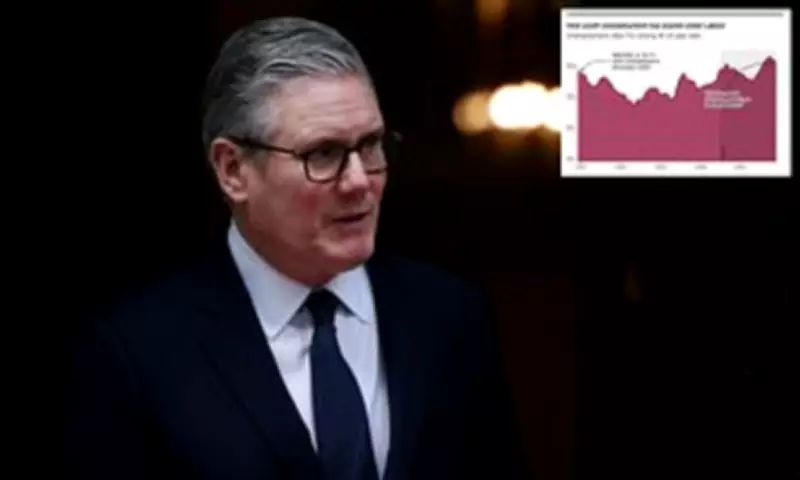
A senior cabinet minister has firmly rejected suggestions that government plans to increase the minimum wage for younger workers are contributing to rising youth unemployment, amid mounting speculation that this could represent the Prime Minister's fifteenth policy reversal since taking office.
Government Position 'Has Not Changed'
Welsh Secretary Jo Stevens has categorically stated that the Government's commitment to equalising minimum wage rates between younger and older workers 'has not changed'. This declaration comes in response to a report in The Times newspaper suggesting the policy was under review due to concerns that higher employment costs for young people might deter businesses from hiring them.
Speaking during separate interviews on Sky News and the BBC's Today Programme on Wednesday, Stevens emphasised that she does 'not accept' the premise that minimum wage increases create problems for employers. 'The Low Pay Commission says that the evidence does not show that there is a direct correlation between problems and the raising of the national minimum wage,' she stated.

Alarming Youth Unemployment Statistics
These assurances arrive against a troubling economic backdrop. According to newly released Office for National Statistics (ONS) figures, the unemployment rate for 16 to 24-year-olds surged to 16.1 per cent during the three months leading to December. This represents the highest level recorded since early 2015 and presents a significant challenge for the government.
Further analysis from the Resolution Foundation think tank reveals that the United Kingdom's youth unemployment rate has now surpassed the European Union average for the first time since records began in the year 2000. The EU-wide rate stood at 14.9 per cent during the final quarter of last year, highlighting Britain's comparatively weaker position.
Current Minimum Wage Structure
The existing minimum wage framework establishes different rates based on age. Currently, employers must pay workers aged between 18 and 20 at least £10 per hour, with this figure scheduled to increase to £10.85 in April. For older workers aged 21 and over, the minimum rate is £12.21, which will rise to £12.71 in the coming month.
The government's manifesto pledge, which Stevens referenced, commits to 'remove the discriminatory age bands' within this system, effectively aiming to create a single, unified minimum wage regardless of a worker's age.
Economic Context and Political Pressure
This debate unfolds amidst broader concerns about economic stagnation. Recent weak GDP figures indicated the economy is slowing to a crawl, with some analysts warning Britain could be facing its 'most dismal decade' in a century. The rising youth unemployment figures provide further evidence of these economic headwinds.
Sources speaking to the Mail have indicated that while the equalisation process would not be cancelled outright, any potential adjustment might involve slowing the implementation timeline rather than abandoning the policy completely.
Historical Precedents and Political Reversals
Stevens drew upon historical context to defend the policy, noting there have been 'many naysayers' regarding the minimum wage since its introduction in 1998. 'People said in 1998 that it caused mass unemployment, and it didn't,' she remarked. 'And every time there is a rise in the national minimum wage, people complain about it. The fact is, people shouldn't be on poverty wages.'
This controversy emerges as Prime Minister Sir Keir Starmer faces scrutiny over policy consistency. Reports suggest he has executed approximately fourteen policy U-turns since entering Downing Street in July 2024. Earlier this week, he reversed a plan to postpone some council elections for a year, deciding they should proceed in May after all.
The Welsh Secretary concluded by reaffirming the government's core objective: 'We came into work on a manifesto to make work pay, and that's exactly what we're doing.' The government now faces the dual challenge of implementing its wage policy while addressing the complex economic factors contributing to rising unemployment among young people.