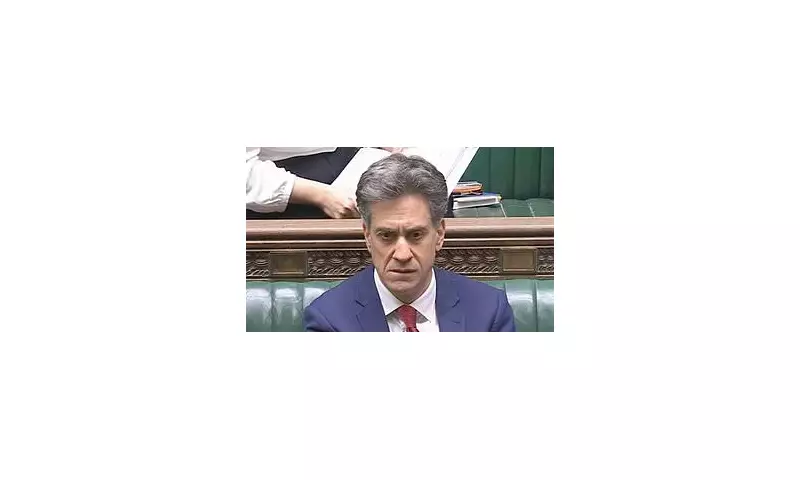
Westminster's corridors are buzzing with speculation that Ed Miliband is the frontrunner to be the next Chancellor of the Exchequer. This anticipation was palpable as the Secretary of State for Energy Security and Net Zero entered the Commons for questions, exhibiting a newly confident and theatrical gait that set the tone for a combative session.
A New Swagger in the Chamber
Observers noted a distinct change in Miliband's demeanour. His entrance was compared to a 'dude walk', a rolling, shoulder-swinging stride reminiscent of a performance meant to project toughness. This theatrical approach left his retinue shuffling behind, seemingly slightly embarrassed by the display. The Energy Secretary, however, was all smiles, flashing his teeth frequently and radiating a palpable sense of self-satisfaction that seemed more pronounced and politically pointed than usual.
Clash Over Energy Bills and Tax Policy
The session quickly turned to the contentious issue of energy costs. Conservative MP Dr Caroline Johnson attempted to puncture Miliband's confidence by questioning the Government's £150 reduction on energy bills. She argued that socialists often take money from people only to expect gratitude for returning a portion of it, asking for the true cost to the taxpayer.

This provocation electrified Miliband. He responded with fervour, stating he was proud that the Budget raised taxes on the wealthy to cut bills for millions of families. His declaration that "for too long this country has been run for the wealthy and powerful by the Conservatives" was seen as a sharp, political signal of intent. He emphasised this point for the benefit of the Labour backbenchers behind him, straying clearly into future tax policy and hinting at a desire for higher taxes on high earners.
Net Zero Costs and Unmet Promises
The scrutiny continued as new Tory frontbencher Bradley Thomas noted that energy bills are currently £190 higher than when Labour took office. He also pressed Miliband on the election pledge made with Sir Keir Starmer to cut bills by £300, demanding to know what happened to that promise. Miliband retorted that bills were going to be lower and insisted the Government was "delivering on the cost-of-living crisis," though he offered little detail on the earlier pledge.
His performance was notably excitable, even by his own standards. He cackled scorn at opponents and stabbed his long index fingers at the despatch box, speaking at such a high volume that his deputy, Michael Shanks, later reported temporarily losing hearing in one ear—an incident that prompted jests about Treasury officials needing earplugs.
Parallel Inquiry into Police Decision
Meanwhile, at the Home Affairs Select Committee, a separate drama unfolded. Four senior police officers were questioned over the decision to ban Israeli football fans from a match in Birmingham. MPs probed whether anti-Jewish political pressure influenced the move, which was firmly denied. The officers defended their actions with a blizzard of jargon including terms like "intelligence bronze commander" and "weekly sit reps." Craig Guildford, Chief Constable of West Midlands Police, maintained an insistent innocence throughout, his demeanour drawing comparisons to a suspect in a crime drama.
The day in Parliament underscored Miliband's evolving political persona. His confident stride, aggressive defence of redistributive tax policy, and focus on Treasury matters have firmly cemented the growing belief that he is being groomed for the nation's top economic job. For Middle Britain, his performance was a clear signal to brace for a potential Chancellor with a strong appetite for taxing wealth and subsidising Net Zero ambitions.