Melania Trump's Surprise Statement on Epstein Investigation
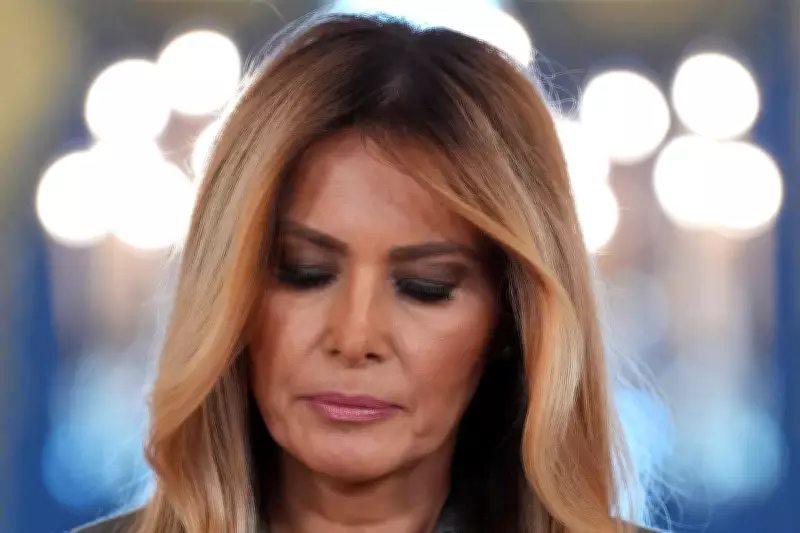
First Lady Melania Trump delivered a political bombshell on Thursday when she publicly denied any association with convicted sex offender Jeffrey Epstein, while simultaneously calling for Congress to hold public hearings with Epstein's survivors. This unexpected move has created significant political complications for both the White House and congressional leadership.
Political Fallout and Unlikely Alliances
The First Lady's statement appears designed to address recent revelations about friendly email correspondence between her and Ghislaine Maxwell, Epstein's convicted accomplice. However, her call for congressional action has created unexpected political alliances. Former Congresswoman Marjorie Taylor Greene, who left Congress after clashing with President Trump over the Epstein files, publicly praised Melania Trump's "brave statement" on social media platform X.
Representative Thomas Massie, a Republican from Kentucky, echoed Greene's sentiments, emphasizing that the Department of Justice must continue prosecuting anyone involved in Epstein's crimes. This creates a remarkable situation where the First Lady finds herself aligned with some of her husband's political adversaries on this sensitive issue.

Contrast with White House Position
Melania Trump's independent stance stands in stark contrast to recent actions by the Trump administration. Last week, President Trump dismissed Attorney General Pam Bondi, whom both Democrats and Republicans believed mishandled the Epstein investigation. Bondi's interim replacement, Deputy Attorney General Todd Blanche, has stated that no additional Epstein files will be released to the public.
Furthermore, the Department of Justice has indicated that Bondi will not comply with a subpoena to testify before the House Oversight Committee. The First Lady's intervention has therefore created a significant policy divergence within the administration, providing Democrats with political ammunition and giving Republicans a framework to support Epstein survivors without directly opposing the White House.
Congressional Reactions and Political Calculations
House Speaker Mike Johnson now faces a delicate political dilemma. Will he oppose the First Lady's call for public hearings and align with the President's apparent desire to move past the Epstein investigation? Or can he find a way to support survivors while maintaining White House relations?
Democratic Representative Robert Garcia of California, ranking member on the House Oversight Committee, immediately endorsed Melania Trump's proposal. "We agree with First Lady Melania Trump's call for a public hearing with the survivors of Jeffrey Epstein," Garcia stated. "We encourage Chairman Comer to respond to the First Lady's request and schedule a public hearing immediately."
Republican Representative Nancy Mace of South Carolina, herself a rape survivor, also expressed gratitude to the First Lady. "As a survivor, I will never stop fighting to expose the truth or let powerful people silence victims," Mace declared. "Thank you for standing up for survivors and demanding transparency."
Survivor Perspectives and Political Implications
Epstein survivor Lisa Phillips responded optimistically to the First Lady's statement. "The opportunity to testify under oath in front of Congress is, to me, a huge thing," Phillips told The Independent. "Like she has power to make that happen. I don't know why, or if it's a trap or whatever it is, but she's coming off like she's on our side."
Phillips contrasted Melania Trump's position with that of interim Attorney General Todd Blanche, expressing skepticism about progress under his leadership. This survivor perspective adds moral weight to the political debate, making it more difficult for congressional leaders to ignore the issue.
Republican Leadership's Political Bind
The situation presents House Republican leadership with significant challenges. Speaker Johnson, Oversight Committee Chairman James Comer, and other GOP leaders would prefer to focus on legislative priorities like immigration funding and military spending replenishment following the Iran conflict. However, the First Lady's intervention has handed Democrats and dissident Republicans political leverage to force the Epstein issue.

Democrats could potentially block Oversight Committee proceedings with support from Republicans like Nancy Mace, Lauren Boebert of Colorado, and Scott Perry of Pennsylvania, all of whom have shown willingness to challenge party leadership on Epstein-related matters. A public hearing with survivors would inevitably divert attention from Republican policy priorities during an election season.
Broader Political Consequences
Melania Trump may have intended to distance herself from the Epstein investigation, but her statement has instead intensified political scrutiny. By denying connections to Epstein and Maxwell while advocating for survivor testimony, she has potentially opened a new chapter in the ongoing investigation that extends beyond her personal involvement.
The First Lady's actions have created permission structures for Republicans to support Epstein survivors while maintaining plausible deniability regarding opposition to the White House. This delicate political dance will test congressional leadership's ability to navigate competing loyalties and priorities in the coming weeks.