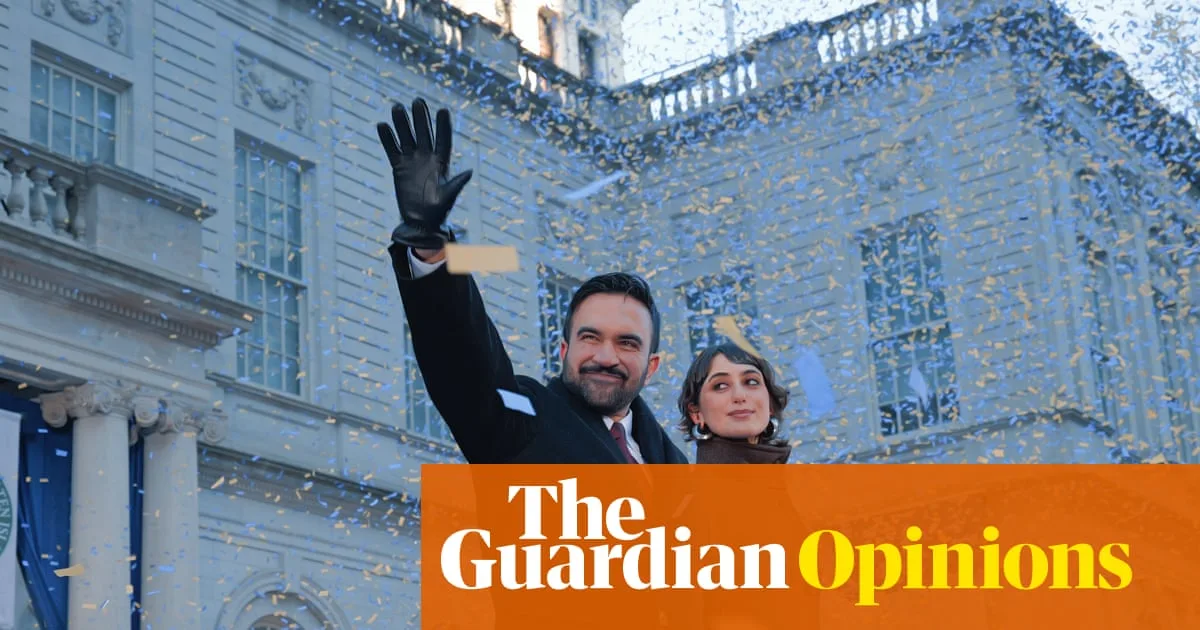
The political landscape of New York City has been irrevocably altered with the historic inauguration of its new mayor, Zohran Mamdani. Sworn in on 1 January in a ceremony attended by his wife, Rama Duwaji, Mamdani assumes office carrying a mantle of multiple firsts and immense progressive expectation.
A Historic Mandate for Radical Change
Mamdani's ascent is record-breaking. He is not only the first Muslim, first south Asian, and first African-born mayor of New York but also its youngest leader in over a century. His electoral victory in November was decisive, securing more votes than any candidate since the 1960s. Politically, he stands as the most leftwing figure to occupy City Hall since the era of Fiorello La Guardia in the mid-20th century.
At his inauguration, Mamdani pledged to govern "expansively and audaciously". The focus of his ambitious platform is a single, powerful promise: to transform New York into "a city we can afford". This vision is underpinned by concrete plans for free universal childcare, a massive expansion of affordable housing, and sweeping measures to reduce the daily cost of living for residents.
Funding the Vision: Redistribution and Coalition-Building
To finance this sweeping programme of civic renewal, Mayor Mamdani has restated his commitment to raising taxes on the very wealthy and on corporations. This strategy of linking urban livability to redistributive politics has proven potent. It assembled a broad electoral coalition, uniting young renters, union members, migrant communities, and segments of the professional middle class.
The implications extend far beyond the five boroughs. Progressive parties on both sides of the Atlantic are watching closely. While New York's unique status as a global financial and cultural hub makes its politics distinct, the core affordability agenda has already shown resonance. It has fuelled Democratic revivals in states like New Jersey and Virginia, and echoes the success of centre-left parties in Europe, such as the Dutch D66, which recently won an election by prioritising tangible issues like housing shortages.
Formidable Challenges and High Stakes
The path ahead is fraught with significant obstacles. Mamdani must navigate federal funding negotiations with a hostile Trump administration and overcome fierce opposition to his proposed tax increases, which are modest in historical terms. Building a functional coalition with key figures like New York State's Democratic Governor, Kathy Hochul—who has criticised the tax hikes—will require considerable political skill.
Yet, the stakes of his mayoralty are profoundly high. In an era where blue-collar voters have often drifted towards the populist right, Mamdani's agenda, articulated by his budget head Sherif Soliman, aims to make New York a home for "low-wage workers, be it in retail or healthcare", not just Wall Street financiers. His success could provide a vital counter-narrative to right-wing populism and chart a new course for left-wing, working-class politics.
As Mayor Zohran Mamdani begins his term, he carries the weight of being a youthful trailblazer. His attempt to implement a radical politics of inclusion and affordability in the heartland of global capital represents one of the most closely watched political experiments of our time.