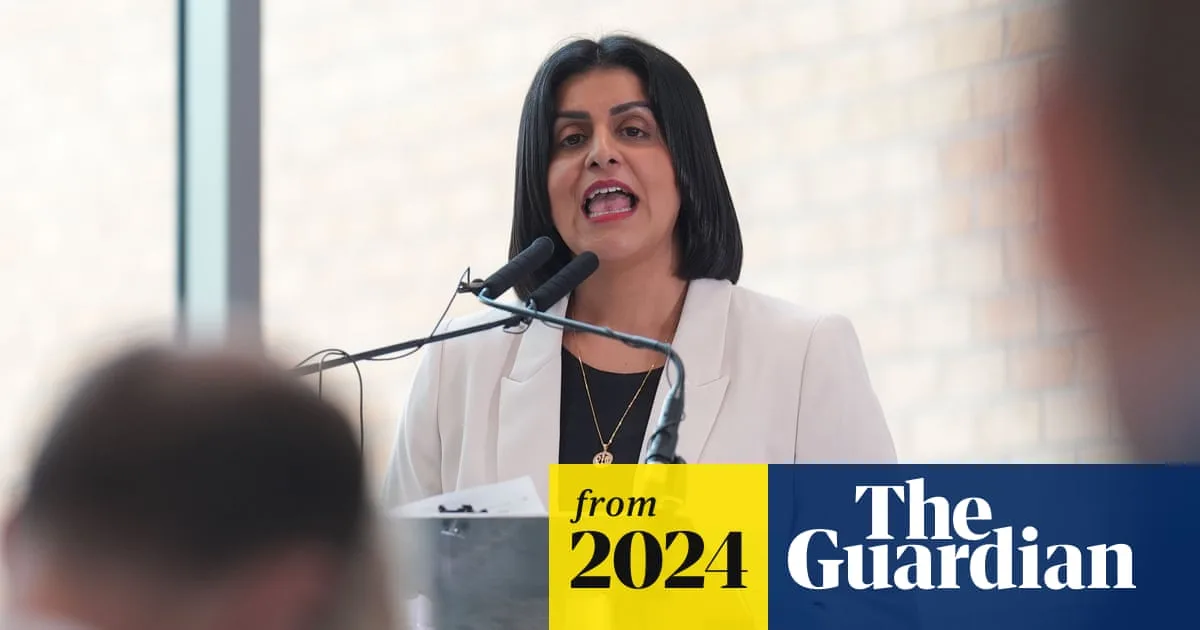
Shabana Mahmood, the justice secretary, has accused Rishi Sunak and his former ministers of being “the guilty men” responsible for “the most disgraceful dereliction of duty” in failing to address the prisons crisis. Speaking as she outlined emergency plans to release thousands of inmates early, Mahmood said the Conservatives had left the country threatened with a total breakdown of law and order.
In a speech at HMP Five Wells in Wellingborough, Mahmood revealed that jails had been operating at 99% capacity since the start of 2023. She criticised Sunak and his team for prioritising their political careers over national safety, stating they should go down in history as the guilty men who ducked difficult decisions and kept the public in the dark about the state of the country.
The new scheme will temporarily reduce the proportion of certain custodial sentences served in prison from 50% to 40% in England and Wales, starting in September. Thousands of prisoners will be released after serving 40% of their sentences, with safeguards excluding serious violent offences of four years or more, sexual offences, and domestic abuse-related crimes. The government also plans to recruit 1,000 probation officers to manage the crisis.
Mahmood described the policy as “the only way to avert disaster”, warning that without action, courts would delay jailing offenders and police would be unable to arrest dangerous criminals, leading to a collapse of the criminal justice system. She emphasised that the measure is temporary and includes strict exemptions to protect the public.
Prime Minister Keir Starmer, writing in the Guardian, underlined the severity of the problem, accusing the Tories of being “arrogant, reckless and irresponsible to the very end”. He said his first week in office made clear that the previous government “fiddled while the country burned”.
Domestic abuse commissioner Nicole Jacobs welcomed the exclusion of domestic abuse offenders from early release but noted that two-thirds of probation areas are struggling to protect the public. She stressed that victims must be kept informed and offenders managed robustly in the community, insisting the scheme must remain temporary.