House of Lords Directly Contradicts Starmer's Peerage Defence
The House of Lords has delivered a devastating blow to Prime Minister Keir Starmer's claim that he could not prevent his former communications chief from receiving a peerage after discovering his association with a convicted paedophile councillor. A definitive statement from the Upper House clarified that peerage appointments are only considered complete when "letters patent" are formally signed by the King and officially sealed.
Timeline Exposes Critical Gaps in No10's Narrative
This authoritative intervention follows intense scrutiny over why Downing Street did not halt the elevation of Lord Matthew Doyle after it emerged he had campaigned for Sean Morton, a councillor charged with possessing indecent images of children. Despite Sir Keir being made aware of these serious allegations through media reports on December 28, his administration insisted it was impossible to reverse course because the honour had already been announced on December 10.
However, the peerage was not formally enacted until January 8, creating a significant two-week window during which action could theoretically have been taken. A House of Lords spokesman stated: "We cannot comment on specific confidential advice given by Parliamentary Officials. However, our understanding is that under the Life Peerages Act 1958, a Peerage is created when the letters patent are sealed."

Badenoch Launches Furious Assault During PMQs
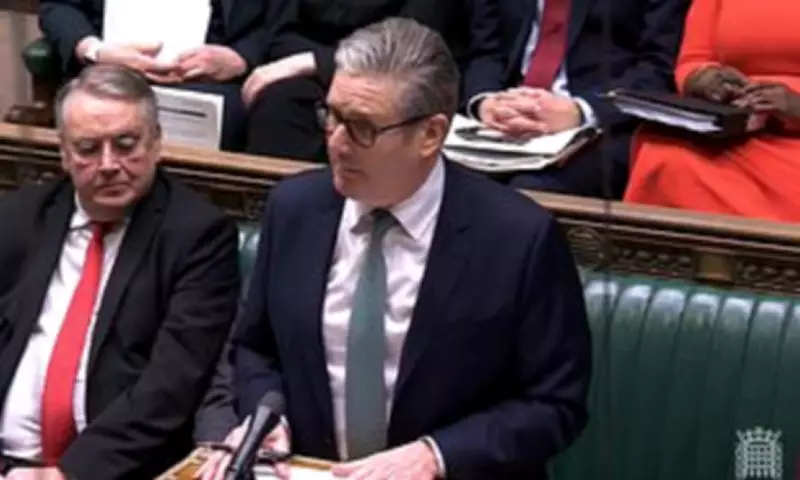
During a heated Prime Minister's Questions session, Conservative leader Kemi Badenoch hammered Sir Keir over what she termed "yet another scandal," accusing him of "stuffing" government and Parliament with "hypocrites and paedophile apologists." She declared: "The Mandelson episode was not an isolated incident. A few weeks ago he announced a peerage for one Matthew Doyle, his former director of communications. Immediately after that, the Sunday Times published that Doyle campaigned for a man charged with child sex offences, yet despite the Prime Minister knowing this, he gave Doyle a job for life in the House of Lords anyway."
Sir Keir responded by stating he had acted decisively: "Matthew Doyle did not give a full account of his actions. I promised my party and my country there will be change, and yesterday I removed the whip from Matthew Doyle." He attempted to pivot to his government's record on women's safety policies, but faced sustained criticism.
Parliamentary Procedures and Historical Precedents Examined
Parliamentary briefing documents on the creation of life peers indicate that the Prime Minister would have needed to make a second formal submission of the nomination to the King for final approval. The exact timing of this submission remains unclear. Crucially, there exists at least one documented case where an individual withdrew from a peerage between the initial nomination announcement and the final confirmation of letters patent, undermining No10's claim that the process was irreversible.
Cross-Party Condemnation and Internal Labour Unrest
The controversy has sparked fierce criticism from across the political spectrum:
- Liberal Democrat leader Ed Davey stated it was "unforgivable to appoint one person linked to a paedophile, but to appoint two shows a catastrophic lack of judgement."
- SNP Westminster leader Stephen Flynn suggested Sir Keir must be "the most gullible former director of public prosecutions in history."
- Labour Party chair Anna Turley called for Lord Doyle to be expelled from the Upper House, insisting he "did not tell the truth" during the vetting process.
- Conservative MPs are considering repeating parliamentary tactics used during the Mandelson scandal to force the release of related documents.
Mrs Badenoch further accused the Prime Minister of "sacking" the Cabinet Secretary rather than accepting personal responsibility for the appointment failure. Meanwhile, Sir Keir praised his former chief of staff Morgan McSweeney, who resigned recently, for helping secure a "landslide majority."

Lord Doyle's Apology and Ongoing Investigation
In a detailed statement, Lord Doyle apologised "unreservedly" for supporting Sean Morton in 2017, after Morton had been charged but before he pleaded guilty. Doyle stated he believed Morton's assertions of innocence at the time, calling his continued support "a clear error of judgement." He emphasised that contact after Morton's conviction was "extremely limited" and that his thoughts were with the victims. The Labour whip has been withdrawn from Lord Doyle pending a formal investigation.
A Labour spokesman confirmed: "All complaints are assessed thoroughly in line with our rules and procedures." However, Downing Street maintains there is "no established precedent for withdrawing a peerage nomination after the announcement stage," and has pledged wider reforms to vetting and appointment processes.
Education Minister Georgia Gould, when questioned on broadcast media, acknowledged the Prime Minister had "looked at this afresh" given his commitment to high standards in public life. Yet Labour MP John McDonnell expressed profound concern, stating he was "at a loss how this can be explained to my constituents other than assessing it as another disastrous failure of judgement."
The episode has plunged Sir Keir's government into fresh turmoil, raising serious questions about judgement, transparency, and the integrity of the honours system at the highest levels of power.