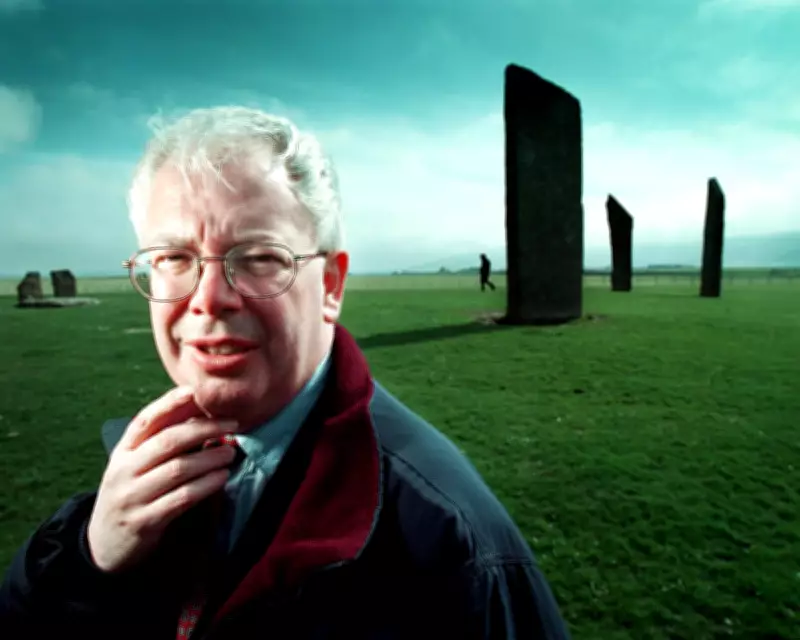
The political world is mourning the loss of Lord Wallace of Tankerness, the widely respected Liberal Democrat figure who has died at the age of 71. Jim Wallace, as he was known before his elevation to the peerage, passed away following complications after surgery, leaving behind a remarkable legacy spanning four decades in Scottish and UK politics.
A Political Career of Rare Distinction
Wallace achieved what few politicians manage: he was disliked by almost nobody. His mild-mannered, pragmatic approach, combined with strong liberal values underpinned by Christian faith, made him a unifying figure during turbulent political times. He served as Scotland's deputy first minister from the very outset of devolution in 1999 until 2005, playing a crucial role in the early years of the Scottish Parliament.
Westminster and Holyrood Service
Wallace's political journey began at Westminster, where he represented the Orkney and Shetland constituency as a Liberal Democrat MP for 18 years after being elected in 1983. He succeeded the legendary Jo Grimond, who had held the seat for 33 years. Wallace's influence extended well beyond his constituency work, however. As Liberal chief whip after the 1987 general election, he played a pivotal role in facilitating the merger between the Liberals and the Social Democratic Party to form the Liberal Democrats.

Tavish Scott, who later succeeded Wallace as leader of the Scottish Liberal Democrats, recalled: "That merger would not have happened had not Jim deployed his diplomacy, intellectual prowess and endless patience to what were at the time fraught negotiations."
Coalition Politics Pioneer
Wallace holds the unique distinction of being the only Liberal Democrat to serve in both coalition administrations in which the party participated. Following the establishment of the Scottish Parliament, he became deputy first minister in the Labour-Lib Dem coalition government led initially by Donald Dewar. His ability to work collegiately without political rancour made him widely acceptable in this role.
The early achievements of this coalition government included the removal of university tuition fees, freedom of information legislation, and significant steps towards land reform - political legacies in which Wallace took considerable pride. He served as acting first minister on two occasions: following the sudden death of Donald Dewar in 2000 and after the resignation of Henry McLeish the following year.
Constituency Champion and National Figure
Though he became closely associated with Orkney and Shetland, Wallace was actually born in Annan, Dumfriesshire. The elder son of Grace, a telephonist, and John, an accountant, he studied law at Cambridge and Edinburgh University before being called to the Scots bar in 1979. His political ambitions were guided by mentor David Steel, who directed him towards the Orkney and Shetland constituency when it became vacant.
Wallace proved himself a formidable constituency MP, dealing with significant local issues that had national implications. The Orkney child abuse scandal of 1991, when nine children were wrongly removed from their homes, led to major reforms in child protection systems under his watch. Similarly, the Braer disaster in Shetland in 1993, when a tanker leaked 85,000 tonnes of crude oil, resulted in the Donaldson inquiry and far-reaching improvements to maritime safety regulations.
Devolution Architect
Wallace was elected unopposed as leader of the Scottish Liberal Democrats in 1992 and became deeply involved in preparing the blueprint for the Scottish Parliament. He championed the old Liberal ambition of proportional representation, which became a reality in the new devolved institution. When Labour won the 1997 general election, legislation quickly followed, and Wallace played a key role in the establishment of Scotland's parliament.
His partnership with Donald Dewar was particularly effective. Wallace later recalled that tuition fees were "a sticking-point" during coalition negotiations, with Dewar foreseeing the risk of under-funding for Scottish universities. However, the case for "free tuition" prevailed and fees were abolished in 2001 - a policy that would later influence debates in England.

Later Career and Personal Faith
After retiring as an MSP in 2007 and going to the House of Lords, Wallace made an unexpected return to ministerial office as advocate general for Scotland in the David Cameron-Nick Clegg coalition government of 2010-15. His experience in Scottish coalition politics proved invaluable during this period.
Wallace's political philosophy was closely aligned with his Christian beliefs. Having grown up as a "cradle Presbyterian," he became an elder and sang in the choir of St Magnus Cathedral in Orkney. In 2021-22, he became only the second layman in modern times to be honoured with the role of moderator of the general assembly of the Church of Scotland, which he described as "a more awe-inspiring chamber to address than the House of Commons."
An ecumenist by instinct, Wallace used his moderatorial year to advance declarations of friendship with the Scottish Episcopal Church and the Scottish Catholic Bishops' Conference. "Unity," he said, "is not uniformity, but whenever we can love one another, be seen to love one another and speak with one voice - that surely must strengthen our witness to the message of the Gospel in our land."
Health Advocacy and Legacy
In 2023, Wallace was airlifted from Orkney to Edinburgh for emergency surgery to replace the aorta, the artery that carries blood from the heart to the rest of the body. After his recovery, he campaigned alongside the Aortic Dissection Charitable Trust to raise awareness of the condition and its symptoms.
Jack McConnell, who served as first minister while Wallace was deputy first minister, described him as "the most principled Liberal I ever met and also the most pragmatic politician. He was just great and knew what had to be done in order to work effectively in government."
Lord Wallace of Tankerness is survived by his wife Rosie, a speech therapist whom he married shortly after his election to Parliament in 1983, and their two daughters, Helen and Clare. His passing marks the end of an era in Scottish politics, leaving behind a legacy of pragmatic liberalism, cross-party cooperation, and steadfast public service that spanned both Westminster and Holyrood.