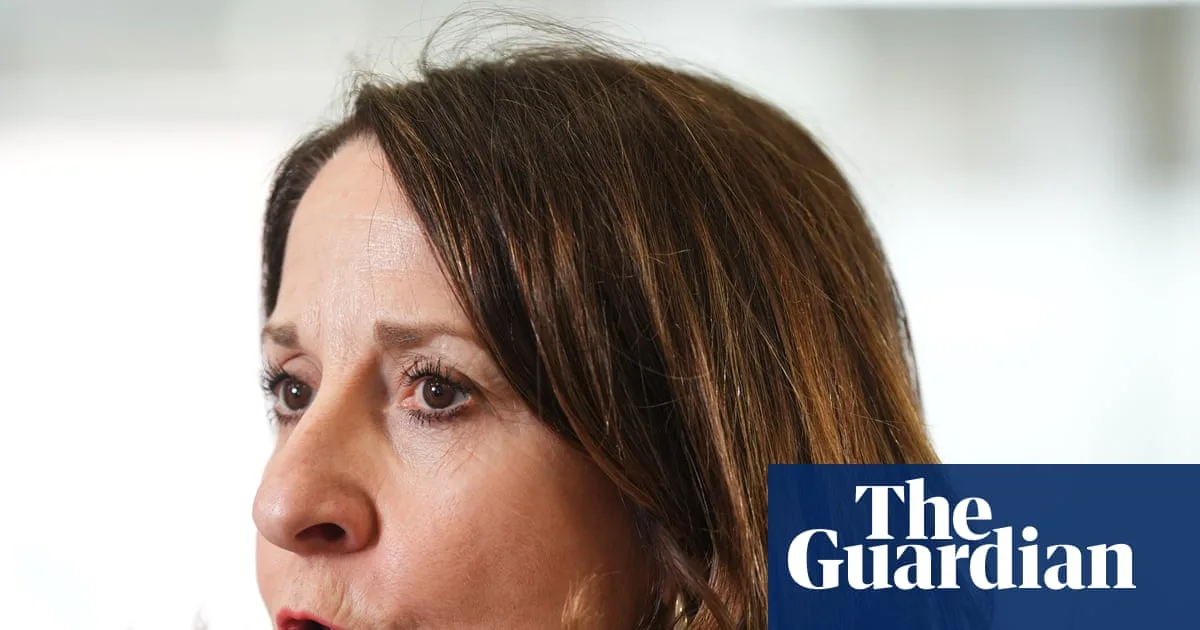
Work and Pensions Secretary Liz Kendall is set to defend the government's £5bn disability benefits cuts in a speech on Wednesday, arguing that the reforms are necessary to prevent the welfare state from collapsing. Despite mounting opposition from within her own party, Kendall will insist that without urgent action, the system will become unsustainable.
Labour backbenchers have warned that more than 100 MPs have signed a private letter to party whips expressing their inability to support the welfare package ahead of a vote next month. The rebellion includes loyalists to Prime Minister Keir Starmer, and is distinct from a previous public statement signed by 42 MPs calling the cuts 'impossible to support'.
In her speech to the Institute for Public Policy Research, Kendall will argue that restricting eligibility for some benefits is essential to focus public money on those with the greatest need. 'Unless we ensure public money is focused on those with the greatest need and is spent in ways that have the best chance of improving people's lives, the welfare state simply won't be there for people who really need it in the future,' she will say.

The cuts, announced ahead of Rachel Reeves's spring statement, target Personal Independence Payment (Pip) and the health element of Universal Credit. The government's impact assessment shows 3.2 million households will lose an average of £1,720 a year. Analysis by the Disability Poverty Campaign Group indicates that over 200 Labour MPs have a majority smaller than the number of Pip claimants in their constituency.
Kendall is also highlighting £1.8bn in additional spending on back-to-work measures, which she says will give people 'real hope' and 'a better future'. However, experts warn that the employment support is unlikely to offset the scale of the cuts. Stephen Evans of the Learning and Work Institute estimates that between 45,000 and 95,000 people may find work as a result, but this is dwarfed by the 3.2 million facing benefit reductions.
Resolution Foundation analysis shows that the hardest hit by Pip cuts will be those over 50 and people with musculoskeletal conditions such as back pain and arthritis. Critics argue that the reforms are driven by a need to meet fiscal rules rather than improve livelihoods, and the backlash has intensified after Labour's poor local election results, which many blame on welfare cuts and the means-testing of winter fuel allowance.