White House Press Secretary Leavitt Slams New York Times Over Trump Ballroom Criticism
White House Press Secretary Karoline Leavitt has launched a fierce defence of President Donald Trump's proposed new White House ballroom, after a New York Times feature criticised its design and construction timeline. Leavitt dismissed the opinions of three experts who contributed to the story, which highlighted significant concerns about the project's aesthetics and practicality.
Leavitt's Social Media Rage Against NYT Experts
In a social media post on Sunday, Leavitt expressed outrage at the New York Times article, which featured input from Larry Buchanan, who has studied fine arts, Emily Badger, who writes about urban planning, and Junho Lee, a trained architect. "The New York Times had three random people who have 'studied fine arts,' 'long written about urban planning,' and never built anything to write an article criticising the new White House ballroom," she wrote. Notably, Leavitt did not address Lee's architectural credentials in her critique.
Leavitt emphasised that President Trump and his lead architect have constructed world-class buildings globally and are ensuring the People's House finally receives a beautiful ballroom that has been needed for decades. She asserted that the project would come "at no expense to the taxpayer," with the estimated $400 million ballroom fully funded by private donations.

NYT Feature Raises Design and Timeline Concerns
The New York Times feature, which has provoked Leavitt's response, detailed several critical issues with the ballroom plan. Experts questioned not only the structure's design but also the ambitious construction timeline. The report noted that the White House aims to begin building in the spring, a schedule requiring construction documents to be prepared while the design is still under review.
Architect Thomas Gallas was quoted saying the presented timeline "never made any sense to me." The article also highlighted the ballroom's reported size, stating it will be 60 percent larger than the White House Executive Residence. When viewed from the south, the ballroom will dominate the site, dwarfing the White House and ruining its symmetry.
Architectural Quirks and Functional Flaws
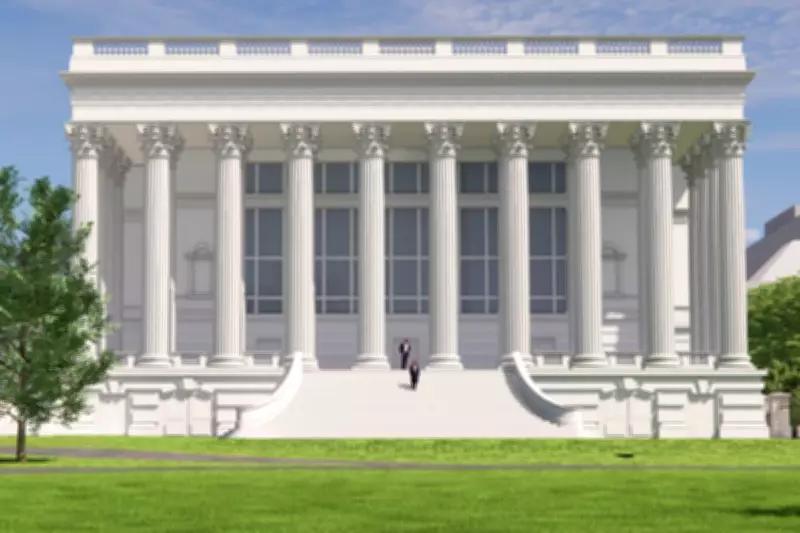
Specific design elements drew criticism from the experts. The south portico, which was not part of the original design, features a grand staircase that leads nowhere, as there are no doors into the ballroom on that side. Additionally, the south face will be lined with massive columns that experts argue will block views from the interior and inhibit natural light.
During a planning commission review earlier this month, the ballroom's architect, Shalom Baranes, described the south portico as more of an "aesthetic decision" than a functional component. The east colonnade, connecting the Executive Residence to the new East Wing and ballroom, will appear from the north to have windows, but these are actually "masonry niches designed to look like windows," according to the report.
Upcoming Vote and Political Implications
The National Capital Planning Commission is scheduled to hold a final vote on Thursday to approve Trump's ballroom project. This decision comes amid heightened political tensions, with Leavitt's defence reflecting the administration's commitment to pushing forward with the controversial design despite expert reservations.
The ballroom debate underscores broader issues of architectural preservation, public spending, and political legacy in Washington, D.C. As the vote approaches, stakeholders on both sides are preparing for a potentially contentious outcome that could reshape the iconic White House grounds for generations to come.