Labour Ministers Rejected Trump's Request for UK Bases to Bomb Iran
Cabinet ministers engaged in discussions about whether cosying up to Donald Trump constituted a 'good thing for Labour' prior to rejecting his request to utilise British military bases for bombing Iran, according to revelations last night. The decision highlights the intersection of national security and domestic political considerations within the Labour government.
Internal Opposition from Senior Labour Figures
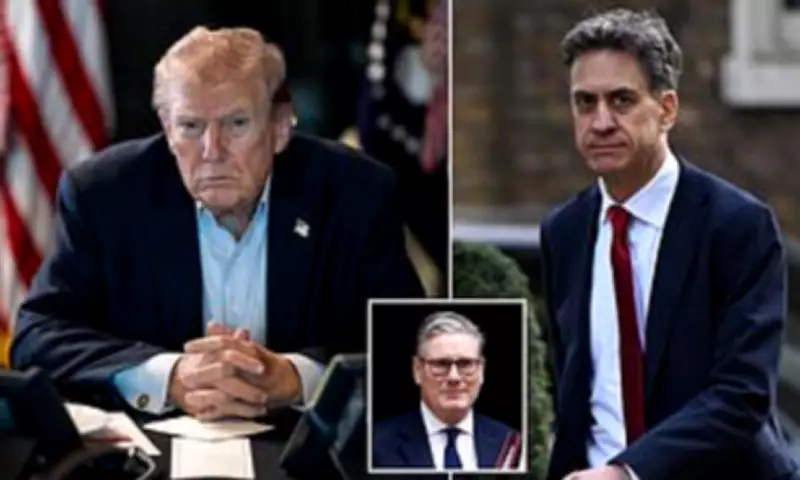
Ed Miliband, Rachel Reeves, and Yvette Cooper reportedly urged Prime Minister Sir Keir Starmer to avoid any association with the US assault on Iran. This stance emerged as Labour faced mounting pressure from Left-wing opponents, including the Greens, following a humiliating defeat in the Gorton and Denton by-election.
Security sources indicated that Mr Miliband adopted a 'petulant, pacifist, legalistic and very political approach' during a National Security Council meeting last Friday, just hours after the electoral setback and a day before the US attack commenced. He and Chancellor Rachel Reeves allegedly 'made it quite difficult for the Prime Minister', while Ms Cooper mirrored the 'cautious approach of the Foreign Office'.

Political Calculations Influencing National Security
The Prime Minister's determination on whether the national interest necessitated maintaining close ties with the United States appears to have been swayed by Labour's domestic challenges. A source disclosed that the debate centred on the legality of the proposed action and whether 'a positive relationship with the US was a good thing right now for the party', with many concluding it was not.
Insiders contested assertions that Sir Keir had initially entertained the idea of permitting President Trump to use UK territory bases before being overruled by fellow ministers. The Prime Minister reportedly received several 'very angry' phone calls from Mr Trump regarding the use of Diego Garcia in the Chagos Islands and RAF Fairford in Gloucestershire for bombing raids.
Legal Objections and a Partial Reversal
It is understood that Sir Keir did not deem the action lawful, with legal objections outlined by Attorney General Lord Hermer communicated to the US days prior to the final decision. In a partial U-turn, ministers have since authorised US planes to employ British bases for 'limited' defensive attacks against Iranian missile batteries threatening the region.
A Downing Street spokesman stated: 'We never comment on the content of National Security Council meetings. The decision had the full support of the Cabinet, including all the members of the National Security Council.'
Strained US-UK Relations and Political Fallout
These disclosures, reported by The Spectator magazine, are likely to exacerbate tensions with Mr Trump and raise further questions about Sir Keir's ability to rebuild the special relationship that underpins UK security. The White House retaliated last night after Sir Keir suggested Mr Trump's attack on Iran was illegal and unplanned.
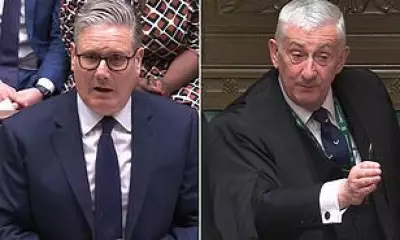
The Prime Minister took a rare jab at the US President yesterday, following Mr Trump's public remark that Sir Keir was 'no Churchill'. Sir Keir told MPs he would not join military action without 'a lawful basis and a viable, thought-through plan'.
White House press secretary Karoline Leavitt 'completely rejected' Sir Keir's implication of illegality, asserting that President Trump believed Iran posed an 'imminent and direct threat' to the US and its allies.
Defence of the Special Relationship
Sir Keir maintained that the special relationship does not 'hang on President Trump's latest words'. However, Tory MP Gareth Bacon suggested the Prime Minister's 'dithering' over base usage had harmed US relations.
Sir Keir responded: 'American planes are operating out of British bases – that is the special relationship in action. British jets are shooting down drones and missiles to protect American lives in the Middle East on our joint bases – that is the special relationship in action. Sharing intelligence every day to keep our people safe – that is the special relationship in action. Hanging on to President Trump's latest words is not the special relationship in action.'

Broader Implications and Future Uncertainties
Deputy Prime Minister David Lammy downplayed the dispute last night but acknowledged that Labour's £35 billion Chagos Islands transfer to Mauritius might be abandoned, stating on ITV's Peston show: 'It's just not clear at the moment whether we're going to be able to transfer it.'
Last night, Mr Trump remarked that the US was in a very strong position on Iran, adding: 'Somebody said, "On a scale of ten where would you rate it?" I said, about a 15. We're in very good shape. It's a great display of military strength.'