Labour MPs Express Fury Over Government's Failure to Include Grok in Deepfake Crackdown
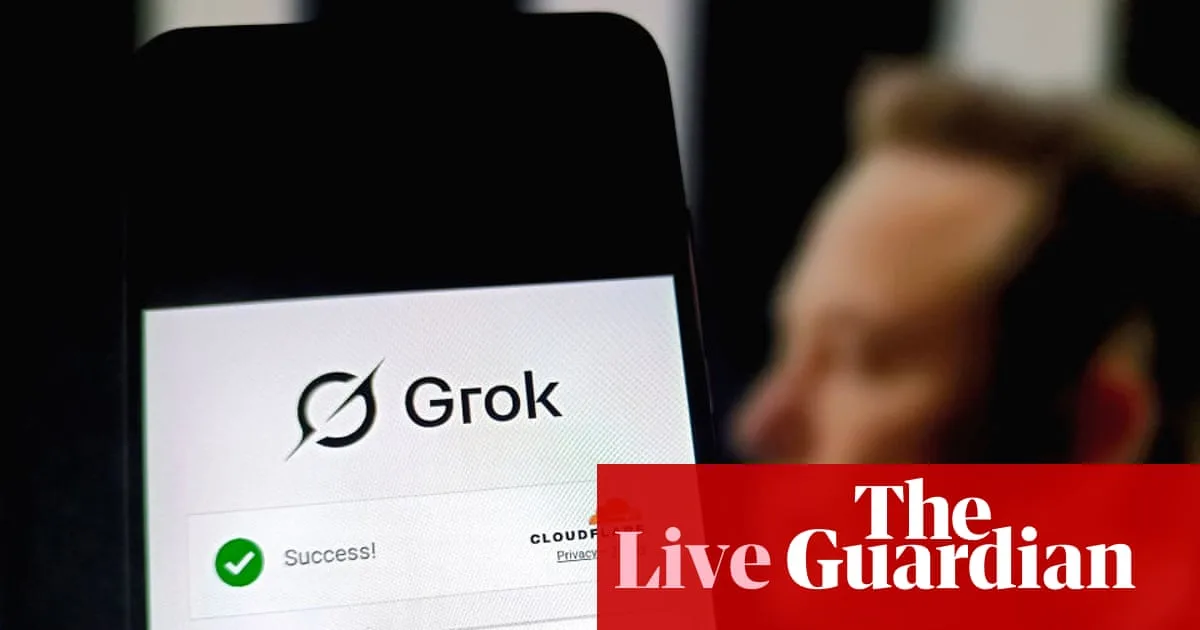
Female Labour MPs are reportedly incandescent with rage over the government's failure to include Elon Musk's controversial AI tool Grok in new measures designed to crack down on sexualised deepfakes shared online. According to reports from the Daily Mail, this omission has sparked significant backlash within parliamentary circles.
Prime Minister's January Promise and Subsequent Backtrack
In January, the Prime Minister publicly promised to take necessary measures against social media platform X after trolls utilized its AI tool Grok to create manipulated images of MPs in bikinis and sexually explicit images depicting children. Addressing backbenchers in the Chamber, Sir Keir Starmer branded Grok as disgusting and committed that the government would strengthen existing laws while preparing for further legislation if required.
Tech Secretary's Response and Legislative Limitations
In response to these concerns, Tech Secretary Liz Kendall announced that the government would ban nudification tools through amendments to the Crime and Policing Bill, which is currently at the report stage in the House of Lords. However, female Labour MPs are furious that the government is now delivering what they describe as a half-baked ban by only imposing these measures on British applications, not those based abroad like Grok.
One Labour MP told the Daily Mail that backbenchers remain concerned that the proposed nudification ban would only apply to products within the UK, thereby failing to affect Grok. This limitation, they warned, would fail to adequately protect women and children from the dangers posed by such technology.
Statistical Analysis and Public Perception
This controversy emerges alongside analysis released today by CARE International UK and Equal Measures 2030, revealing that less than four in ten adults in the UK believe the Labour government genuinely cares about the rights of women and girls. Ms. Kendall had previously warned that Grok might not be covered by the proposals, despite the tool generating approximately three million sexualised images in less than two weeks, including 23,000 appearing to depict children.
Parliamentary Debates and Opposition Criticism
In a letter to Labour MP Chi Onwurah, the Tech Secretary acknowledged that the government has identified that not all chatbots are covered and has commissioned officials to examine how this gap can be addressed. However, speaking in the Lords on Monday, Conservative peer Baroness Bertin warned that the government's legislation would bring no change whatever as the changes would not capture software based overseas.
Baroness Bertin stated, I believe this legislation would also not have caught Grok. The regulation must go further. Many MPs have been in touch wanting us to get clarity on this point. It is wrong to announce that you have banned something when you potentially have not. We have to be really clear on that, because otherwise we have the worst of all worlds.
Political Reactions and Broader Implications
Claire Coutinho, the shadow equalities minister, criticised the government's approach, stating, This is yet another example of Labour talking tough but failing to deliver. By refusing to act on overseas platforms, they are leaving glaring loopholes that predators will exploit. Offering tools to create deepfake nudes must be banned in the UK regardless of where the company is based.
Baroness Bertin later told the Daily Mail that Grok represents the tip of the iceberg, noting that the majority of sexualised deepfake images originate from Chinese applications. Despite these concerns, the government imposed a three-line whip on peers in the Lords to vote against Conservative amendments aimed at further regulating the pornography industry.
Upcoming Political Challenges and Internal Criticism
The bill is scheduled to return to the Commons just before the local elections, where Labour is anticipated to cede significant numbers of local council seats to Reform and the Green Party. Looking ahead, Baroness Bertin expressed that she would be deeply uncomfortable if she were a Labour MP potentially whipped to vote against banning content depicting step incest porn and porn involving children.
This apparent weakening of measures to protect women and girls online coincides with criticism directed at Sir Keir Starmer for allegedly running a boy's club in Number 10. This follows a series of scandals within Downing Street that prompted Culture Secretary Lisa Nandy to complain about Labour briefings dripping with misogyny.
Government Statement and Ongoing Efforts
A government spokesperson responded, This government is taking robust action to protect women and girls from intimate image abuse, no matter where a platform is based. We are making the creation of non-consensual sexual deepfakes a priority offence under the Online Safety Act, so services must proactively stop this content appearing. We are also criminalising nudification apps, targeting those who profit from the distress of others. Social media and search services will be required to remove content promoting these tools. Deepfakes are created through a wide range of AI tools, which is why we are closing loopholes so more chatbots have legal duties to protect users from illegal content. Our message is clear: Intimate image abuse will not be tolerated.