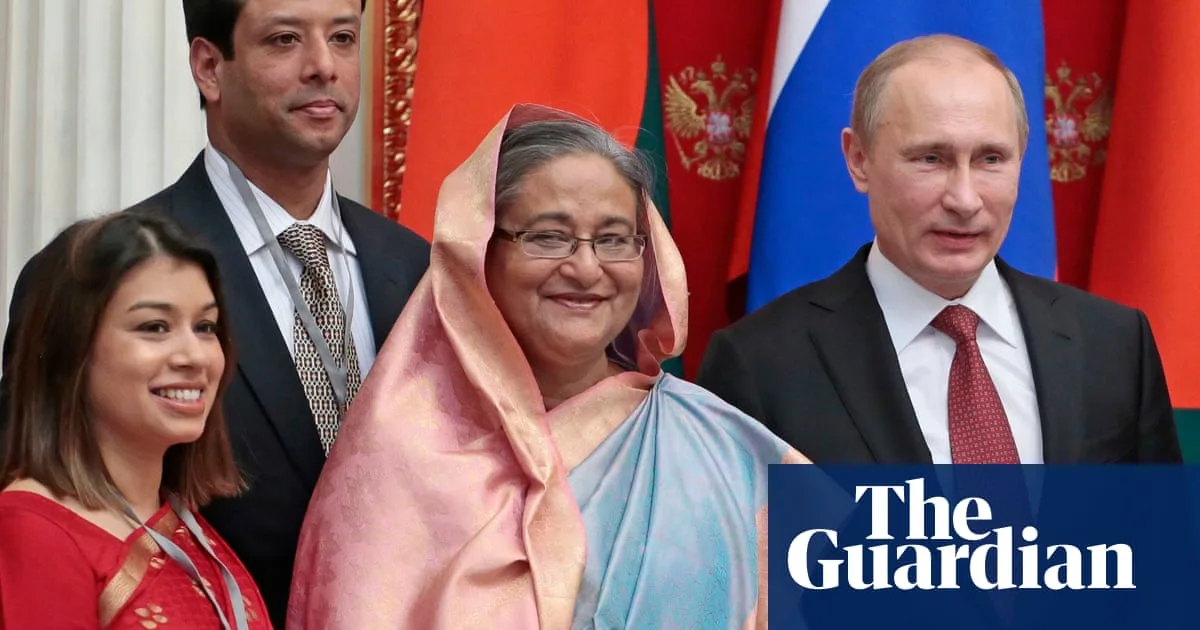
City minister Tulip Siddiq is under pressure to explain why she benefited from property paid for by people linked to the regime of her aunt, former Bangladeshi prime minister Sheikh Hasina. Siddiq, who is responsible for UK anti-corruption policy, has referred herself to the prime minister's independent adviser on ministerial standards to determine whether she has breached the ministerial code.
Critics argue that Siddiq's attempts to distance herself from her family's authoritarian regime in Bangladesh have glossed over how close she really is to them and their Awami League party. David Bergman, a Dhaka-based investigative journalist, said: 'Siddiq's position is that she has no relationship with the Awami League or Bangladeshi politics, but the truth is she has been a major beneficiary of the Awami League.'
Rose Whiffen, a senior research officer at Transparency International, said: 'Since Sheikh Hasina was swept from power in Bangladesh, there has been greater scrutiny over the support received by her niece from senior Awami League figures. Now that the minister has referred herself to the independent adviser on standards, the full facts surrounding this support should be established to help identify any possible undue influence or breaches of the ministerial code.'
According to a now-deleted section of her website, Siddiq worked 'for the Awami League, as part of its UK and EU lobbying unit and election strategy team' while running to be a Labour councillor in London in 2009. She also appeared on the BBC World news channel as a spokesperson for the party. In 2015, she told an Awami League rally: 'Had it not been for your help, I would never have been able to stand here as a British MP.'
Bangladeshi authorities are now investigating whether Siddiq helped broker a deal for Russia to build a power plant in Bangladesh at an allegedly inflated price, allowing her family members to embezzle money. Mubashar Hasan, a Bangladeshi political commentator, said: 'If similar activities were conducted by members of the Chinese or Russian diaspora in the UK – linked to the Chinese Communist party or Vladimir Putin – and they supported a British politician of Chinese or Russian origin, it would undoubtedly be regarded as foreign interference.'