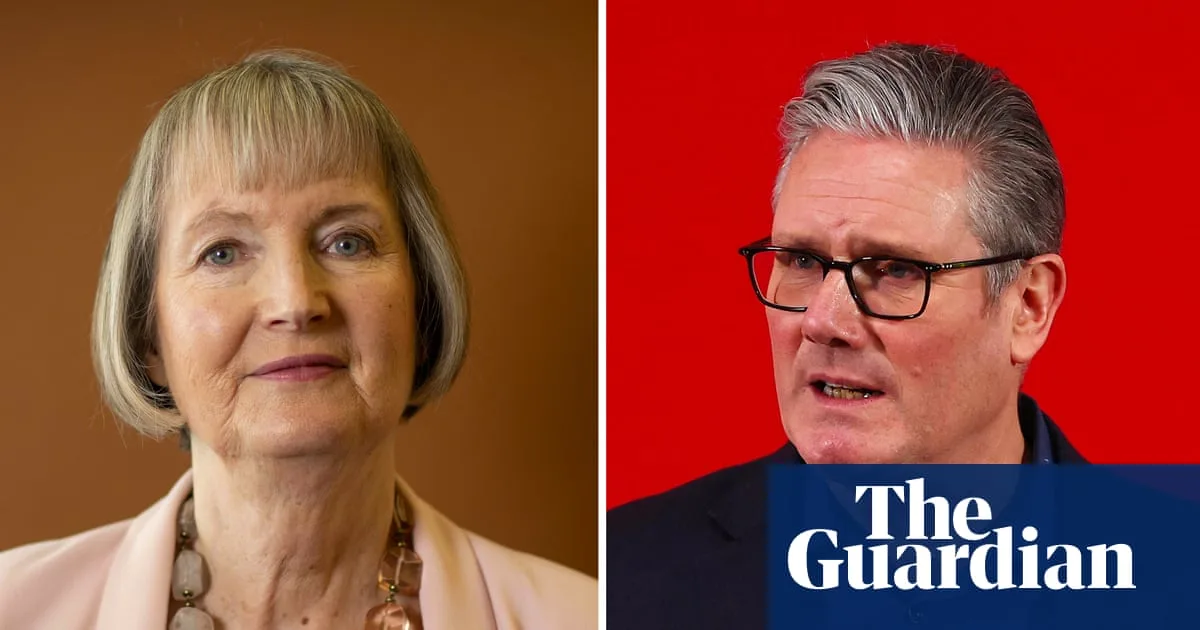
Female Labour MPs Demand Starmer Create New Role to End No10 'Boys' Club' Culture
Labour MPs Demand Starmer End No10 'Boys' Club' with New Role

Female Labour MPs Issue Urgent Demand to Starmer Over No10 'Boys' Club' Culture

Female Labour MPs have issued an urgent demand to Prime Minister Keir Starmer, calling for the creation of a new government role specifically designed to tackle misogyny and fundamentally change what they describe as the pervasive 'boys' club' culture within Number 10 Downing Street. The demand emerged from a packed meeting of female Labour parliamentarians that Starmer attended immediately following Prime Minister's Questions.

Revival of First Secretary of State Role Proposed

Baroness Harriet Harman, the former deputy Labour leader, took a leading role in the discussions by publicly calling on the Prime Minister to revive the historic position of First Secretary of State. This senior cabinet role, which functions similarly to a deputy prime minister, was last held by Peter Mandelson during Gordon Brown's premiership. Harman argued that appointing a woman to this powerful position would send a 'massive signal' about the government's commitment to cultural transformation.

'I think he knew enough not to do any mansplaining or he'd be killed,' Baroness Harman remarked about Starmer's conduct during the meeting, while praising his overall performance and apparent understanding that he needed to listen rather than lecture. She emphasized that Starmer 'understood that he had to listen and not mansplain' to the assembled female MPs.

Cultural Change and Practical Government Machinery

The senior MP elaborated that giving the First Secretary role to a woman would help 'clear up the absolute mess' that she associates with Lord Mandelson's tenure, particularly referencing his controversial associations with convicted sex offender Jeffrey Epstein. Harman hinted that current deputy Labour leader Lucy Powell would make an excellent candidate for the position, describing the appointment as 'a very practical thing to do in terms of the machinery of government, because changing culture is hard.'

'He said he wanted culture change across government, and that is what everybody in that room wants, and it's evident that it's necessary, but actually making that happen is really difficult,' Harman explained after the parliamentary meeting. 'But he didn't create the culture. He inherited the culture. It is long standing and it was alive and well when Gordon was prime minister, hence Peter Mandelson's appointment as First Secretary. So to turn that around, you need to drive it from the top.'

Additional Demands and Broader Context

Beyond the structural government changes, Harman revealed she had also urged Starmer to make tackling misogyny and violence against women and girls a sixth official mission for the Labour government, which currently has five established missions focusing on economic growth, clean energy, crime reduction, educational opportunities, and NHS improvement.

The meeting occurred against a backdrop of ongoing controversy surrounding former No10 communications director Matthew Doyle, who recently had the Labour whip removed after revelations about his links to Sean Morton. Morton pleaded guilty in November 2017 to possessing indecent images of children, though Doyle had campaigned for him earlier that year after charges were filed. Some MPs at the meeting reportedly challenged Starmer about this situation, warning that 'there are still a lot of questions to be answered.'

Positive Responses and Further Requests

Despite these concerns, several MPs expressed appreciation for Starmer's engagement. Labour MP Natalie Fleet, who was raped as a teenager, described the meeting as 'really worthwhile and really valuable,' adding: 'That's the first time I've ever been to women's PLP. I'm not a big meeting fan. He says he'll do it again. This is really important. That's how he's demonstrating he's listening to us.'

Fleet also called on the Prime Minister to launch a national inquiry into the crimes of former Harrods boss Mohamed Al Fayed and confirmed that Starmer had agreed to meet with victims of the associated scandal. Earlier in the day, the Prime Minister's press secretary had stated: 'We've always objected to the boys club characterisation in No10,' indicating official resistance to the terminology while acknowledging the underlying concerns about workplace culture.

When directly questioned about whether Starmer was genuinely committed to dismantling the 'boys' club' environment in Downing Street, Baroness Harman responded: 'I think he knows he's got to. There were a lot of women saying there needs to be leadership.' The collective demand from female Labour parliamentarians represents a significant internal pressure point for the Prime Minister as he navigates the complex challenge of transforming institutional culture while maintaining government stability and addressing multiple policy priorities simultaneously.




