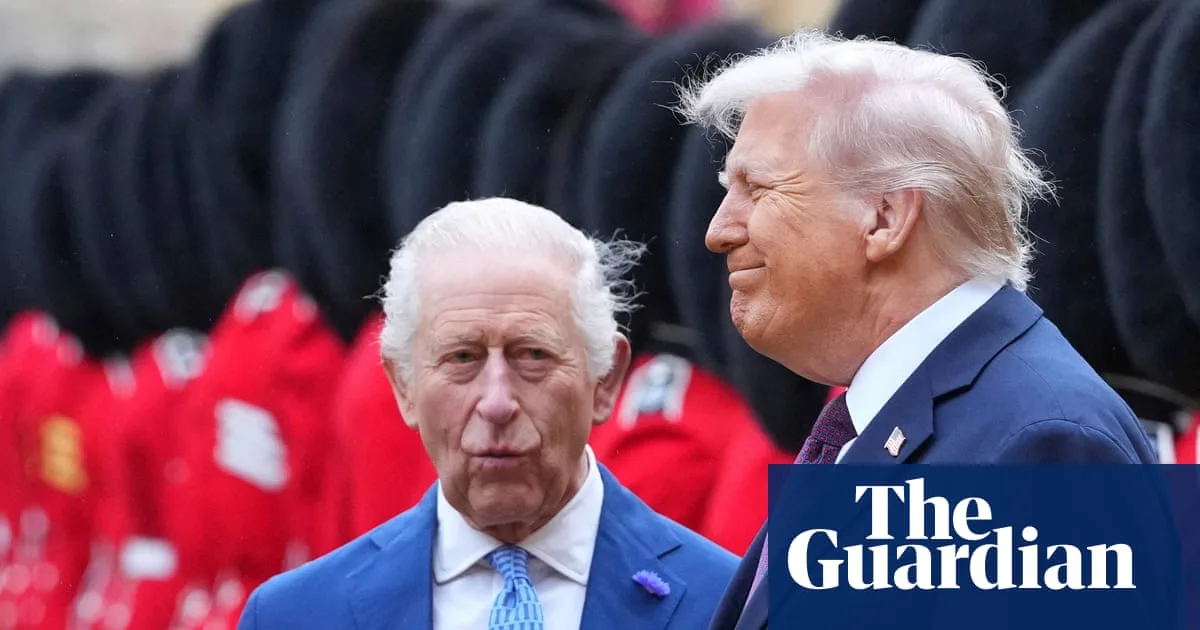
King Charles III is set to embark on a state visit to the United States this week, aiming to reinforce the enduring bonds between the two nations amid diplomatic strains over Iran. The challenge for the monarch, as always, is to match the example set by his mother, the late Queen Elizabeth II.
Following a Legendary Example
In 1991, Queen Elizabeth II captivated the U.S. Congress with a speech that celebrated the shared democratic traditions of Britain and America. She quoted Abraham Lincoln, Franklin D. Roosevelt, and Ralph Waldo Emerson, highlighting the deep ties between the countries. These themes will be central to Charles’ agenda as he helps mark America’s 250th birthday and seeks to ease tensions surrounding Prime Minister Keir Starmer’s refusal to support President Donald Trump’s military actions in Iran.
Douglas Brinkley, a presidential historian at Rice University in Texas, noted that royal visits serve to distinguish between government policy and the enduring friendship between nations. “Politics come and go, prime ministers, presidents, come and go, but there’s something deeper about the special relationship between the United States and the U.K.,” he told the Associated Press.
Diplomatic Choreography
Beneath the pomp of Charles’ four-day trip to Washington, New York, and Virginia lies a carefully orchestrated diplomatic event, requested by the British government. Starmer resisted calls to cancel the visit after Trump belittled British military sacrifices in Afghanistan and criticized him personally for not backing the U.S. in Iran. Despite these tensions, Trump has spoken warmly of Charles.
Brinkley remarked, “History has shown that President Trump really tries to be impressive whenever he’s dealing with British royalty. And I’m sure it’ll be the same this time around.”
Historical Context
Since 1939, when King George VI became the first British monarch to set foot in the former colony, royal visits have generated special excitement. During that initial trip, as World War II loomed, the royals toured the East Coast and attended a picnic at Roosevelt’s Hyde Park home. The New York Times reported, “King tries hot dog and asks for more.” The visit culminated at Mount Vernon, where the king laid a wreath at George Washington’s tomb, signaling respect during a period of isolationism.
Barbara Perry, a presidential scholar at the University of Virginia, explained, “People could see the handwriting on the wall and know that it was going to be important for the United States and Britain to stay strong for fighting against Hitler.” After war broke out, Queen Elizabeth (the Queen Mother) wrote to Eleanor Roosevelt, expressing gratitude for American support.
The Queen’s Legacy
Queen Elizabeth II built on these ties during her 70-year reign, making four state visits to the U.S. She helped President Gerald Ford celebrate the bicentennial in 1976 and met with President George W. Bush in 2007 as British and American forces fought in Iraq and Afghanistan. These trips aimed to smooth turbulent waters and remind both sides of their common bonds.
Charles’ Visit Agenda
Charles’ visit will follow suit. It includes a commemoration of the September 11, 2001 attacks, a ceremony honoring fallen service members, and an event with Queen Camilla marking the 100th anniversary of Winnie the Pooh stories by A.A. Milne. Awkward encounters will be avoided: the royals will not meet Jeffrey Epstein’s victims, despite calls for the king to address his brother’s links to the convicted sex offender, nor are there plans for Charles to meet his son Prince Harry, a royal critic living in California.
Author Robert Hardman noted that the visit’s core message is one of reconciliation: “He’s going because 250 years ago the Founding Fathers of the USA kicked out his great-times-five grandfather, and he’s going to say, ‘No hard feelings, it’s been a great divorce, we’ve had a lovely 250 years and let’s reflect on the high points.’” He acknowledged “very, very large elephants in the room” but stressed there are many other things for the king to focus on.
Addressing Congress
Charles’ speech to a joint session of Congress will emphasize that long-term friendship outweighs transient disputes. He is likely to inject humor, as his mother did in 1991 when she joked about a lectern that obscured her view. “I do hope you can see me today from where you are,” she deadpanned, drawing laughter and a standing ovation before launching into a speech on democratic values and the Atlantic Alliance.
Brinkley predicted the speech will cover “American exceptionalism, American history, the importance of U.S.-British alliance, and some memories from the past... about the love affair the two countries share with each other, even though it goes over rocky rapids from time to time.”






