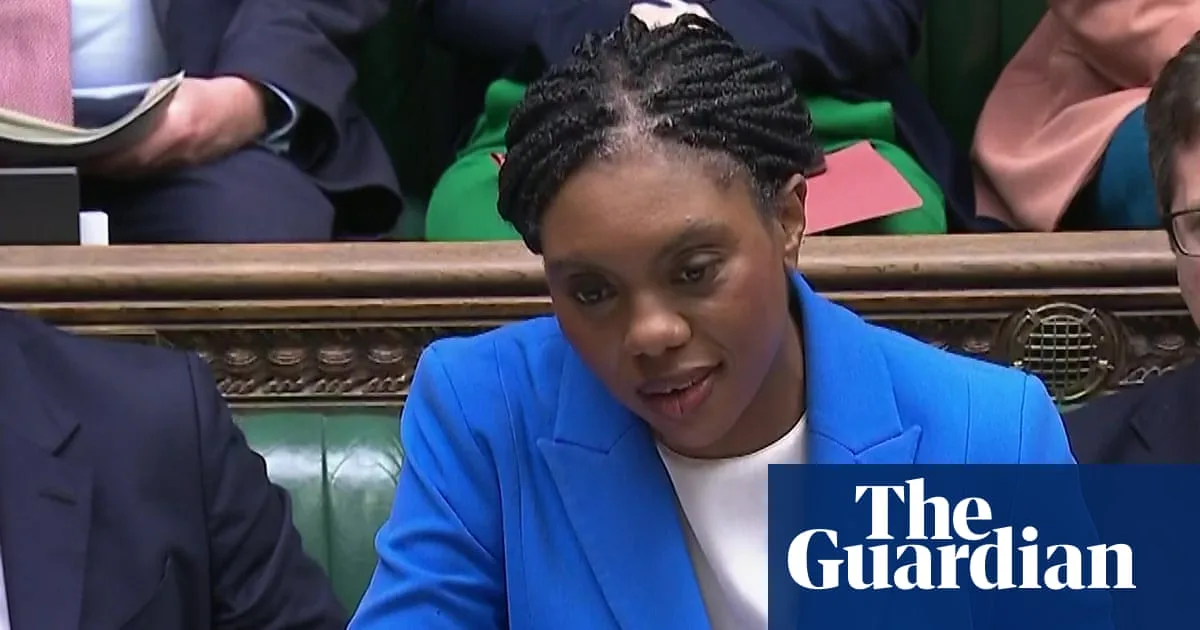
Conservative Party leader Kemi Badenoch is reportedly considering implementing a ban on burkas as a strategy to combat Islamic extremism, according to claims made yesterday. This potential policy shift represents a notable departure from her previously stated position on the matter.
Policy Review Underway
Shadow home secretary Chris Philp and shadow justice secretary Nick Timothy are said to be examining the merits of such a ban as part of a broader review of Islamist issues. If accepted by Mrs Badenoch, this move would constitute a significant reversal of her earlier views expressed just nine months ago.
Previous Opposition to Ban
In a BBC Radio 4 interview last year, Mrs Badenoch firmly rejected the idea of an outright burka ban, citing practical enforcement concerns. She questioned the feasibility of such measures, asking whether police officers would be sent into homes to check compliance and whether prisons would have capacity for violators.
At the time, she stated: 'I don't think women should be forced to wear things that their husbands or their communities want. If you have segregated societies, those things happen.' She specifically contrasted her position with that of Reform UK, saying: 'What I'm not doing is announcing that I'm going to ban the burka, like Reform is doing.'
Security and Integration Concerns
According to reports in The Telegraph, Mr Philp has expressed concerns that the burka - a garment worn by some Muslim women to cover their entire body except for the eyes - can be divisive, potentially drive extremism, and hinder social integration efforts. These security and cohesion arguments form the basis for the current policy review.
Political Implications
Any implementation of a burka ban would align Conservative policy with that of Reform UK, whose home affairs spokesman Zia Yusuf has advocated for prohibiting all face coverings in public spaces, including both burkas and balaclavas. This move would also create a clear distinction from Labour positions ahead of the upcoming May local elections.
The Telegraph cites anonymous sources indicating that Home Secretary Shabana Mahmood - the first Muslim woman to lead the department - maintains that government should not dictate citizens' clothing choices, suggesting potential internal divisions within government on this issue.
International Precedents
Several Western nations have already implemented various forms of burka restrictions:
- France, The Netherlands, Switzerland, Belgium, Austria and Bulgaria currently maintain partial or complete bans on wearing burkas in public
- The European Court of Human Rights upheld France's ban, accepting arguments that religious face coverings degrade women, conflict with secular traditions, and can be justifiably restricted for social cohesion
- Countries with significant Muslim populations including Kazakhstan, Turkmenistan and Uzbekistan have introduced similar bans primarily on security grounds
The European court ruled that while such restrictions limit freedom of thought and religious practice, they do not violate the European Convention on Human Rights when they protect the rights and freedoms of others.
Broader Context
This policy consideration emerges within a complex landscape of security concerns, religious freedoms, and integration challenges. The debate touches on fundamental questions about the balance between individual liberties and collective security, as well as the government's role in regulating religious expression in public spaces.
The potential shift in Mrs Badenoch's position highlights how security considerations can prompt reevaluation of previously held policy stances, particularly regarding measures aimed at countering extremism and promoting social cohesion.






