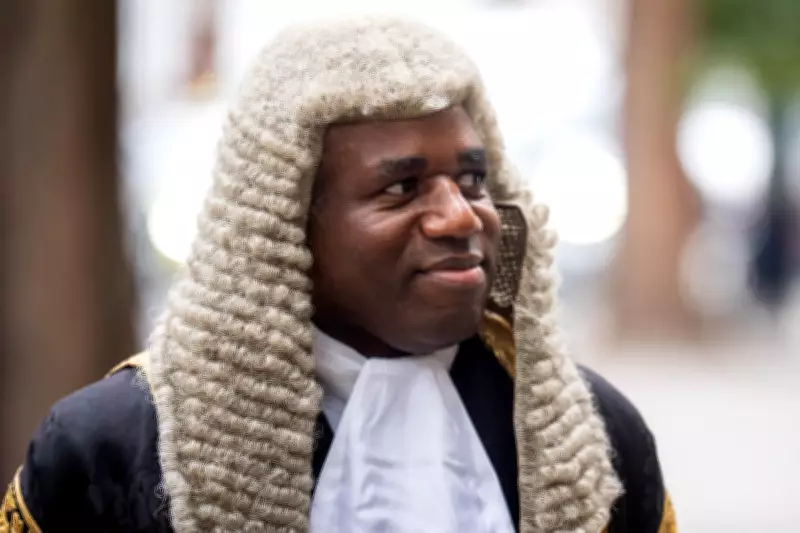
Lammy's Jury Trial Reforms Spark Parliamentary Debate Amid Justice Crisis
The facts surrounding Britain's criminal justice system are, as legal professionals would state, not in dispute. No political faction, including the Conservative opposition that inherited this challenging situation, can credibly argue that all is functioning optimally within the nation's courts and prisons. A severe crisis of overcrowding in prisons combines with an overwhelming backlog of cases in the courts, creating what many describe as a broken system.
The Scale of the Justice System Breakdown
Even with emergency early release programmes implemented by Labour ministers upon assuming power in 2024, the situation remains profoundly unsatisfactory and, from a compassionate viewpoint, completely unsustainable. This dysfunction causes distress to victims of crime, the general public, and dedicated legal professionals alike. The consequence is that far too many victims endure excessively long waits to see justice served, and as established by Magna Carta, justice delayed effectively becomes justice denied.
Perversely, the situation has deteriorated to such an extent that one of the most compelling arguments for restricting jury trials—an admittedly deeply unsatisfactory solution—is that without immediate action, numerous individuals accused of serious crimes may never face a judge and jury at all. This is particularly poignant for cases involving rape and other sexual assaults, where delays can extend for years.

The Courts and Tribunals Bill and Its Controversial Provisions
This precise context explains why, in principle and with certain essential amendments, the government should proceed with the Courts and Tribunals Bill, which has now received its crucial second reading. Regrettably, this legislation includes further restrictions on the right to trial by jury, though it is important to note this right has never been an absolute obligation in any case. These restrictions should only be accepted for the shortest period necessary to alleviate the current crisis.
A group of Labour MPs, led by Natalie Fleet—herself a survivor of grooming and rape—is campaigning vigorously to support Justice Secretary David Lammy's proposals. Driven by passionate determination against the injustices disproportionately affecting women and girls, they have managed to counterbalance an equally committed and sincere group of other Labour backbenchers led by Karl Turner, who harbor well-founded concerns about the future integrity of the jury system.
Parliamentary Dynamics and the Opposition's Position
As often occurs following a landslide victory in the Commons, parliamentary debates within the governing party carry more consequence than those between the government and a significantly weakened official opposition. This dynamic is evident now, with Shadow Justice Secretary Nick Timothy resorting to personal criticism of Mr. Lammy and casting dubious aspersions regarding the government's motivations.
The pro-reform MPs on the government benches possess the decisive argument that a woman raped today might face a wait until 2030 for her case to reach trial. This reality is simply inhumane, let alone unjust, and cannot be tolerated any longer. Experience demonstrates that too many such cases fail to reach conclusion because victims, constantly re-traumatised by delays, ultimately withdraw charges. Conviction rates in these cases also remain pitifully low.
Alternative Solutions and Funding Considerations
Conservatives and some Labour MPs argue that improving efficiency in handling caseloads, extending court sitting hours, and increasing funding could accelerate the system. These points hold validity, and some measures are already being implemented, with nearly £3 billion in additional investment according to Mr. Lammy.
However, the scale of the problem necessitates that every possible measure be taken to end unconscionable delays in delivering prompt justice. Ideally, the sections of proposed legislation relating to juries should include a "sunset clause," ensuring that jury trials as traditionally understood could be restored after a specified period, perhaps three years. Currently, Mr. Lammy appears willing only to offer a "review," which many consider insufficient given Parliament is contemplating diminishing such a fundamental civil liberty.

The Fundamental Importance of Jury Trials
To be unequivocally clear, Parliament and the nation should never have reached a point where justice delays can only be remedied through restricting jury trials. Juries do matter profoundly. A bench of judges might reach different conclusions than one's peers. More "political" offences, such as public disorder and allegedly unlawful protest, come to mind, where the informal democratic safeguard of a jury can rightly override poorly conceived laws, however clearly drafted by Parliament.
This represents a crucial check and balance within the system. That is the entire purpose of jury trials, and why they constitute an essential defence for a free society against potential elective dictatorship. They should remain as freely available as practicable and be restored as soon as achievable, just as they have been following previous national emergencies, including wartime.
The Broader Lesson for Public Services
The wider lesson emerging from this crisis is that courts represent just as vital a public service as schools and hospitals. They must never be permitted to fall into such profound neglect again. The current debate underscores the delicate balance between addressing immediate systemic failures and preserving long-cherished civil liberties that form the bedrock of British justice.