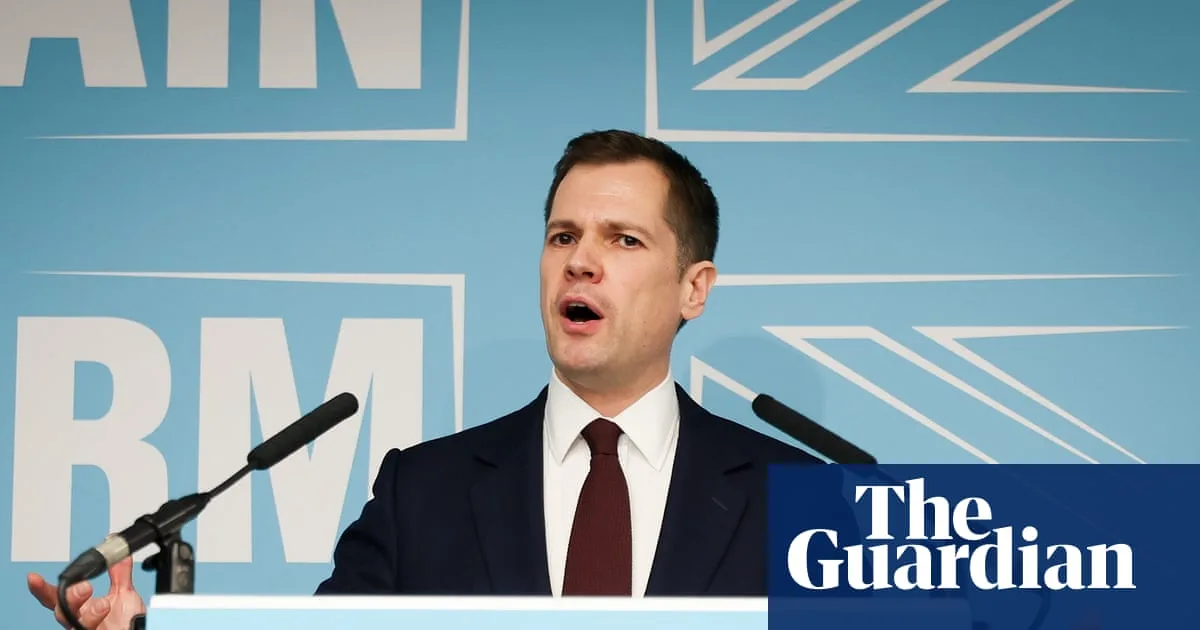
The political landscape in Britain witnessed another seismic shift this week as Robert Jenrick, the MP for Newark, defected from the Conservative Party to join Nigel Farage's Reform UK. The move, announced amidst a flurry of media speculation, has been framed by some as the culmination of a personal political journey. Yet a closer examination reveals a consistent thread: a career propelled not by core values, but by a relentless focus on personal advancement.
The 'Journey' of a Political Chameleon
Since his election as the MP for Newark in 2014, Jenrick's political identity has been notably fluid. He initially presented himself as a modernising 'Cameroon' Conservative, aligning with the party's centrist wing under David Cameron. A committed supporter of the Remain campaign during the 2016 EU referendum, he performed a rapid and stark U-turn following the public vote, embracing Brexit without apparent hesitation.
This pattern of adaptation continued. Jenrick later adopted a strident populist stance, most notably on immigration, targeting what he termed "the golden visa scheme" and making inflammatory remarks about areas like Sparkbrook in Birmingham. Critics argue each evolution was a calculated move to align with perceived electoral winds and internal party power struggles, rather than a genuine development of belief.
A Defection Mired in Contradiction
The circumstances of his defection have further fuelled accusations of opportunism. In an exclusive interview with the BBC's Laura Kuenssberg, Jenrick claimed he had planned the move since Christmas after numerous conversations with Nigel Farage. This narrative directly contradicted his assurance to the Conservative Chief Whip just days prior, where he reportedly stated, "Of course not. Nothing could be further from my mind."
When pressed on this inconsistency, Jenrick offered a defence centred on his own sensitivity, suggesting he was "too kind" to disappoint party leader Kemi Badenoch sooner. His new ally, Nigel Farage, had previously labelled Jenrick a "liar and a fraud," while Jenrick himself had questioned Farage's fitness to run public services. Jenrick dismissed this past acrimony as a form of political flirtation, a "neg" tactic born of mutual admiration.
Scandal, Self-Interest, and the Future for Newark
Jenrick's record in government has also drawn scrutiny. He was forced to admit to a "real possibility of bias" after overruling a planning inspector to approve a £1 billion property development by Tory donor and former pornographer Richard Desmond, a decision that reportedly saved Desmond £45 million. Jenrick has bizarrely framed this admission as a mark of his unique honesty compared to colleagues.
Following his defection, Jenrick has insisted he will not trigger a by-election in Newark, claiming it is in no one's best interests and that his constituents do not want one. This stance ignores immediate calls from many local voters and Conservative associations who view his switch as a betrayal of the mandate they granted him as a Tory candidate. He maintains he will continue to represent them "to the best of my ability," citing minor local achievements like repairing a pothole.
The defection splinters the right-wing vote and presents a significant challenge to the Conservative Party's electoral strategy. While Jenrick calls it a "unifying moment" and hopes former colleagues will join him, his departure has been met with thinly veiled relief by some senior Tories. Kemi Badenoch appeared notably unperturbed by his exit, leading to questions about why he was not removed from his ministerial roles earlier given his long-apparent ambitions.
Ultimately, Robert Jenrick's political journey appears less a path of ideological discovery and more a circular track of self-interest. From Cameronite to Brexiteer, from Cabinet minister to Reform defector, the constant has been an eye for the main chance. As Britain heads towards a general election, his story serves as a stark case study in the mutable nature of political allegiance in an era of upheaval.




