
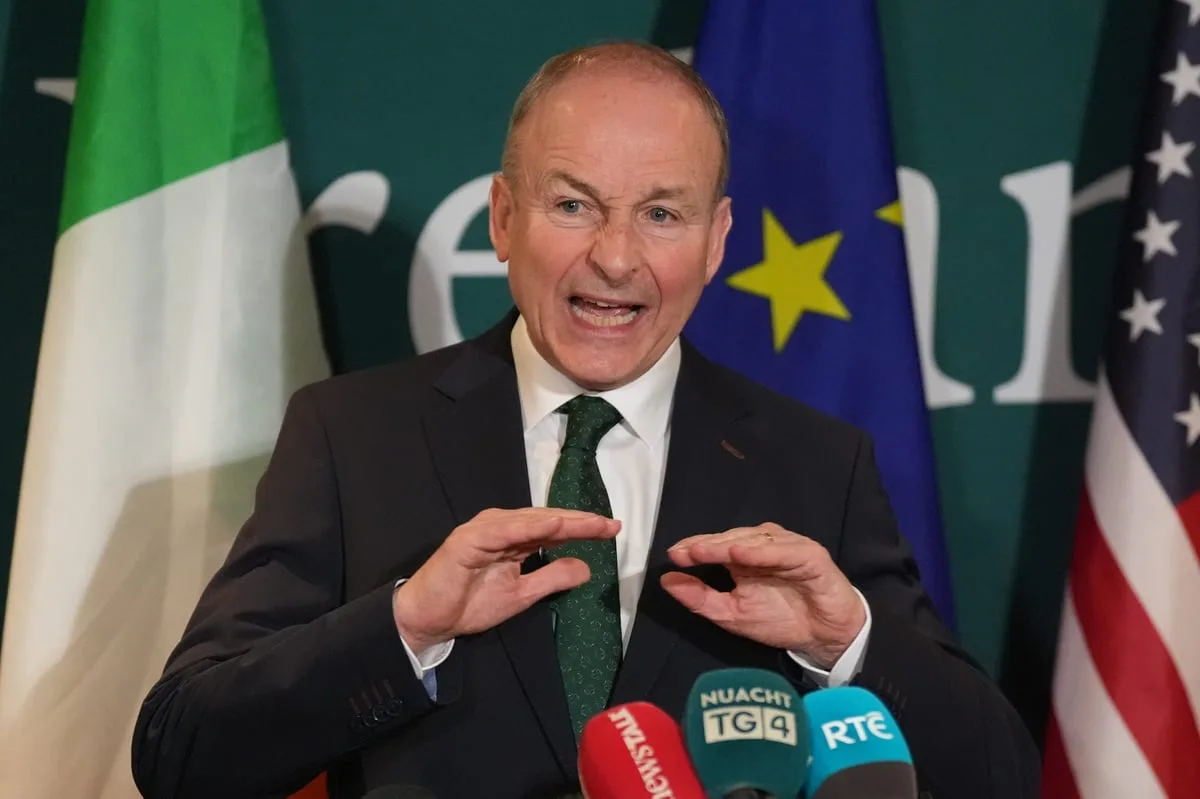
Ireland will not be involved in securing the Strait of Hormuz, Taoiseach Micheal Martin has confirmed. Speaking in Washington ahead of a meeting with US President Donald Trump, Mr Martin said Ireland lacks the military capacity to participate in such operations.
The US has called for international assistance to ensure safe passage through the strategic waterway, following a joint bombing campaign with Israel against Iran. The conflict has disrupted oil supplies and raised global energy prices.
Mr Martin noted that discussions are ongoing within NATO, but stressed Ireland is not a member of the alliance. 'We're not a military power. We don't have that offensive military capacity in any shape or form, so obviously that's not something that's on our agenda,' he said.
The Taoiseach expressed concern over the economic implications of the crisis, including energy price increases, and condemned Iran's 'reckless attacks' on Gulf states. He reiterated Ireland's desire for a peaceful resolution.
On domestic measures to mitigate rising oil costs, Mr Martin said any support would be 'targeted' at low-income families, but declined to provide specifics. He warned against creating inflationary pressures and emphasised the need for a balanced, medium-term approach.
Deputy Prime Minister and Finance Minister Simon Harris said a macroeconomic analysis is expected in the coming days. He cited the fuel allowance as an effective tool to help those at risk of fuel poverty, noting that excise cuts have been used previously.




