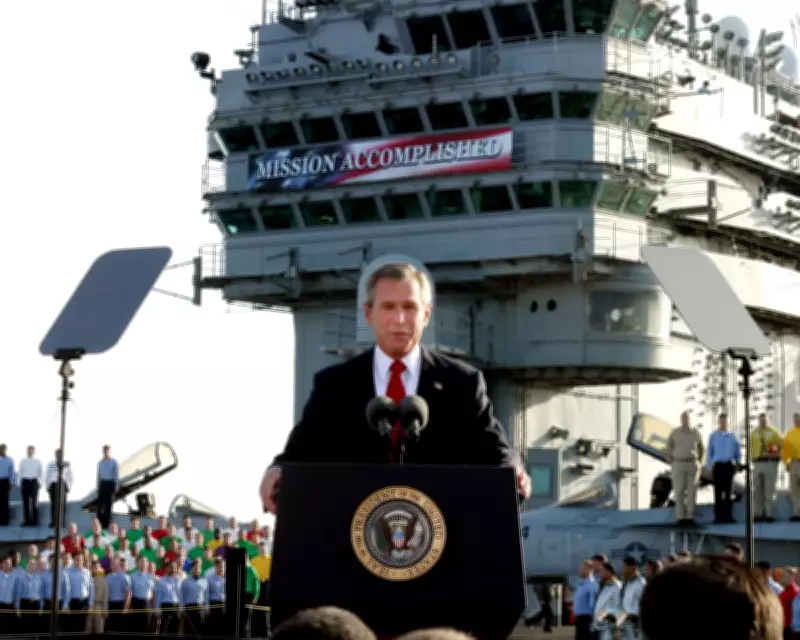
In May 2003, US President George W. Bush prematurely declared the end of major combat operations in Iraq, a moment that continues to cast a long shadow over British politics. As MPs in Westminster grapple with the implications of recent US-Israeli offensive strikes on Iran, the legacy of the Iraq conflict weighs heavily on parliamentary discussions.
Lessons from Iraq Inform Current Crisis Response
Calvin Bailey, the Labour MP for Leyton and Wanstead and a former wing commander with 24 years of service, keeps his Iraq medal from Operation Telic safely stored at home. Speaking at a meeting between Labour MPs and the prime minister, Bailey emphasised the importance of learning from past mistakes. "I was exposed to all the things happening in the lead-up to the invasion of Iraq, the groupthink, the unstoppable momentum," he stated. "While the current situation is materially different, I can speak with adequate weight and credibility."
Starmer's Stance on International Law and Military Planning
Prime Minister Keir Starmer has assured MPs that the government remembers the "mistakes of Iraq" and will always operate on a "lawful basis" with a "viable thought-through plan" regarding the Middle East crisis. This position echoes arguments Starmer made in 2003, when he wrote that flawed advice does not justify unlawful force and noted military commanders would not appreciate actions later deemed illegal.

Bailey highlighted that Starmer's approach aligns closely with guidance from "The Good Operation," a handbook based on lessons from the Chilcot inquiry. This includes initially denying the US permission for strikes aimed at regime change from British bases, citing international law, and later allowing limited defensive uses. "The decisions have been entirely consistent with Chilcot," Bailey said, but added that flexibility is crucial as situations evolve.
Political Reactions and Criticisms
Starmer's lack of full-throated support for US actions has drawn rebukes from former President Donald Trump, who quipped that Starmer "is not Winston Churchill." Conservative leader Kemi Badenoch has painted the prime minister as weak for relying on international law rather than taking a clear side. However, these criticisms may not harm Starmer's standing with his own MPs, with some suggesting it could bolster his position.
Other MPs, like Liberal Democrat leader Ed Davey—who voted against the Iraq war—offered cautious praise. "Starmer has done a better job than I expected by distancing himself from the US president," Davey said, though he expressed concern about a slippery slope from defensive to offensive action. He urged current MPs to reflect on the regrets of those who supported the Iraq invasion.
Enduring Lessons and Warnings
Labour MP Jon Trickett, another opponent of the 2003 invasion, warned that the most enduring lesson of Iraq is not just about intelligence disputes but the consequences of state collapse. "If the state falls apart under intervention pressure, you could imagine all kinds of disorder problems," he said, highlighting similar risks in Iran.
Former Conservative leader Iain Duncan Smith, who supported the Iraq invasion, reflected on the need for honesty in military actions. "The biggest lesson is don't put out false prospectuses—be honest about what you are doing," he stated, recalling accusations of a "culture of deceit" during the Iraq dossier row.
As Westminster navigates this complex geopolitical landscape, the spectre of the Iraq war serves as a stark reminder of the importance of lawful, well-planned military interventions and the heavy responsibility borne by decision-makers.