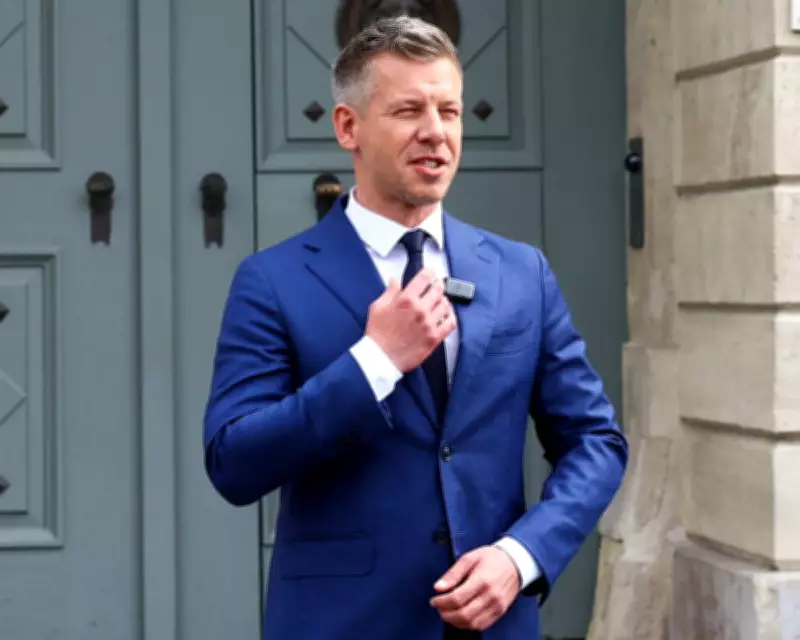
Hungary's Incoming Leader Targets State Media Overhaul
Hungary's prime minister-elect, Péter Magyar, has made a bold commitment to suspend state media news coverage, denouncing it as a "propaganda machine" that must be reformed. This announcement comes as Magyar prepares to assume office around mid-May, following his landslide election victory that ended Viktor Orbán's 16-year tenure.
Confrontation in Media Interviews
In two tense interviews on public radio and television this Wednesday, Magyar detailed his plans for the suspension, marking his first appearance on state media in 18 months. He accused these outlets of spreading fear and lies, drawing stark comparisons to propaganda from North Korea and Nazi-era Germany. "Every Hungarian deserves a public service media that broadcasts the truth," Magyar asserted during his interview on Kossuth state radio.
He emphasized that his government will enact a new press law and establish a media authority to ensure state media fulfills its intended public service role. However, the state media authority countered Magyar's claims of exclusion during the campaign, stating it had extended multiple invitations to him and his party.

Challenges in Dismantling Orbán's Legacy
The interviews and a subsequent meeting with Hungarian President Tamás Sulyok highlighted the significant hurdles Magyar faces as he seeks to dismantle Orbán's "illiberal democracy." During his time in power, Orbán's Fidesz party systematically placed loyalists across the Hungarian state, media, and judiciary, raising questions about their response to a Tisza-led government.
In the meeting, Magyar reiterated his call for President Sulyok, an Orbán supporter, to resign, citing his unworthiness to embody national unity and ensure legal respect. Sulyok agreed to "consider" these arguments, with Magyar noting that the new parliament is set to convene around May 6 or 7, potentially allowing his government to be sworn in by mid-May or earlier.
International Reactions and Trump's Stance
Globally, reactions to Magyar's victory have been mixed. Donald Trump, a staunch ally of Orbán, appeared to distance himself in recent comments, stating, "I think the new man's going to do a good job – he's a good man." Trump noted that Magyar, a former Fidesz member, shares similar views on migration, suggesting a potential alignment in policies.
Despite Trump's endorsement of Orbán during the campaign, including calls for Hungarians to vote for him and promises of U.S. economic support, he acknowledged Orbán was "behind substantially" in the election. U.S. Vice-President JD Vance, who visited Budapest to rally behind Orbán, described the trip as a show of support for a loyal ally, even while recognizing the likelihood of Orbán's loss.
Vance praised Orbán's "transformational" legacy, which included controversial measures such as attempts to ban Pride events and clamp down on independent media, but expressed confidence in working with Magyar's administration. Reporters Without Borders has consistently raised concerns about Hungary's media landscape, where Fidesz loyalists control an estimated 80% of media, underscoring the urgency of Magyar's proposed reforms.
In a social media post after the interviews, Magyar declared, "We have just witnessed the last days of a propaganda machine. After the formation of the Tisza government, we will suspend the news services of the 'public' media until its public service character is restored." This move signals a pivotal shift in Hungary's political and media dynamics as Magyar aims to restore integrity and truth in public broadcasting.