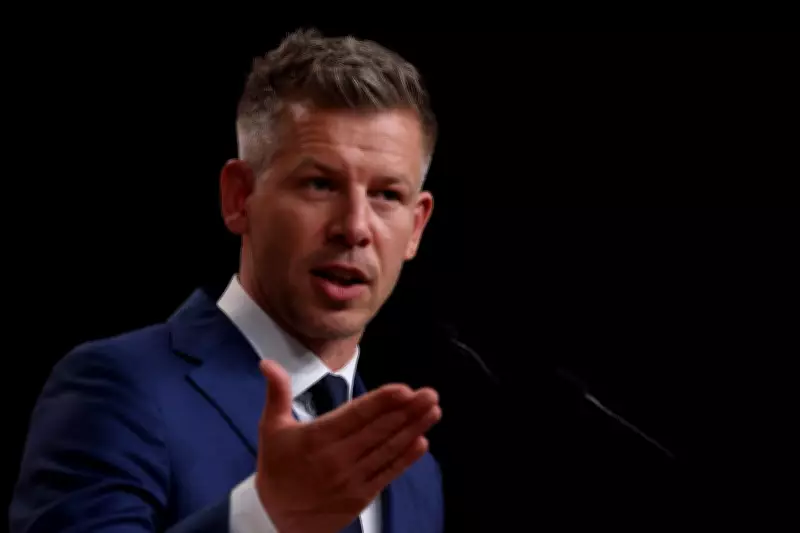
In a dramatic political development, Péter Magyar, Hungary's newly elected prime minister, has issued a forceful demand for President Tamás Sulyok to resign immediately. This call comes on the heels of Magyar's Tisza party securing a landslide victory in the recent election, effectively ending Viktor Orbán's 16-year tenure as leader.
A Scathing Attack on the Presidency
Magyar, in a speech delivered shortly after his election triumph, launched a scathing attack on President Sulyok, describing him as "unworthy" and "unfit" to represent the Hungarian nation. The incoming prime minister accused Sulyok of being a close ally of the previous administration under Orbán, suggesting that his continued presence in office would hinder the new government's reform agenda.
Constitutional Threats and Legislative Maneuvers
Magyar did not mince words in outlining his intentions should President Sulyok refuse to step down voluntarily. He explicitly threatened to amend the Hungarian constitution and other relevant legislation to force Sulyok from office. This bold move underscores Magyar's determination to reshape Hungary's political landscape and distance his administration from the Orbán era.

Election Victory and Reform Promises
The Tisza party's election victory marks a significant shift in Hungarian politics, with Magyar campaigning on a platform centered on combating corruption and improving Hungary's strained relationship with the European Union. Among his key proposed reforms are:
- Joining the European Public Prosecutor's Office to enhance anti-corruption efforts
- Restoring judicial independence to ensure fair legal processes
- Reestablishing media independence to promote unbiased reporting
- Suspending state media news broadcasts temporarily to guarantee impartiality
A Tense Political Atmosphere
The demand for resignation comes amidst a tense political atmosphere, highlighted by the fact that Magyar posed for a picture with President Sulyok just minutes before delivering his scathing attack. This juxtaposition illustrates the complex and rapidly evolving dynamics within Hungary's government as power transitions from Orbán's long-standing rule to Magyar's new administration.
Magyar's aggressive stance signals a clear break from past policies and sets the stage for potentially contentious constitutional battles. His commitment to sweeping reforms and his uncompromising approach to political opponents suggest that Hungary is entering a period of significant transformation, with implications for both domestic governance and international relations, particularly with the European Union.