Budapest Celebrates as Tisza Party Secures Landslide Victory in Hungarian Elections
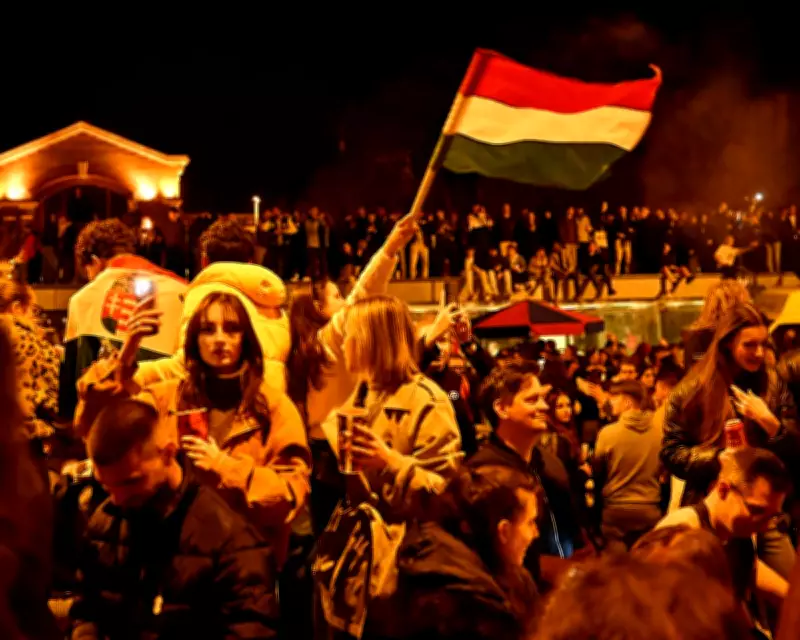
In a historic turn of events, Budapest erupted in jubilation on April 13 as Péter Magyar's Tisza party claimed a decisive victory in Hungary's parliamentary elections. Crowds gathered along the Danube riverbank, chanting patriotic slogans and celebrating the potential end of Viktor Orbán's long-standing populist rule. This outcome signals a profound shift not only for Hungary but for the broader European political landscape, with implications for Ukraine, the European Union, and global democracy.
A New Generation Demands Change
The election campaign was marked by a palpable energy for transformation, particularly among younger Hungarians. At a "system-changer" concert on Heroes' Square, reminiscent of the 1989 protests that saw a young Orbán call for communist reform, a new generation now rallied against his regime. Chants of "Filthy Fidesz!" and "Russians go home!" echoed through the square, highlighting widespread discontent with Orbán's alignment with Vladimir Putin and his erosion of democratic institutions.
In contrast, Orbán's final campaign speech on the Buda side of the river revealed the exhaustion of his government. Despite orchestrated efforts with flags and megaphones, the event lacked vitality, with Orbán appearing hoarse and irritable. Reports even surfaced of paid participants at Fidesz rallies, underscoring the regime's reliance on manipulation rather than genuine support.

Election Day: A Surge of Popular Will
As polls opened, uncertainty lingered, but record turnout figures quickly buoyed spirits. The results soon confirmed a landslide for Tisza, overwhelming gerrymandering, media control, and alleged vote-buying tactics. In a dramatic concession, Orbán phoned Magyar to admit defeat, prompting immediate celebrations. One observer exclaimed, "Voldemort is gone!" capturing the relief felt by many.
Magyar's acceptance speech on the Danube bank pledged to restore constitutional checks and balances, mend neighbourly relations, and strengthen Hungary's role in NATO and the EU. The crowd responded with chants of "Europa! Europa! Europa!" reflecting a renewed desire for European integration.
Challenges Ahead: Political and Economic Hurdles
With a two-thirds supermajority in parliament, Tisza has the power to enact constitutional changes, potentially overcoming obstacles similar to those faced in Poland's post-populist transition. However, challenges remain, including potential resistance from Fidesz, the president, and the constitutional court.
Economically, Hungary faces significant difficulties. Fidesz has depleted much of the annual budget in pre-election spending, and opaque contracts with Russia and China pose risks. Magyar's promises to maintain welfare payments and price controls may strain finances further. Access to frozen EU funds, totaling approximately €17 billion, will be crucial for recovery, alongside efforts to reclaim assets allegedly misappropriated under Orbán's regime.
European Support and Moral Obligations
The European Union and its member states have a vital role in supporting Hungary's transition. Rather than bureaucratic conditions, substantive political measures—such as ensuring media freedom and executive accountability—should guide assistance. Leaders like German Chancellor Friedrich Merz and Polish Prime Minister Donald Tusk are urged to engage directly with Hungary's new government.
Critically, the EU bears moral responsibility for enabling Orbán's democratic erosion through the misuse of funds. Figures like Manfred Weber, who long protected Fidesz, now congratulate Magyar, highlighting a shift in European politics. The indulgence of Orbán by leaders like Angela Merkel and Jean-Claude Juncker underscores the need for a more principled approach moving forward.
A Precedent for Democracy
Hungary's potential emergence from populism offers a beacon of hope globally. As the first European country to escape communism in 1989 and the first to fall into democracy-eroding populism in 2010, its success could set a vital precedent, even influencing nations like the United States. The spontaneous chants for Europe in Budapest streets symbolize a second "return to Europe," reinforcing the enduring appeal of democratic values.

This election marks not just a political change but a profound moment for Hungarian sovereignty and European solidarity, demanding vigilance and support to ensure a lasting democratic renewal.