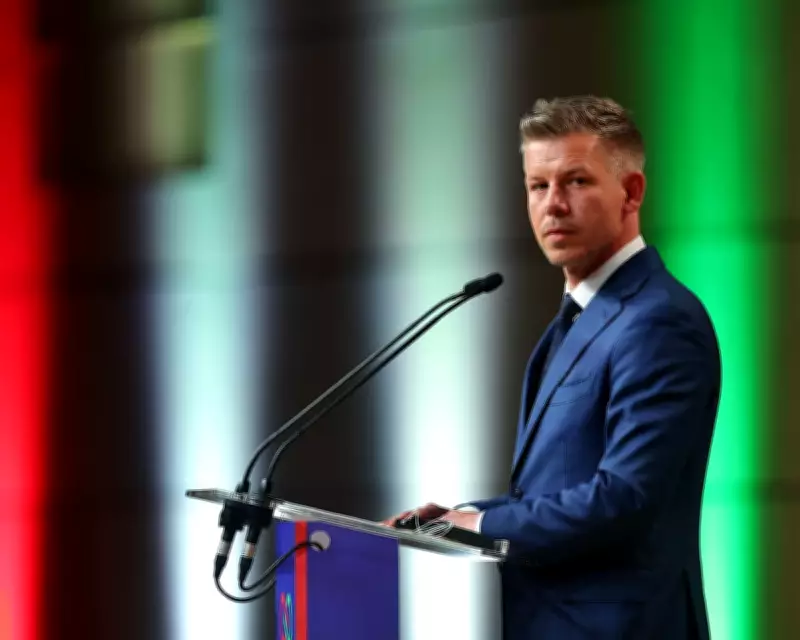
In a stunning political reversal, Hungary's recent election has delivered a seismic shift, with Péter Magyar's Tisza party securing a landslide victory that effectively ends Viktor Orbán's 16-year reign. This outcome, marked by a record voter turnout, represents not merely a change in government but a profound reclamation of democracy by Hungarian citizens.
A Historic Defeat for Orbánism
Viktor Orbán, who famously declared that his party needed to "win once, but then properly" ahead of his 2010 supermajority, has now seen that strategy turned against him. Orbán's tenure transformed Hungary into a soft autocracy, dismantling democratic checks and balances, marginalising minorities, and positioning the nation as a beacon for the global far right. His control over state media and gerrymandered constituencies made this defeat all the more remarkable.
The Rise of Péter Magyar
Péter Magyar, a former member of Orbán's Fidesz party who became disillusioned, campaigned on a robust anti-corruption platform. While not a progressive, Magyar's decisive mandate empowers him to initiate the arduous process of "de-Orbánising" Hungarian society. This involves rolling back egregious abuses where a self-serving elite enriched itself amid economic stagnation and misdirected EU funds.

The election results indicate a supermajority for Magyar's Tisza party, providing the political capital necessary for sweeping reforms. Early signs suggest swift action to address judicial independence, media freedom, and academic liberties—areas systematically undermined during Orbán's rule.
Implications for the European Union
Brussels has greeted Magyar's victory with understandable elation. For years, the EU has been locked in a "forever war" with Hungary, a member state that openly flouted core values on the rule of law and minority rights. Magyar's win signals a potential end to this conflict, offering hope for renewed cohesion.
Key Challenges and Opportunities
One of Magyar's immediate tasks will be to implement reforms that unlock €17 billion in suspended EU payments. This requires tangible progress in areas like judicial overhaul and safeguarding academic freedom. On foreign policy, Magyar shares Orbán's opposition to sending weapons to Ukraine and EU accession talks, and differences may persist on migration. However, he has signalled a willingness to compromise with Brussels, contrasting sharply with Orbán's confrontational stance.
Orbán often weaponised disagreements with the EU, particularly on Russian sanctions, aligning closely with Vladimir Putin's interests. In contrast, Magyar aims to be a leader with whom Brussels can constructively engage, prioritising dialogue over disruption.
Global Repercussions
The election outcome has significant international ramifications. Washington and Moscow have lost a leader valued for disrupting European unity. Recent efforts by US figures like Vice-President JD Vance and Donald Trump to bolster Orbán through visits and economic pledges failed to sway voters, potentially backfiring.
As global challenges mount, enhanced EU cohesion becomes imperative. Hungary's shift towards a more cooperative stance makes this goal more achievable, strengthening Europe's collective resilience.
A Triumph for Civic Mobilisation
Above all, this election underscores the power of civic engagement. Polls reveal that young voters, in particular, mobilised en masse to oust an authoritarian leader whose shadow loomed over their entire lives. Their demand was clear: not just a change of government, but a fundamental change of regime.
Magyar aptly summarised the sentiment, noting that citizens sought to reclaim their democracy after years of Orbánism. This spectacular success marks a globally significant moment, demonstrating that democratic renewal is possible even in the face of entrenched autocratic structures.