US House Press Gallery Renamed in Honour of Frederick Douglass
In a significant bipartisan gesture, the press gallery overlooking the United States House chamber has been officially renamed after the renowned abolitionist, writer, and presidential adviser Frederick Douglass. The dedication ceremony, orchestrated by Black lawmakers from both sides of the political aisle, took place during Black History Month, marking a moment of unity in a typically divided Washington.
A Bipartisan Effort to Commemorate Black History
The initiative to rename the gallery was spearheaded by Republican Representative Byron Donalds of Florida, who collaborated with his staff over the past year to identify meaningful ways to honour prominent Americans, including Black historical figures, within the Capitol complex. Donalds emphasised Douglass's enduring faith in America during his remarks at the dedication, stating, "When we talk about Frederick Douglass, we are talking about a man who possessed a profound and unshakable faith in Americans, in America’s family."
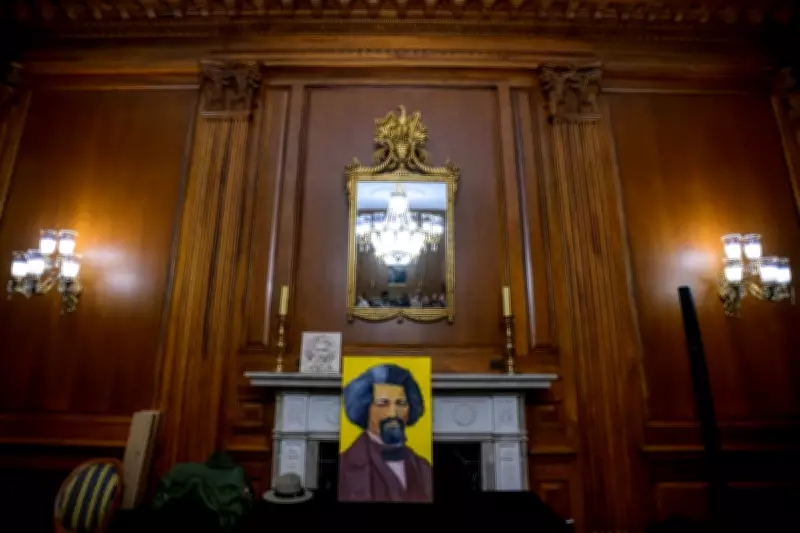
House Speaker Mike Johnson, a Republican, unveiled a plaque at the gallery's entrance, echoing this sentiment by declaring, "It’s an important thing for us to give honor where honor is due. That’s a biblical admonition. Frederick Douglass is certainly deserving of that honor." The ceremony attracted a diverse gathering, including prominent Black conservatives, activists, faith leaders, former Trump administration officials, and lawmakers, with the Library of Congress displaying artifacts from Douglass's life.

Historical Context and Contemporary Debates
Frederick Douglass played a pivotal role in American history, reporting on congressional proceedings during the Civil War and using his speeches and letters to President Abraham Lincoln and Republican congressmen to rally support for abolishing slavery. His legacy, however, emerges amid ongoing national debates over how race, history, and democracy are taught and understood in the United States.
Last year, President Donald Trump signed executive orders targeting historical education, alleging that institutions like the Smithsonian promoted "divisive, race-centered ideology" and that schools compelled children to adopt identities as "victims or oppressors." These orders, along with efforts to dismantle diversity, equity, and inclusion programs, have sparked criticism from opponents who argue they risk whitewashing history and exacerbating discrimination against minorities.
Supporters of the administration's policies, including some Black conservatives, contend they correct overly critical narratives about America's past. At the gallery dedication, Republican Representative Burgess Owens of Utah, who is Black, highlighted the importance of celebrating positive stories, saying, "This is what we did when I was growing up. We knew about our Black heroes. When we stop telling the good, then people start thinking that we’re not the country that is the promise that we gave."
Cross-Aisle Collaboration and Douglass's Legacy
Democratic Representative Steve Horsford of Nevada, who worked with Donalds on the renaming, stressed the value of bipartisan cooperation, noting, "I wouldn’t be here if it were not for the desire to want to work across the aisle, to not just recognize our history and culture, but to solve our problems that people face today." This collaboration underscores a rare moment of agreement in a polarised political landscape.
Frederick Douglass's life story is one of remarkable resilience. Born into slavery in Maryland, he escaped to New York and became a leading voice for abolition and civil rights, later residing in Washington, D.C., where his home is now a national park. Self-educated, he delivered powerful speeches, such as his 1852 address "What to the Slave Is the Fourth of July?" which critiqued America's contradictions regarding slavery. In an 1867 essay, he urged Congress to grant Black men voting rights and advocated for robust Reconstruction efforts to foster multiracial democracy.

Douglass, who celebrated his birthday on Valentine's Day as a tribute to his mother's endearment, was praised by Donalds for his ability to "love this country enough to tell the truth about it." Donalds added, "His life story, from the field, from the slavery fields to the world stage, is one of the greatest narratives of perseverance in U.S. history." The gallery renaming serves as a lasting tribute to his enduring impact on American society and the ongoing pursuit of justice and equality.