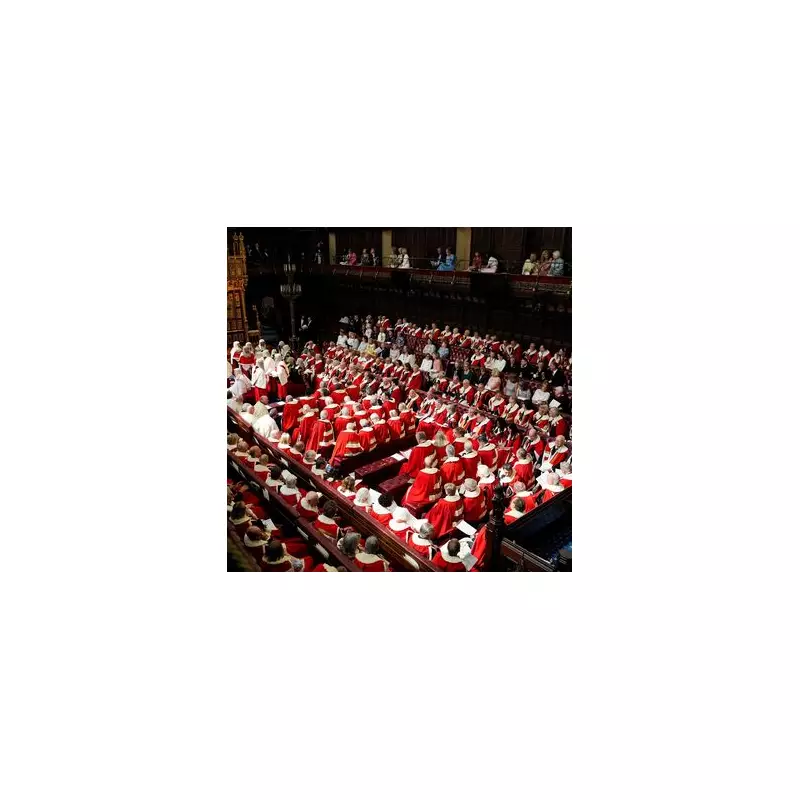
The House of Lords has voted to grant additional parliamentary time to the controversial Assisted Dying legislation, following intense criticism that procedural delays were jeopardising the bill's future. Peers unanimously passed a motion for "further time" after a heated debate where they were accused of damaging the chamber's reputation and attempting to talk the bill "out of existence".
Accusations of 'Filibustering' and a Reputation at Stake
During a one-hour debate on Thursday, peers were warned that the public perception of the Lords was being severely harmed by apparent "time-wasting". The motion, proposed by Labour peer Lord Falconer, who is steering the Terminally Ill Adults (End of Life) Bill through the upper house, highlighted the urgent need for progress. He cautioned that if the bill does not complete its Lords stages by the end of the parliamentary session—expected in May—it will fail.
The core of the delay stems from an extraordinary volume of amendments. A group of just eight unelected peers have tabled a staggering two-thirds of the 1,100 proposed amendments. The campaign group Dignity in Dying has alleged that opponents engaged in a "sweepstake" over who could stall progress the most, and that an email was circulated soliciting ideas for even more amendments.

A Race Against the Parliamentary Clock
Lord Falconer laid out the stark arithmetic facing the bill. Despite 32 hours of scrutiny already spent, with another 50 hours scheduled, the pace has been glacial. In four committee days totalling 17 hours, only 10 of the 84 amendment groups were discussed. "If we continue at the rate we are going, this House will fail to complete the process of scrutiny… the bill will fail through lack of time," he told the chamber.
His warning was echoed by Baroness Butler-Sloss, who stated unequivocally that "the reputation of this house is at stake". Her intervention is understood to have persuaded several peers to support the motion for extra time. The bill, which would allow terminally ill adults the choice of an assisted death under strict safeguards, has already passed two votes in the elected House of Commons but has been stuck in the Lords since June 2025.
Personal Anguish and Political Argument
The debate is charged with profound personal testimony. Louise Shackleton, whose husband Antony travelled to Dignitas in December 2024 to end his life after a battle with Motor Neurone Disease, condemned the delays as "pure filibustering" and "vicious and undemocratic". She revealed she was under investigation for almost a year after accompanying her husband.
"The Bill will allow people to live what is left of their lives without terror or anxiety regarding what their death will look like," she said. "The people who need this choice most don't have the time to wait."
Opponents, however, argue the bill is fundamentally flawed. Disabled peer Lord Kevin Shinkwin called it "poorly drafted" and "unsafe", arguing the volume of amendments reflected the bill's poor quality. "We are simply doing our job without fear or favour as Parliament's Revising Chamber," he stated, adding, "You can't make a silk purse out of a sow's ear."
The Lords' decision to allocate more time offers a crucial lifeline to the legislation. All eyes will now be on whether peers use this time for substantive scrutiny or if the accusations of deliberate obstruction continue to dominate the bill's fraught passage through Parliament.