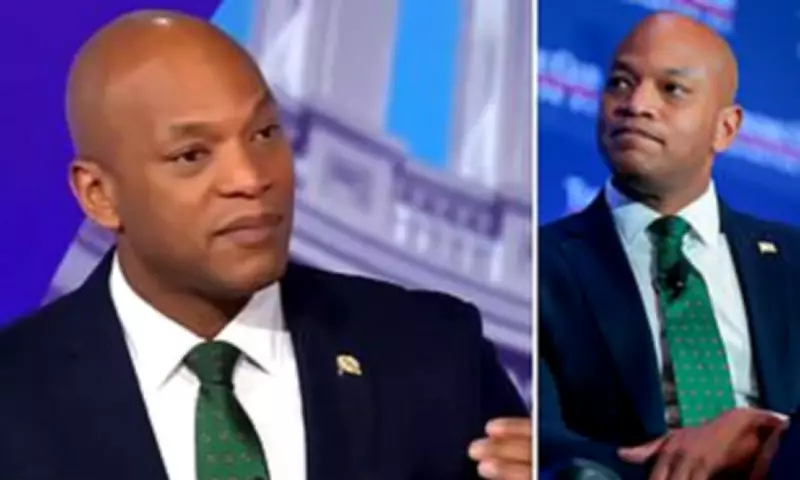
Maryland's Democratic Governor Wes Moore skillfully dodged a direct question from a CNN anchor regarding emerging evidence that appears to contradict a personal family narrative he has frequently shared about ancestral exile. The tense exchange occurred during Wednesday's broadcast of The Arena, where anchor Kasie Hunt pressed the governor about a Washington Free Beacon report challenging the veracity of his story.
Historical Records Versus Family Narrative
The controversy centers on Governor Moore's account of his maternal grandfather, James Joshua Thomas, and great-grandfather, Reverend Josiah Johnson Thomas, being forcibly driven from the United States to Jamaica by Ku Klux Klan violence during the 1920s. However, investigative reporting from the right-leaning Washington Free Beacon publication presents church documents and historical records suggesting a different reality.
According to the Free Beacon's February 4 report by journalist Andrew Kerr, archival materials from the Protestant Episcopal Church in Pineville, South Carolina—the family's hometown—indicate Reverend Thomas's departure was actually a routine professional transfer. The documents reportedly show he accepted an appointment to replace a deceased pastor in Jamaica, where he was originally from, rather than fleeing racial terror.

The CNN Interview Exchange
During the CNN segment, anchor Kasie Hunt directly confronted Governor Moore with these contradictory records. "And those church records that show that one of your family members left voluntarily to take over for someone who had passed away, those records are wrong?" Hunt asked pointedly.
Moore's response notably avoided addressing the specific documentation. "They should really ask the Ku Klux Klan about what their activities were during the 1920s," the governor replied curtly, redirecting the question toward the hate group rather than the historical evidence presented.
Earlier in the interview, Hunt had framed the discrepancy carefully. "The Free Beacon recently wrote about a story that you often tell about your great-grandfather and your family, and how and why they left the United States," she began. "They say that the story is—they report—they look at church records, they say the story is not true, that the Ku Klux Klan did not force your family to leave, your family left voluntarily."
Governor's Defense and Emotional Response
Governor Moore firmly defended his family's oral history during the exchange. "There is no truth to what a right-wing blog writes about me. No. There is not. Because I know my family's history," he asserted with conviction.
The 47-year-old governor, who made history as Maryland's first African-American governor when sworn in in 2023, elaborated emotionally about his grandfather's legacy. He emphasized how his grandfather returned to the United States, became the first Black minister in the history of the Dutch Reform Church, and maintained what Moore described as "maybe the most patriotic man I've ever met."
Moore also referenced threats both his grandfather and great-grandfather faced as pioneering African-American religious leaders in both the United States and overseas, though he didn't specifically connect these threats to the 1920s departure questioned in the report.
Additional Contradictory Evidence
The Free Beacon report includes additional findings that challenge Moore's narrative. A Virginia Commonwealth University map examining Ku Klux Klan presence in the 1920s reportedly indicates no active KKK chapter operated in Pineville, South Carolina, at the time of the Thomas family's departure.
Despite these contradictory records, Governor Moore has stood firmly by his version of events. In a subsequent statement to Fox News on Thursday, he declared, "It's hurtful, and it's offensive," regarding the Beacon's reporting while maintaining his family's account.
Political Implications and Context
The controversy emerges as Governor Moore, a rising star in Democratic politics, has recently denied rumors about potential presidential ambitions in 2028. The personal family narrative in question has been part of his public identity and political storytelling, making the historical challenge particularly sensitive.

The Washington Free Beacon has maintained its reporting stands accurate, while the clipped interview segment has been widely reshared on social media platforms, particularly by the reporter who authored the original investigation. This exchange highlights ongoing tensions between personal family histories, documented records, and political narratives in contemporary American discourse.