Political Killing in France Exposes Left's Rifts as Far Right Seizes Opportunity
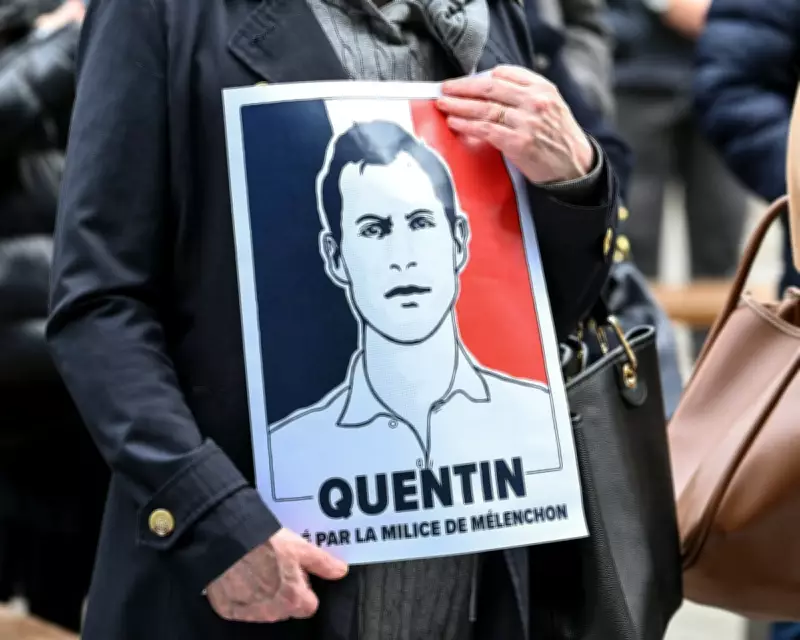
The violent death of Quentin Deranque, a 23-year-old mathematics student and far-right activist, has inflamed political divisions in France, casting a harsh spotlight on the radical left and providing a strategic opening for the far right. This incident occurs against the backdrop of upcoming municipal elections and next year's presidential race, heightening tensions across the political spectrum.
Mélenchon's Miscalculation and the Jeune Garde Connection
In 2023, Jean-Luc Mélenchon, the firebrand leader of La France Insoumise (LFI), made a critical error by publicly endorsing La Jeune Garde, a group of young antifascist activists founded in Lyon in 2018. This organisation, known for its politically inexperienced members and history of violent confrontations with far-right groups, was banned in 2025. Now, its members are suspected of involvement in Deranque's killing, which has convulsed the nation.
Deranque died in Lyon on February 14, two days after a street confrontation allegedly involving Jeune Garde members during a far-right protest against a conference by Rima Hassan, an MEP from Mélenchon's party. Eleven suspects, including a parliamentary aide to an LFI MP, have been arrested. Despite this, Mélenchon continues to defend the group, highlighting his close ties since attending a Jeune Garde summer camp in 2023. Critics argue this reflects his unwillingness to admit a flawed judgment, underscoring a polarising strategy that many deem dangerous.

Fallout and Far-Right Exploitation
The case has sparked widespread outrage, with far-right groups marching in Lyon to mourn Deranque. It has also rocked LFI, raising serious questions about Mélenchon's autocratic leadership and the party's internal dynamics. Among those arrested are associates of Raphaël Arnault, an LFI MP and former Jeune Garde spokesperson convicted of aggravated assault in 2022. Another suspect had prior charges for a violent antisemitic assault in 2024, further tarnishing LFI's image.
Jordan Bardella, president of the far-right National Rally (RN), has capitalised on the tragedy, calling for a cordon sanitaire around LFI and using the fallout to gain mainstream acceptance. The RN views this as an opportunity to detoxify its image ahead of the 2027 presidential election, despite its historical ties to French fascism, including former Vichy collaborators and far-right paramilitaries. This revisionism allows the RN to redefine anti-fascism as the "new fascism," a brazen distortion that has drawn support from Macronist centre-right and Les Republicains parties.
Broader Implications for the Left and International Reactions
The French left faces an impossible dilemma: criticising LFI aids the anti-left offensive, while supporting Mélenchon endorses his deleterious strategy. Raphaël Glucksmann, leader of the centre-left Place Publique, has severed ties with LFI, accusing Mélenchon of brutalising politics. This ostracisation indirectly attacks the broader left, both in France and internationally.
Internationally, the far right has exploited the tragedy. The US State Department cited Deranque's death as evidence of "violent radical leftism," while Italy's Prime Minister Giorgia Meloni called it "a wound for the whole of Europe." This mirrors past efforts, such as Donald Trump's classification of Antifa as a terrorist movement, aiming to criminalise antifascist struggles globally.
Ultimately, Deranque's death has not only exposed deep flaws within the French left but also provided the far right with a potent tool to reshape political narratives, threatening democratic integrity and historical truth in the process.