

As the 250th anniversary of the Declaration of Independence approaches on July 4, a long-standing debate over the religious intentions of America's Founding Fathers has gained renewed intensity. Historian Gregg Frazer, a professor at The Master's University, finds himself at the center of this contentious discussion, arguing that the founders did not establish a Christian nation.
Nuanced Views on Founders' Faith
Frazer notes that his nuanced perspective often frustrates both sides of the debate. He asserts that key founders either rejected core Christian doctrines or held vague beliefs, disappointing Christian audiences. However, he also counters the portrayal of founders as deists or anti-religious skeptics, emphasizing that most were religious in some capacity.
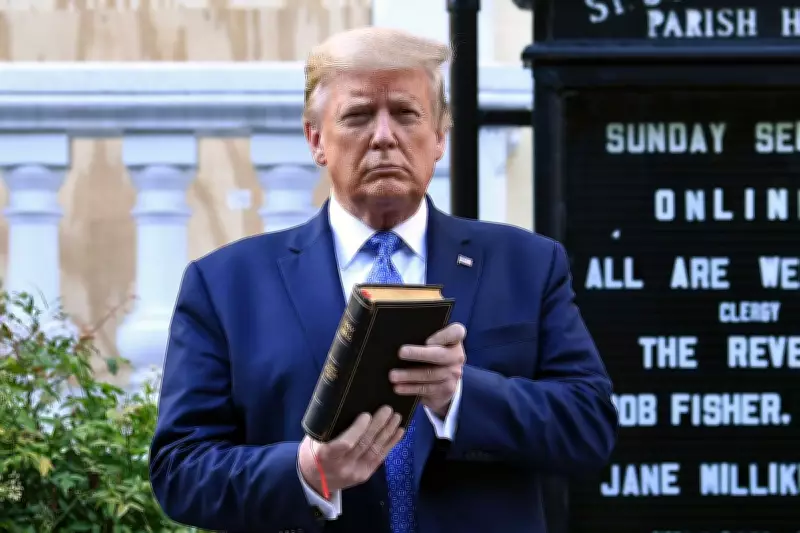
This debate has intensified with the "America 250" celebrations, where some Christian activists and authors claim the U.S. was founded as a Christian nation. President Donald Trump has promoted "America Prays," culminating in a May 17 gathering on the National Mall, while Defense Secretary Pete Hegseth proclaimed that "America was founded as a Christian nation … in our DNA."

Historical Perspectives
Critics push back against this narrative. "Most — nearly all — serious historians agree that America was not founded as a Christian nation in any meaningful legal, philosophical, or constitutional sense," states Americans United for Separation of Church and State. Yet a 2022 Pew Research Center report found that six in 10 U.S. adults believe the founders intended America to be a Christian nation.
Historian John Fea, author of "Was America Founded as a Christian Nation?", explains that people seek a "usable past" to advance political or cultural agendas. He notes that taxation and representation were more central to the Revolution than religion.
In contrast, historian Mark David Hall argues that Christianity did significantly impact the founding. He points to the founders' emphasis on human dignity, rooted in biblical teachings, and the system of checks and balances reflecting Protestant views on human sin. Hall also notes that early presidents and Congresses issued prayer proclamations, and some states sponsored churches after the Constitution's ratification.
Constitutional and Declaration Language
The Constitution contains no reference to any specific religion beyond the date — "in the year of our Lord" 1787. It forbids religious tests for officeholders, and the First Amendment guarantees religious freedom while prohibiting the establishment of a national religion. Frazer argues that the Bible is not cited in Constitutional Convention proceedings or the Federalist Papers, with founders drawing on Enlightenment thinking for concepts like equality and accountable government.
The Declaration of Independence, however, uses religious language, stating that rights come from the "Creator" and appealing to "Nature's God." Frazer notes that founders like Thomas Jefferson used terms acceptable to Christians and others.
Religious Landscape of the Founders
At the time of the Revolution, most colonists were Protestant, but church participation had declined. Rationalistic religion influenced many elite founders, including those who drafted key documents. Freemasonry also played a role. While some founders like John Jay were devout Christians, others like Jefferson, John Adams, and Benjamin Franklin believed in God but not Jesus' divinity. George Washington attended church but avoided sacraments and was an active Freemason.
Frazer describes many founders as "theistic rationalists" rather than deists, believing in an active God. Washington, for instance, believed divine Providence saved his life. Even skeptics saw religion as important for forming virtuous citizens. Many scholars contend that the First Amendment created a religious free market, allowing Christianity to flourish.






