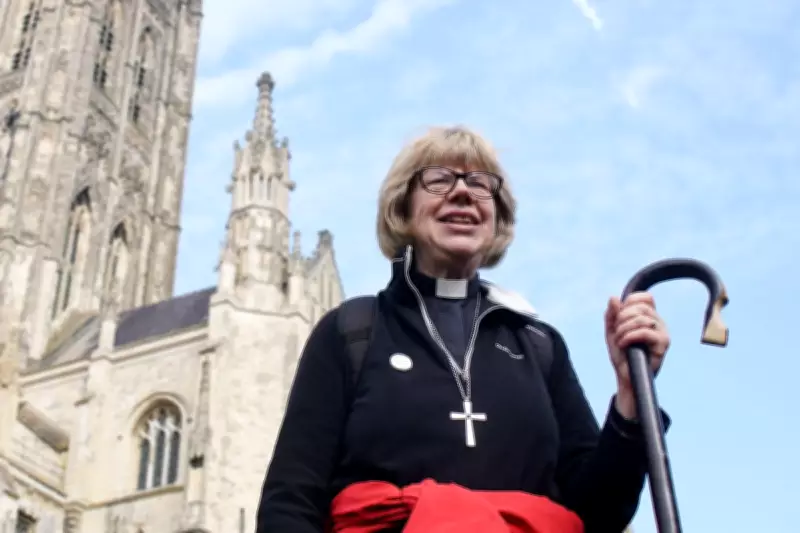
First Female Archbishop of Canterbury Enthroned Amid Historic Challenges
In a landmark moment for the Anglican Church, Dame Sarah Mullally has been enthroned as the first female Archbishop of Canterbury. The historic appointment, announced last year after a confidential selection process chaired by former MI5 head Lord Jonathan Evans, breaks what many have called the "stained-glass ceiling" within the Church of England.
Mullally, a former chief nurse in the NHS who was awarded a damehood for her service, has served as Bishop of London for nearly eight years. Her selection by the 17-strong Crown Nominations Commission was widely seen as a predictable choice, given her reputation as a highly capable administrator who helped Archbishop of York Stephen Cottrell manage the Church following Justin Welby's shock resignation ten months ago.
Conservative Opposition and Global Anglican Tensions
Despite the historic nature of her appointment, Mullally's enthronement is not without controversy. Conservative factions within the Church of England, including several bishops who refuse to receive Communion from women, have expressed opposition. The appointment also presents challenges within the 85-million-strong worldwide Anglican Communion, where Mullally will serve as primus inter pares among other primates.

Her previous support for special prayers blessing same-sex relationships has drawn criticism from traditionalists, while relations with other Christian denominations—particularly the Orthodox churches and Roman Catholic Church—will require delicate navigation. The potential image of Mullally processing to an altar in Rome alongside Pope Leo would represent a historic moment, but one that could prove controversial for many observers.
Safeguarding Scandals and Declining Congregations
The shadow of safeguarding failures and child sex abuse cases that plagued Justin Welby's tenure continues to hang over the Church of England. Abuse survivors have expressed concern about Mullally's involvement in controversial safeguarding issues during her previous roles.
In her appointment statement, Mullally acknowledged the harm and mistrust caused by safeguarding failures within the Church, stating: "We must all be willing to have light shone on our actions, regardless of our role in the Church." This commitment to transparency will be tested as she addresses these ongoing challenges.
Beyond safeguarding concerns, Mullally faces the monumental task of reversing declining church attendance. Recent figures show just 1.02 million people attended Anglican services in 2024, while the 2021 Census revealed that less than half the population of England and Wales now identify as Christian.
A Calm Presence During Turbulent Times
At 64 years old, with six years ahead in her leadership role, Mullally brings a calm, compassionate approach shaped by her nursing background. Church members hope this steady presence will provide stability after what many describe as a "rollercoaster" period for the institution.
As Mullally herself acknowledged, her new role is both complex and straightforward—ultimately about offering people hope. Whether her background in healthcare administration can provide the right medicine for the Church of England's various ills remains to be seen, but her historic appointment undoubtedly marks a new chapter for the ancient institution.