Has the Hard Right Finally Reached Its High Water Mark?
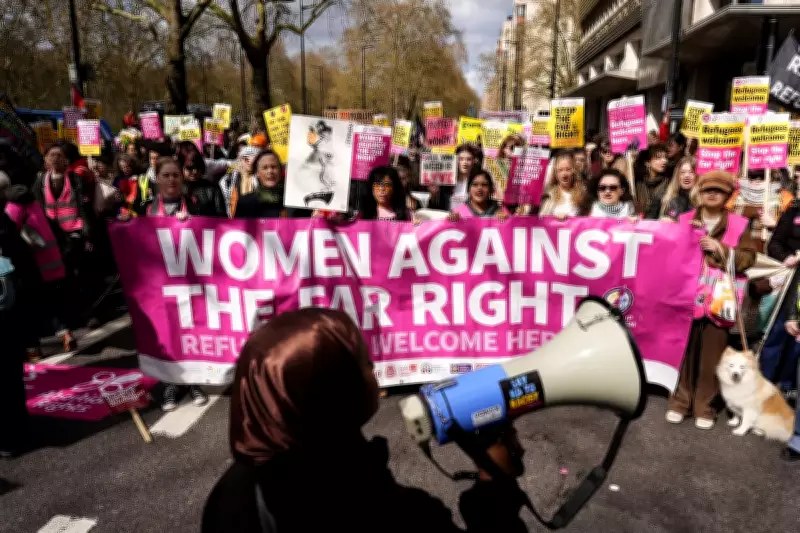
As protesters march through London to oppose the far right, recent elections in Europe and beyond reveal a significant political shift. The left is winning back ground, according to analyst Ben Judah, partly due to the worldwide unpopularity of Donald Trump's authoritarian and aggressive presidency. This trend offers a case for optimism in the European left, with parties across the continent achieving notable victories.
France: A Ceiling for the Far Right
In France, Marine Le Pen's party faces growing challenges in its bid for the Élysée Palace. Recent municipal elections served as a bellwether, exposing a ceiling of respectability and a reputation for municipal incompetence. Tactical voting patterns held the far right back, preventing them from capturing major cities crucial for building momentum toward the 2027 presidential vote.
Marseille, the nation's second city, rejected the Rassemblement National, while Toulon narrowly did the same. Nîmes booted out its right-wing mayor, though Carcassonne and Nice went the other way. However, Le Pen's forces needed far stronger results to demonstrate a clear path to the presidency. Paris saw the right hit more than a ceiling; the failure of Rachida Dati to dislodge Anne Hidalgo's socialist successor, Emmanuel Grégoire, shows the Parisian left has found a winning formula.

Hidalgo's legacy of mass pedestrianisation, cycle lane expansion, and green planting has transformed Paris into a greater Amsterdam, where bikes now make twice as many journeys as cars. The city has explicitly prioritised young people over the car-owning grande bourgeoisie, and despite intense opposition from the French right and media allies, Parisians backed this project to continue. This created another hard ceiling for the right, proving that doing nice things resonates with voters.
Italy and Denmark: Trumpism Becomes a Liability
In Italy, Georgia Meloni's defeat in a referendum on constitutional reform of the judiciary has shattered her all-powerful image. Italian voters, against expectations, turned sceptical on granting the government more powers over the courts. The left effectively warned of parallels to Viktor Orbán's Hungary and Donald Trump's America, framing the debate around democratic safeguards.
Meloni's loss coincides with Trump's wildly unpopular and poorly planned war on Iran, whose economic repercussions are racing toward Europe. This marks a turning point in Italy, where Trump has shifted from an asset to a liability for the prime minister. Similarly, in Denmark, the right once comfortably expected to return to power, but geopolitical turmoil under Trump—including threats to annex Greenland—disrupted this.
Danish forces reinforced Greenland with plans to blow up runways to prevent an easy invasion path. While Mette Frederiksen and her bloc didn't secure a majority, intense coalition talks will follow. The right in Denmark, as in Italy, has paid a heavy price for Trumpism, showing how global politics can sway domestic outcomes.
A Broader Trend: The Left's Resurgence
There is too much pessimism in the Anglosphere about the global left's prospects, often driven by algorithms on platforms like X that promote right-wing content and set narrative tones for journalists. Since Trump's return to power, countries like Canada, Australia, and Norway demonstrate how liberals and the left can bounce back and win big in elections.
These victories combine a focus on cost of living, a degree of distance from the United States, and toughness on borders and security. In Europe, the left's formula adds elements like Rob Jetten's Dutch optimism, with millennial enthusiasm for new towns, Hidalgo's Parisian public realm improvements, and Frederiksen's Danish security message. As the right finds Trump a bad bet for their brands, this blend proves effective.
The Labour Party should take note as May elections approach, learning from these European examples to craft a winning strategy. The hard right may have reached its high water mark, with the left poised to reclaim influence in an era defined by Trump's divisive legacy.