EU Resurgence Across the Continent: Hungary's Political Earthquake and Britain's Regulatory Shift
In a seismic political development, Hungary has decisively rejected the pro-Russia leadership of Viktor Orban after sixteen years of increasingly authoritarian rule. Simultaneously, Britain under Prime Minister Keir Starmer is pursuing a closer relationship with the European Union through regulatory alignment mechanisms. These parallel developments signal a significant continental realignment as the EU regains political relevance across member states and former members alike.
Hungary's Democratic Reawakening
European Commission President Ursula von der Leyen's spontaneous social media declaration captured the moment perfectly: "Hungary has chosen Europe." Her statement, while diplomatically unconventional, accurately reflected the election's outcome where Hungarian voters overwhelmingly rejected Orban's increasingly truculent leadership.
During his lengthy tenure, Orban systematically eroded Hungary's post-Cold War democratic institutions through media control and judicial manipulation. His foreign policy became openly aligned with Vladimir Putin's Russia, despite Hungary's formal membership in both the European Union and NATO. This created constant friction with Brussels, particularly regarding migration policies and support for Ukraine.

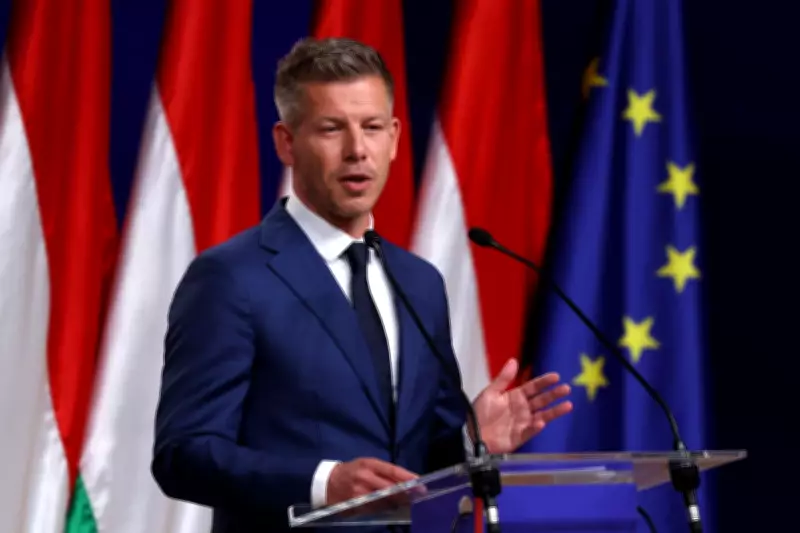
The new Prime Minister, Peter Magyar, represents a dramatic shift. Though not a liberal and once an Orban disciple, Magyar understands Hungary's future lies with Europe rather than as a Russian vassal state. His landslide victory, achieved despite potential foreign interference in the election, echoes the spirit of Hungary's 1956 uprising against Soviet oppression.
Britain's Technical Realignment
Meanwhile, at the opposite end of the continent, Britain is pursuing a more technical but equally significant resetting of relations with the European Union. The Labour government has established a parliamentary mechanism for "dynamic alignment" with EU single market rules, allowing certain product standards and regulations to be seamlessly adopted into British law.
This approach has drawn criticism from Conservative and Reform UK politicians who label it a "betrayal of Brexit." However, the government maintains it represents practical implementation of Labour's manifesto commitment to "tear down unnecessary barriers to trade" without rejoining the single market or customs union.
Further progress is anticipated on veterinary agreements to reduce border checks and food costs, while Britain continues developing its defence coalition with France and Germany through the informal "E3" group. These developments have not compromised Britain's independent trade agreements with nations including America, Australia, and India, nor its autonomous regulatory approach to artificial intelligence.
Broader Continental Implications
These parallel developments occur against a challenging geopolitical backdrop where America has grown hostile toward the EU and UK, NATO faces visible fractures, and China emerges as a superpower challenger. In this context, the European Union's relevance has increased substantially.
For years, Christian nationalist populists across Europe have successfully blamed the EU for domestic problems, most spectacularly during Britain's Brexit referendum nearly a decade ago. The current shifts in both Hungary and Britain suggest growing recognition that, despite its imperfections, the European Union remains the best guarantor of prosperity and freedoms for member nations.
As Hungary embraces its European path with renewed vigor and Britain pursues practical alignment, the continent appears to be entering a new phase of political realignment where the European project gains renewed appreciation and relevance.