
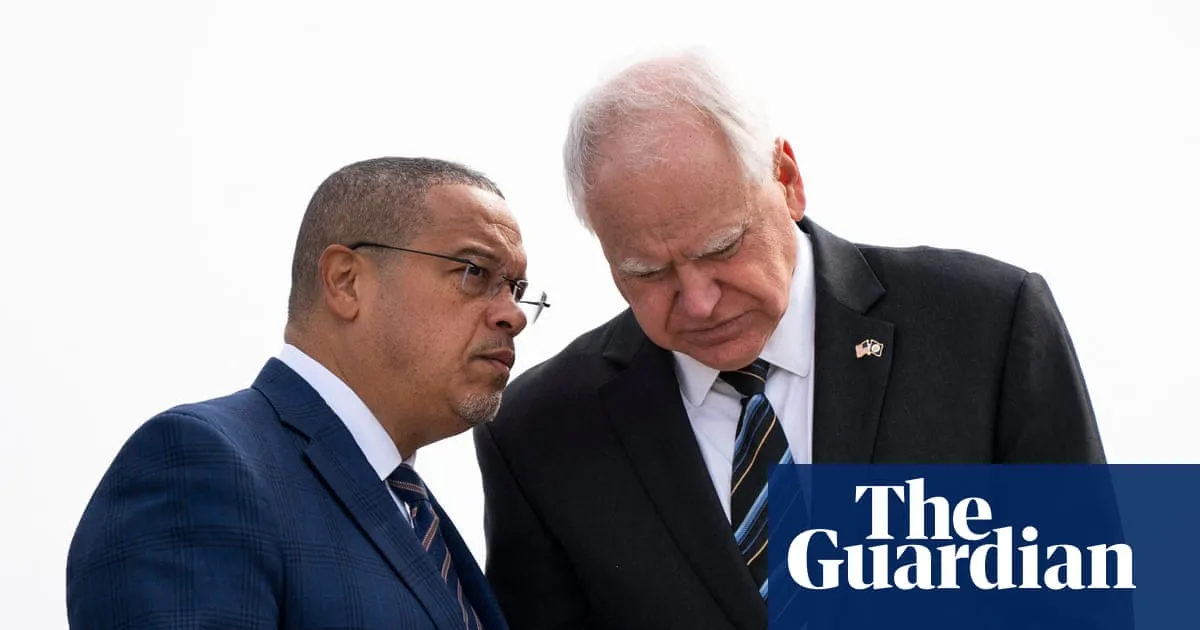
A federal judge has quashed subpoenas issued by the US Department of Justice to Minnesota Governor Tim Walz, Attorney General Keith Ellison, Minneapolis Mayor Jacob Frey and other local officials, ruling they were politically motivated and lacked proper legal foundation.
The subpoenas were issued in January as part of a Trump administration investigation into whether the officials obstructed federal immigration enforcement during a controversial crackdown in the state. The operation resulted in the deaths of two US citizens, Renee Good and Alex Pretti.
Chief Judge Patrick J Schiltz of the US District Court for Minnesota unsealed an order on Monday describing the subpoenas as unlawful, noting that the government had failed to identify a plausible investigatory justification. He wrote that the 'dominant purpose' was to 'coerce Minnesota officials into assisting the federal government with enforcing civil immigration law and to harass and retaliate against them'.
The judge, appointed by Republican President George W Bush, cited violations of the 10th Amendment, which protects states' rights. He highlighted that the Justice Department could not point to a single instance where a county employee actually obstructed a law enforcement officer, despite claiming four instances of obstructive conduct, including a separation ordinance and internal guidance.
Attorney General Ellison described the quashing of subpoenas as an 'extremely rare step' by the court. Governor Walz called the ruling 'a victory for the rule of law and our democracy' and stressed the importance of an independent judiciary.
A Justice Department spokesperson said the department takes obstruction of federal law enforcement seriously and will continue to act in compliance with the law. The ruling comes amid broader allegations that the Trump administration used federal powers to target political opponents.




