DHS Shutdown Looms as Senate Democrats Block Homeland Security Funding Bill
A shutdown of the United States Department of Homeland Security now appears virtually certain after Senate Democrats blocked a critical funding bill on Thursday. The dramatic vote unfolded as lawmakers prepared to depart Washington for a scheduled ten-day recess, with negotiations between Democratic leaders and the White House over new immigration enforcement restrictions having completely stalled.
Stalled Negotiations and Rejected Proposals
In recent days, Democrats and the White House have exchanged proposals, with Democrats pushing aggressively for significant curbs on President Trump's extensive immigration enforcement campaign. Their core demands include improved identification protocols for US Immigration and Customs Enforcement officers and other federal law enforcement personnel, the establishment of a new code of conduct for these agencies, and a greater reliance on judicial warrants for operations.
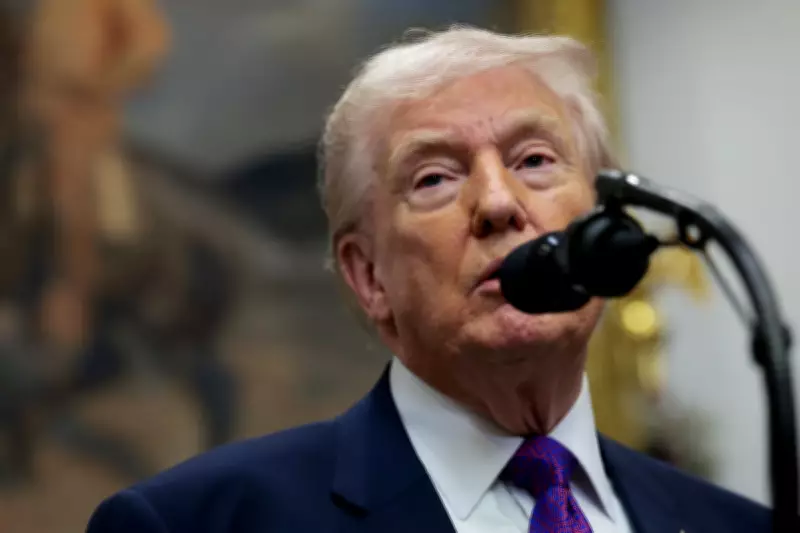
The White House submitted its latest offer late on Wednesday, but President Trump told reporters on Thursday that some Democratic demands would be "very, very hard to approve." Democrats swiftly rejected the undisclosed White House proposal, arguing it failed to include sufficient restrictions on ICE, particularly in the wake of fatal shootings involving two protesters last month.

Senate Democratic Leader Chuck Schumer asserted that Americans demand accountability and "an end to the chaos," moments before the Senate voted down the funding legislation. "The White House and congressional Republicans must listen and deliver," Schumer stated firmly.
Lawmakers on Standby as Shutdown Inevitability Grows
Lawmakers in both the Senate and House of Representatives were officially put on notice to return to Washington at short notice should a last-minute deal be reached to avert the anticipated shutdown. Senator Patty Murray, the leading Democrat on the Senate Appropriations Committee, informed reporters that Democrats would present a formal counterproposal to the White House over the coming weekend. "They haven't taken it seriously yet," she remarked pointedly regarding Republican engagement.
Following the decisive vote, Senate Majority Leader John Thune conceded that a shutdown now seemed inevitable. "The people who pay the price are the people of the agencies who are not going to be getting paychecks," Mr. Thune stated, highlighting the human cost of the political impasse.
Operational Impacts and Agency Strain
The immediate operational impact of a DHS shutdown is expected to be relatively minimal for immigration enforcement. Operations are unlikely to be halted, as President Trump's tax and spending bill passed last year allocated approximately $75 billion to ICE specifically for expanding detention capacity and bolstering enforcement activities.
However, other vital agencies within the sprawling department could face significant challenges over time. These include the Transportation Security Administration, the Federal Emergency Management Agency, the Secret Service, and the US Coast Guard. Gregg Phillips, an associate administrator at FEMA, testified this week that while its disaster relief fund currently holds sufficient balances for immediate emergency response, it would become "seriously strained" in the event of a catastrophic disaster. Mr. Phillips warned that long-term planning and coordination with state and local partners would be "irrevocably impacted" by a prolonged funding lapse.
Core Sticking Points: Warrants and Enforcement
The issue of judicial warrants remains a profound sticking point in the negotiations. Senator Thune, who has urged bipartisan cooperation, indicated that this Democratic demand would be "very hard for the White House or for Republicans." Despite this, he suggested, "there are a lot of other areas where there has been give, and progress."
Senator Schumer and House Democratic leader Hakeem Jeffries insist that DHS officers should not enter private property without a judicial warrant and that warrant procedures and standards must be substantially improved. They are seeking an end to so-called "roving patrols" of agents targeting individuals in streets and private homes.

Most immigration arrests are currently conducted under administrative warrants—internal documents authorising arrest but not forced entry into private spaces without consent. Traditionally, only judge-signed warrants grant such authority. An internal ICE memo obtained last month reportedly authorises officers to use force for entry based solely on a narrow administrative warrant for individuals with a final removal order, a move critics argue flagrantly infringes upon Fourth Amendment protections against unreasonable search and seizure.
Partisan Tensions Erupt on Senate Floor
Simmering partisan tensions erupted on the Senate floor immediately after the funding vote. Senator Katie Britt, a Republican from Alabama and chairwoman of the Homeland Security appropriations subcommittee, attempted to pass a two-week extension of funding, only for Democrats to object. Britt accused Democrats of "posturing" and causing federal employees to suffer, exclaiming, "I'm over it!"
Connecticut Senator Chris Murphy, the top Democrat on the subcommittee, retorted forcefully. "We want to fund the Department of Homeland Security, but only a department that is obeying the law," Murphy declared. He concluded with a grave assessment: "This is an exceptional moment in this country's history."
Despite some perceived "concessions" in the latest White House offer, Senator Thune acknowledged that the two sides remained "a long ways toward a solution." Senator Schumer dismissed the administration's recent announcement of an end to a specific immigration crackdown in Minnesota—which led to thousands of arrests and the fatal shootings—as entirely insufficient. "We need legislation to rein in ICE and end the violence," he stated, warning that mere administrative actions "could be reversed tomorrow on a whim."
President Trump, who has remained largely silent during the bipartisan talks, noted on Thursday that a recent court ruling had rejected a ban on masks for federal law enforcement officers. "We have to protect our law enforcement," he told reporters. The President had previously agreed to a Democratic request to separate the Homeland Security bill from a larger spending measure that became law last week, which only extended Homeland Security funding at current levels until this Friday, setting the stage for the current crisis.