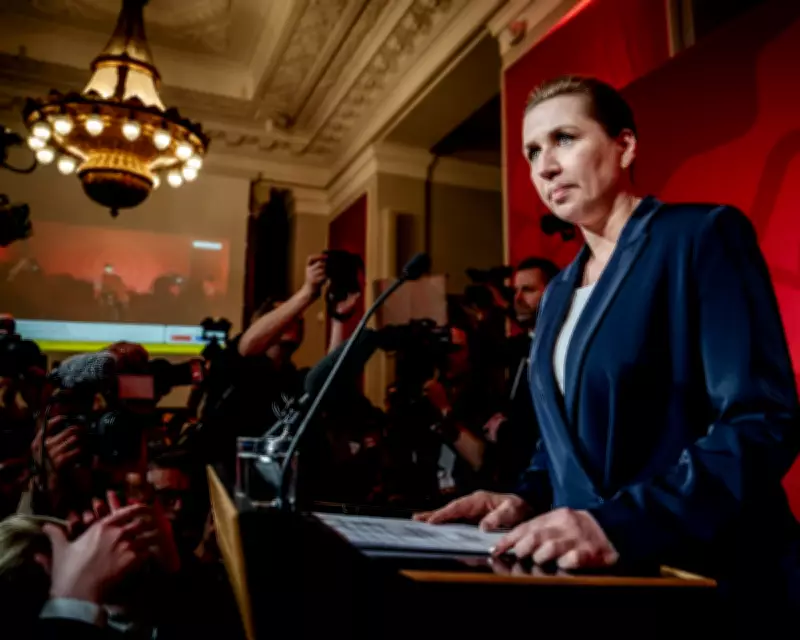
Denmark's Political Model in Crisis: The Boomerang Effect of Centrist Governance
Denmark's unique parliamentary system, long admired internationally, is now in a state of profound crisis following the recent general election. The outcome delivered a clear vote of no confidence in the centrist government led by Social Democrat Mette Frederiksen, yet paradoxically, the most likely result is the formation of another centrist administration. This situation exemplifies a democratic boomerang effect, where voters' rejection of a political approach is thrown back at them due to perverse parliamentary logic.
The Tyranny of the 10% and the Collapse of Traditional Blocs
At the heart of this crisis lies what can be termed the tyranny of the 10%. In a multiparty system like Denmark's, if 45% of voters support left-leaning governments and 45% favor right-leaning ones, but 10% opt for centrist parties, it becomes exceedingly difficult for traditional blocs to form stable governments. This new dynamic has made coalition negotiations exceptionally challenging and represents a significant departure from Denmark's political norms.
For over half a century, with only one brief exception in the late 1970s, Danish governments have consistently been based on either left or right ideological foundations. The historical conflict between these opposing interests has served as the organizing principle of parliamentary politics, creating a remarkable blend of legitimacy and efficiency. Unlike Germany's institutionalized firewall or France's consensual cordon sanitaire, Denmark's approach has been to integrate and deradicalize protest parties by offering them a seat at the table.

Deradicalization Through Integration: Successes and Failures
The positive aspect of this political culture is that those in power cannot ignore protests against the governing consensus. Dissatisfaction with the system has been able to correct and influence policy directions. For instance, Mette Frederiksen's immigration policies have been shaped by right-wing protest parties, while her environmental policies reflect demands from left-wing groups. The Social Democrats, who once considered migration limits racist and emission reduction targets utopian, have now embraced both positions.
However, the negative consequence has been a culture of blackmail from the right, particularly from the Danish People's party, which has repeatedly held the annual budget hostage to extract concessions that make life more difficult for immigrants and refugees. This strategy of deradicalizing extremes through inclusion has led to what some describe as extremism of the centre, radicalizing governing parties, especially Danish social democracy.
The Rise of Elite Populism and Its Consequences
This parliamentary trade-off became unsustainable for former Prime Minister Lars Løkke Rasmussen, who in 2021 formed the centrist Moderates party after his "moment of liberation." This move collapsed the platform for right-leaning governments but not for the left. From 2019 to 2022, the Social Democrats led a minority government with left and centre-left support, adopting a platform that was somewhat leftist on the economy, green on climate, and far-right on immigration.
After a Covid mishandling scandal forced Frederiksen to resign in 2022, she opted to form a centrist government with the Liberal party and the Moderates, despite a narrow left majority in the subsequent election. Officially, this was framed as a leadership of responsibility and experience, but critics saw it as elite populism that replaced legitimate ideological conflict with a false dichotomy between reasonable centrists and extreme factions.
This radical break from Danish political tradition failed to deliver on its promises. Voters never warmed to the alliance between traditional rivals, and in the recent election, the Social Democrats suffered their worst result in over a century. The elite populism of the centre has weakened established parties while empowering protest movements.

Campaign Strategies and the Future of Danish Democracy
Interestingly, when the early election was called this year, both traditional governing parties reverted to their historical positions to win public support. The Social Democrats campaigned on wealth taxes and environmental protection, while the Liberal party promised a "richer" Denmark, abandoning their centrist appeals.
This gap between electoral promises and governing reality highlights the need to reinvent political channels between protest and power. There is growing fear in Denmark that the country will be haunted by a European-style centrism of the governing classes, leading to political alienation and public frustration while eliminating viable alternatives.
The danger now is that if centrism continues to breed more centrism, pushback against injustice could degenerate into destructive forces. The boomerang effect may ultimately undermine the very foundations of Denmark's distinctive democratic style, leaving the nation at a critical crossroads in its political history.