

The Unlikely Newsroom: How Satire Became America's Political Watchdog
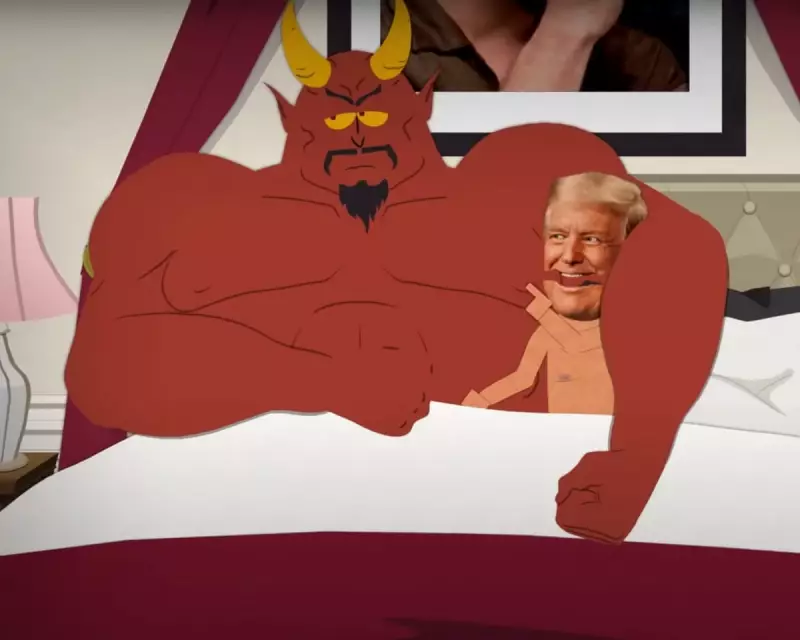
In a recent, visually arresting episode of South Park, Donald Trump is depicted cheating on Satan—who is carrying his spawn—with JD Vance in the White House. This raucous, unhinged scene exemplifies the freedom comedy possesses to respond to world events with a candor often absent from mainstream news. Yet, it also highlights a troubling trend: satirical programmes are increasingly shouldering the burdens of journalism, investigation, and political critique.
The Failings of Corporate Media and Comedy's Cathartic Rise
Over the past three decades, the deficiencies of US corporate media in covering dilapidated politics have created a vacuum. As economist Paul Krugman noted in 2000, the press became "fanatically determined to seem even-handed," often failing to call out blatant falsehoods. This environment propelled American satire to a cathartic triumph in the early 21st century.
The Daily Show began conducting harder-hitting interviews than many primetime news programmes. Stephen Colbert rose by parodying conservative talk shows, while John Oliver pioneered "investigative comedy," frequently breaking scandalous stories more effectively than the outlets he satirised. Researchers from Innsbruck and Groningen universities argue that "affective shifts" enable late-night comedians to build audience trust, allowing political comedy to function as "opinionated journalism."

A New Generation Embraces Comedy's Political Power
Contemporary stand-ups intuitively grasp this dynamic. Parisian journalist and comedian Charles Pellegrin observes, "Comedians don't have to play by the same rules, so they can point out the glaringly obvious—so obvious it feels subjective." Safia Benyahia, who runs a Paris-based comedy production company, notes stand-up's growing popularity stems from increased political divisiveness: "People are walking on eggshells and they trust comedy to engage difficult topics in a safe way."
However, the lines have blurred dangerously. From absurd White House statements to comedians struggling to satirise horrific events, political news nearly breaks comedy. American stand-up star Gianmarco Soresi reflects, "Trump gave us so much fodder that you could only approach it at a superficial level." He warns, "Comedy should question power, and the second that comedy becomes power, it's lost its efficacy."
The Limits of Laughter: Can Comedy Save Democracy?
Soresi acknowledges comedy's constraints: it can offer relief and reflection, even challenge geopolitical agendas, but it cannot build political movements to dismantle regimes. This underscores a perilous expectation—that comedy must assume journalism's responsibility to inform the public, yet without its institutional safeguards.
In France, the contrast was once stark. A decade ago, satirical political comedy was less prevalent on television because news media performed their duties effectively. Programmes like Des Paroles et Des Actes on France 2 featured live fact-checking, and presidential debates involved rigorous moderation. Recently, however, French media has declined, with right-wing billionaires acquiring major outlets, trust eroding, and disinformation spreading. The rise of polarisation and the far right mirrors American patterns, with satire sites like Le Gorafi exposing political absurdities.
A Dangerous Crossroads: Comedy as Public Forum
As traditional news weakens and politics descends into farce, comedy risks becoming society's most important public forum. This is dangerous, transforming the comedian's stage into a primary space for political discourse—antithetical to comedy's true purpose. Without reversing this trend, we jeopardise democratic integrity, relying on satire to fill voids left by failing institutions.
The long-term cost of inaction outweighs the effort required to rejuvenate robust, impartial journalism. Only then can comedy return to its essential role: questioning power, not wielding it.






