Carla Bruni's Subdued Court Appearance Amid Sarkozy's Appeal Trial
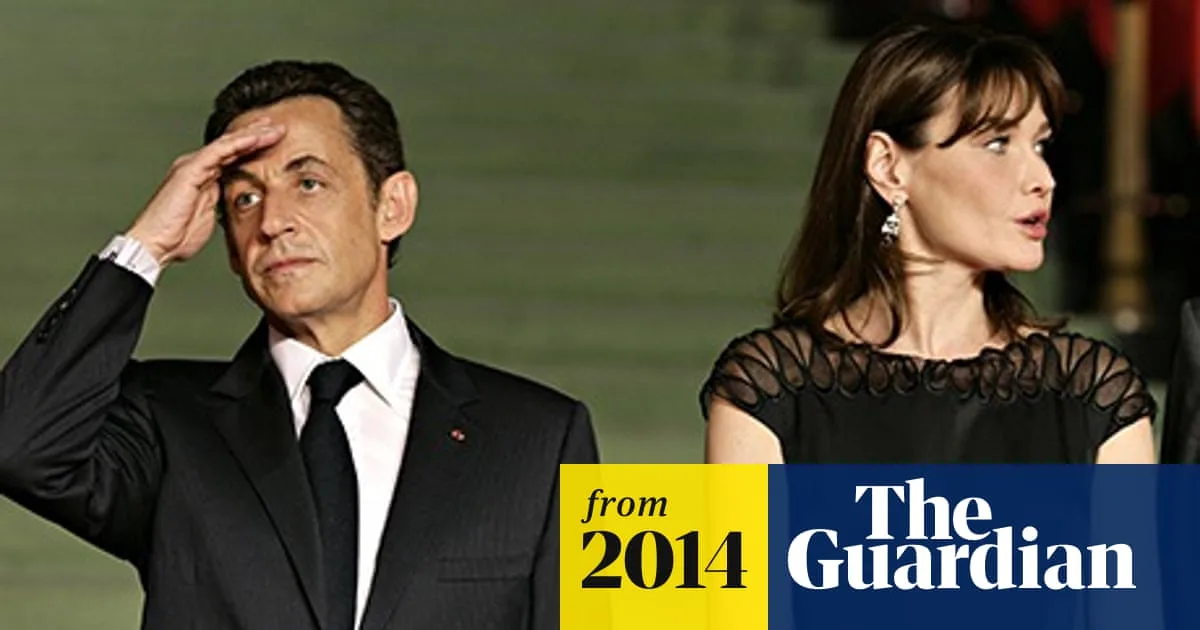
Carla Bruni presented a starkly different image from her typically glamorous public persona as she attended court in support of her husband, former French president Nicolas Sarkozy. The 58-year-old model and singer appeared at the Palais de Justice courthouse in Paris wearing minimal makeup, a simple black suit, and noticeably stained white trainers, a far cry from her usual sophisticated style.
Sombre Support for Sarkozy's Legal Battle
Bruni was photographed walking through the courthouse flanked by two security guards, holding only her sunglasses and mobile phone. Her expression appeared defeated as her lightly wavy hair framed her face, and she stared straight ahead without smiling. This contrasted sharply with her appearance on October 21, when Sarkozy was incarcerated at La Sante prison, where she had worn a chic black turtleneck and fitted grey suit with dark lipstick and bronzed cheeks.
Her husband, 71-year-old Nicolas Sarkozy, attended an appeals trial where he vehemently declared his innocence regarding charges that he sought Libyan financing for his 2007 presidential election campaign. Prosecutors allege that in exchange for this funding, Sarkozy promised to help improve Tripoli's international image following deadly airplane bombings that were blamed on Libya.
The Libyan Funding Allegations
The case centers on accusations that Sarkozy's aides, acting in his name, struck a deal with former Libyan leader Muammar Gaddafi. Prosecutors claim the arrangement promised to help restore Gaddafi's international reputation after Libya was blamed for two devastating airplane bombings: the 1988 Pan Am Flight 103 over Lockerbie, Scotland, which killed 259 people, and the 1989 UTA Flight 772 over Niger, which claimed 170 lives.
During the appeal trial, relatives of those killed in the 1989 bombing spoke of their ongoing suffering. Sarkozy responded to their testimony by stating, "You can only respond to such indescribable suffering with truth. But you cannot repair suffering with an injustice: I am innocent."
Sarkozy's Historic Incarceration
Sarkozy has become modern France's first president to serve time in jail, spending 20 days in solitary confinement at Paris's La Sante prison before being released pending his appeal. He described his prison experience in a memoir released in December, writing about the "absence of any colour" and how "grey dominated everything" in his 12-square-metre cell.
In the initial trial, the lower court found Sarkozy guilty of criminal conspiracy regarding the alleged scheme to acquire Libyan funding, though not of actually receiving or using the funds for his campaign. The appeal trial is scheduled to continue until June 3, with a verdict expected in the fall. If convicted, Sarkozy faces up to 10 years in prison.
Broader Legal Challenges
This case represents just one of several legal challenges facing the former president. France's highest court has already upheld a separate conviction for breaking campaign spending limits during his failed 2012 re-election bid, for which he received six months of house arrest after spending €42.8 million—almost double the legal limit.
Sarkozy also faces the possibility of another trial linked to alleged pressure placed on witness Ziad Takieddine, who initially claimed he delivered suitcases of cash from Libya to the French ministry before later withdrawing his statement.
Political Divisions and Public Opinion
The Sarkozy case has created deep divisions within French society. Many right-wing voters believe the former president has been unfairly targeted by politically motivated prosecutors, while approximately 60 percent of the general public supported his initial sentence. The last time France jailed a former head of state was Philippe Petain, the wartime Vichy leader who was sentenced to death in 1945 before his punishment was commuted to life imprisonment.
As the appeal trial continues, Carla Bruni's subdued court appearance reflects the serious nature of the proceedings that could determine her husband's future freedom and legacy.






