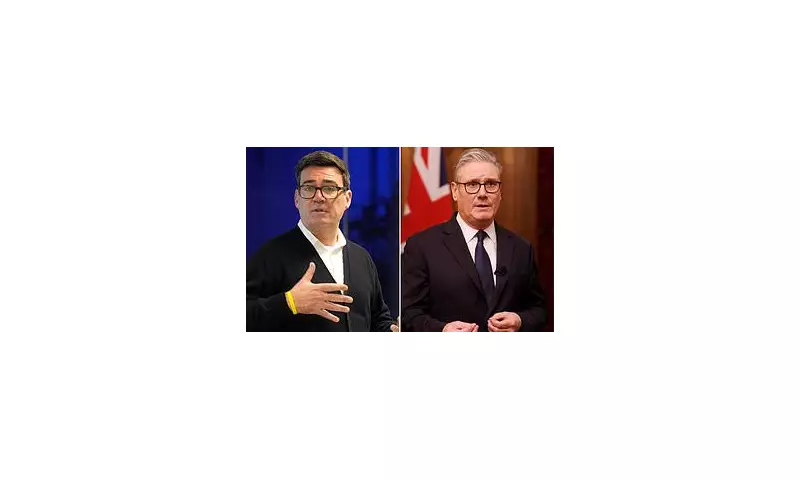
Labour's NEC Blocks Andy Burnham's Westminster Return in Contentious Vote
Andy Burnham, the Mayor of Greater Manchester, has publicly declared his "disappointment" after being prevented from returning to Westminster, while simultaneously criticising the internal operations of the Labour Party. This development has significantly intensified the ongoing civil war within Labour's ranks.
NEC Committee Overwhelmingly Rejects Burnham's Request
In a decisive move this morning, a committee of the National Executive Council (NEC) that includes Prime Minister Sir Keir Starmer voted overwhelmingly to block Mr Burnham from contesting the upcoming Gorton and Denton by-election. The vote concluded with an eight-to-one majority against his candidacy.
The self-styled "King of the North" had announced his intention to step down as mayor and seek Labour's nomination following the resignation of disgraced former minister Andrew Gwynne. Mr Burnham, who served as health secretary and has been an MP since 2001, required permission from the Starmerite-dominated NEC officers committee to pursue this path.

Official Reasoning and Internal Backlash
The committee's stated justification for the rejection centred on the substantial cost associated with electing a new mayor to complete his term. The meeting, which lasted just forty-five minutes, saw Prime Minister Starmer and party chairwoman Anna Turley vote against Mr Burnham's request. Only Lucy Powell, the Labour deputy leader and a Manchester MP, supported his bid.
In response, Mr Burnham took to social media platform X to voice his concerns. "I am disappointed by today's NEC decision and concerned about its potential impact on the important elections ahead of us," he stated. He pledged full support to whoever becomes Labour's candidate in the constituency.
However, he also delivered a pointed critique of the party's leadership: "The fact that the media was informed of the NEC decision before I was tells you everything you need to know about the way the Labour Party is being run these days. You would think that over 30 years of service would count for something but sadly not."
Internal Party Division and External Reactions
The decision has provoked considerable uproar among the soft Left faction of the party. MP Karl Turner warned of "a lot of bloodletting in the Parliamentary Labour Party" as a consequence. Another MP, Jon Trickett, remarked that "strong leaders don't hide from talent, they make common cause." Andrea Egan, general secretary of Unison, condemned the process as undemocratic.
Conversely, Housing Secretary Steve Reed defended the committee's decision, emphasising the electoral mandate. "Voters elected Andy Burnham to serve a four-year term and 'don't like' mid-term elections," he told the BBC, arguing that politicians should complete the terms for which they were elected.
Strategic Implications and Electoral Risks
This controversy raises significant questions about Labour's electoral strategy. The NEC, led by Home Secretary Shabana Mahmood who remained impartial during the vote, expressed concern that a mayoral election would strain campaign resources ahead of crucial local and devolved elections in May.
Furthermore, analysis suggests the decision could jeopardise Labour's hold on the Gorton and Denton seat, with predictions indicating potential gains for either Reform UK or the Green Party. Richard Burgon, secretary of the hard-Left Socialist Campaign Group, accused the leadership of being "prepared to lose Gorton and Denton to Reform – just to protect narrow factional interests."
Broader Leadership Context and Future Prospects
Mr Burnham's manoeuvre was widely interpreted as a potential step towards challenging Sir Keir Starmer for the party leadership. Reports indicate he had secured backing from over 100 Labour MPs, sufficient to trigger a formal leadership contest upon returning to Parliament.
Despite the internal friction, Mr Burnham insisted his campaign would have been "hopeful and unifying," and that he intended to support the government, not undermine it. The episode underscores the deep-seated tensions within Labour as it navigates its internal dynamics while preparing for future electoral battles.

As the Mayor returns his focus to Greater Manchester, the political fallout from this decision continues to reverberate through the party, highlighting persistent divisions and strategic dilemmas facing the Labour leadership.