Congressional Bills to Pay FAA and TSA Workers During Shutdowns Repeatedly Stall
Members of Congress have repeatedly introduced legislation aimed at ensuring federal employees who control air traffic and conduct airport security screenings receive their pay during government shutdowns. Despite bipartisan support and multiple proposals over the years, these bills consistently fail to advance, leaving aviation workers without financial guarantees during funding lapses.
Legislative Efforts and Persistent Gridlock
Since 2019, following a partial shutdown that disrupted holiday travel, lawmakers have drafted, revised, and reintroduced various proposals to protect the pay of aviation workers required to report for duty during budget impasses. Notable bills include:
- The Aviation Funding Stability Act of 2019, 2021, and 2025
- The bipartisan Aviation Funding Solvency Act introduced after a shutdown last fall
- The Keep Air Travel Safe Act, filed in October, extending protection to TSA agents
- The Keep America Flying Act, also from October, covering both TSA personnel and certain FAA employees
Broader proposals, such as the Shutdown Fairness Act introduced in January, would maintain pay for essential federal workers across the entire U.S. government, but these too have stalled. According to Eric Chaffee, a Case Western Reserve law professor specializing in aviation risk management, "Congress cares about headlines, and as a result of that, it means they don’t always make changes that would be really beneficial." He notes that public outrage over issues like long security lines and flight delays tends to fade once a shutdown ends, reducing political momentum for lasting solutions.

Impact on Workers and Aviation Safety
Shutdowns have repeatedly disrupted air travel, highlighting the need for pay protections. The 35-day shutdown during President Donald Trump's first term, centered on border wall funding, caused delays at East Coast airports as air traffic controllers and TSA agents went unpaid. Last fall's 43-day shutdown, the longest funding lapse on record, revived safety concerns when the FAA ordered airlines to cut flights at 40 busy airports due to staffing shortages from unscheduled absences.
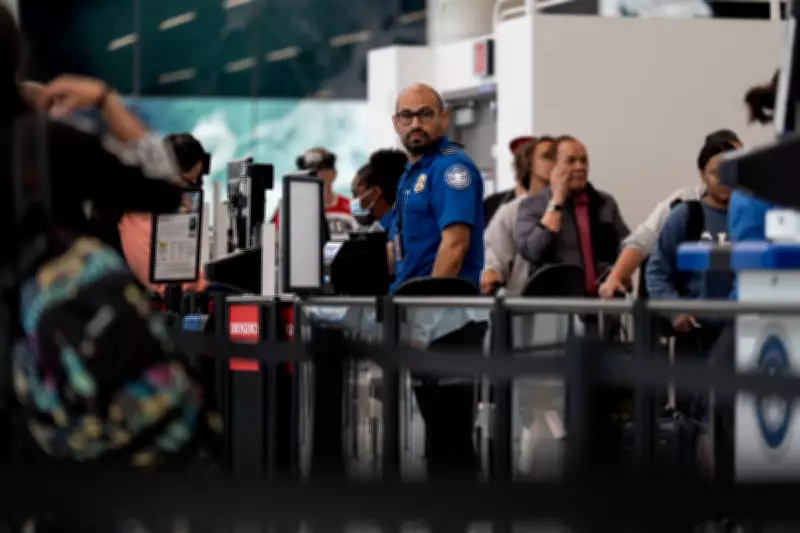
TSA officers faced additional hardships during subsequent shutdowns in January and February, with thousands missing shifts daily. Carlos Rodriguez, a TSA agent and union leader in New York, expressed frustration: "Part of the American dream that I was sold was that working for the government was honorable and stable. But this is not honorable or stable." Many workers have not recovered financially from previous shutdowns, with reports of employees sleeping in cars or considering selling vehicles to pay rent.
Political Dynamics and Public Pressure
Despite emergency measures, such as Trump's order to pay TSA agents during a recent shutdown, long-term solutions remain elusive. Johnny Jones, secretary-treasurer of the TSA division of the American Federation of Government Employees, criticized the political brinkmanship: "To them, the machinations of Congress feel like 'let’s checkmate the queen with the TSA pawn here, and then we’ll smash them over whenever we feel like it.' We’re on the chess board."
Labor unions, airline leaders, and airport executives have intensified pressure on lawmakers, issuing open letters and newspaper ads urging action on bipartisan proposals. The Modern Skies Coalition, representing over 60 organizations, called on Congress to "end this dysfunction once and for all" by passing legislation like the Aviation Funding Solvency Act. Similarly, Chris Sununu, president and CEO of Airlines for America, argued in an op-ed that lawmakers are "sitting on their hands doing nothing with three viable, bipartisan bills that could prevent this mess."

Historical Precedents and Future Prospects
Previous legislative attempts have struggled despite broad support. The Aviation Funding Act of 2019, introduced by Sen. Jerry Moran with 13 co-sponsors, never advanced out of committee. A House version with 303 co-sponsors cleared committee but never received a floor vote. Chaffee attributes the current stalemate to political polarization: "We live in a society currently where things are very polarized. Whether or not any of these bills get passed, it will need to have political momentum behind it, meaning it will need to be something that the public really wants to see happen."
Without greater certainty, more aviation workers may miss shifts or quit, exacerbating staffing shortages. Caleb Harmon-Marshall, a former TSA officer, emphasized that temporary pay fixes are insufficient: "It has to be an extended pay for them to come back or want to stay there." As shutdowns continue to cycle through Congress, the lack of guaranteed pay for essential aviation personnel remains a critical vulnerability in the nation's travel infrastructure.