BBC Confronts Trump's $10 Billion Defamation Lawsuit Over Panorama Programme
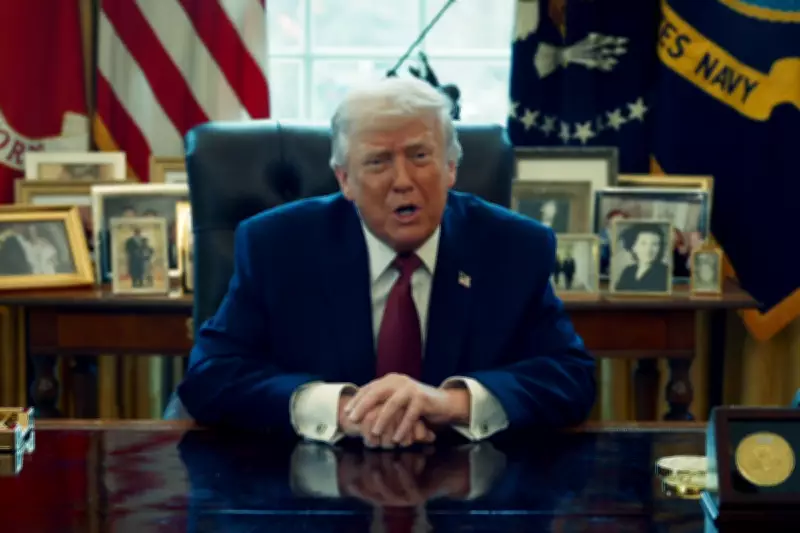
The British Broadcasting Corporation finds itself at the centre of a monumental legal battle as former US President Donald Trump pursues a defamation claim that could amount to as much as ten billion dollars. The lawsuit, which Trump's legal team asserts was motivated by an intent to interfere with the 2024 presidential election, targets a Panorama documentary that the plaintiff claims tarnished his saintly reputation and business prospects. A trial date has been scheduled for February 2027 in Miami, with proceedings expected to span two full weeks.
Political Reactions and Institutional Fallout
Some figures on the right of British politics have voiced support for Trump's legal action. Reform-turned-independent MP Rupert Lowe publicly wished the former president good luck in his lawsuit against the national broadcaster. The writ references the now departed director general Tim Davie as disgraced and quotes former BBC editorial adviser Michael Prescott, who criticised the programme for lacking balance and impartiality while taking an anti-Trump stance. The leaking of Prescott's memo to The Daily Telegraph has contributed to institutional turmoil at the BBC, including the resignation of Davie and the substantial financial burden of mounting a defence against what many consider a specious claim.
In the first year of Trump's presidency, numerous previously respected institutions across media, law, and academia displayed what critics describe as a tsunami of cowardice, bending to political pressure as though facing a medieval monarch. The BBC, however, maintains it is not a subject in Trump's quasi-feudal fantasy and must defend itself vigorously. Unlike other organisations that have crumbled under such pressure, the corporation asserts it does not rely on favours from political rulers or their associates.

Journalistic Fallibility and Legal Precedents
Alan Rusbridger, former editor of The Guardian, emphasises that all journalists and news organisations make mistakes, citing examples from The Daily Telegraph, The Guardian, and The Sunday Times during Michael Prescott's tenure. He notes that such errors do not necessarily indicate malice or institutional bias. The disputed segment in the Panorama programme, which joined two separate sentences from Trump's January 2021 speech without proper visual indication, represents what many consider a minor editorial lapse compared to the substantive reporting on Trump's supporters featured throughout the fifty-five minute documentary.
Bill Keller, former executive editor of The New York Times, described the editing choice as an unnecessary own goal that distracts from the broader reality of Trump's actions surrounding the Capitol riot. However, American legal precedent may provide the BBC with substantial protection. The landmark 1964 Supreme Court decision established that journalists should have extraordinary protection when criticising public officials, provided there is no evidence of actual malice. The court recognised that erroneous statements are inevitable in free debate and must be protected to ensure breathing space for First Amendment freedoms.
The Irony of Free Speech Advocacy
Justice Brennan's opinion invoked British philosopher John Stuart Mill, arguing that even false statements can contribute valuable perspectives to public discourse by creating clearer perceptions of truth through collision with error. The court further warned that fear of expensive litigation could chill journalism, creating an atmosphere where First Amendment freedoms cannot survive. Justice Black advocated for even stronger protections, proposing absolute immunity for criticism of public officials—a position that might appeal to self-proclaimed free speech absolutists like Elon Musk.

The Trump administration frequently extols America as a bastion of free expression while criticising European countries for curtailing political liberties. There is considerable irony in the prospect of the British Broadcasting Corporation reminding Americans about the fundamental principles of their First Amendment. As the BBC prepares for this legal confrontation, it faces the challenge of proving it retains institutional spine despite the departure of its director general. The corporation's defence will test both its resilience and the enduring strength of free speech protections in an increasingly litigious political landscape.