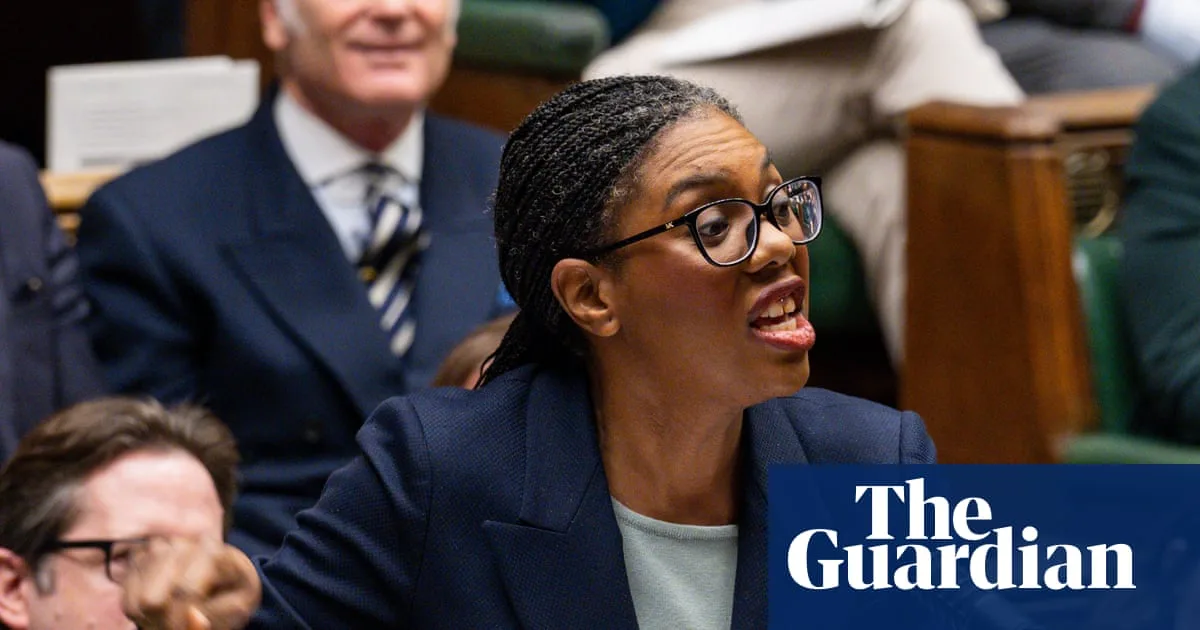
The recent confusion surrounding Kemi Badenoch's position on the US-Israeli military campaign against Iran has exposed a significant deficiency in serious foreign policy thinking among Britain's right-wing political factions. During Prime Minister's Questions on March 11, the Conservative leader made contradictory statements that revealed conflicting impulses driving her approach to international conflict.
Contradictory Positions on Military Involvement
In the initial week of the conflict, Badenoch accused Labour leader Sir Keir Starmer of indecision and cowardice for maintaining distance from Donald Trump's war. She dismissed the absence of a legal mandate for military action as irrelevant and called for greater Royal Air Force involvement. However, she has since denied advocating for Britain to join the US-Israeli action directly, instead claiming she only supported British forces striking targets within Iran. This distinction has proven difficult for her to explain coherently, highlighting the confusion in her position.
Conflicting Impulses Driving Policy
Badenoch's initial instinct demonstrated unwavering alignment with the White House, a position that appeared particularly attractive following Donald Trump's public criticism of the Prime Minister. The former US president's disparaging comparison to Winston Churchill seemed to create a perceived vacancy for a Churchillian figure in Trump's political imagination, a role Badenoch apparently fancied herself filling.
However, as the conflict progressed, it became increasingly clear that Trump had blundered into an open-ended military engagement without properly considering the predictable economic consequences. The campaign has driven up global oil prices, disrupted vital Gulf trade routes, unsettled financial markets, and contributed to inflationary pressures. Reluctance to be associated with these mounting costs has created a countervailing impulse, leading Badenoch to distance herself from what now appears to be an ill-conceived military misadventure.
Broader Pattern on the Political Right
Badenoch is not alone in this erratic approach to foreign policy. Nigel Farage, leader of Reform UK, similarly endorsed the war initially before retreating to a less aggressive position as the conflict's complications became apparent. This pattern reveals a broader deficiency of serious strategic thinking among right-wing political forces in Britain.
Ideological Alignment Over National Interest
There exists a legitimate historical and realpolitik case for maintaining broad alignment with the United States on defense and security matters. However, this should not translate into unquestioning obedience to a president whose judgment has repeatedly proven faulty and who routinely treats allies with contempt. Both Reform UK and the Conservative Party have increasingly positioned themselves as ideological satellites of extreme American conservatism, adopting MAGA-coded positions on cultural issues and foreign policy by default rather than through careful consideration of British interests.
Farage has courted Trump's favor for years, though this admiration has not been reciprocated recently. Meanwhile, Badenoch praised US Vice President JD Vance for dropping "truth bombs" when he controversially claimed European democracies posed a greater threat to their continent than Russia. Such sycophantic behavior places these politicians outside the mainstream of British public opinion, though their radicalization through social media engagement may prevent them from recognizing this divergence.
Broader Implications for British Politics
Britain stands among many nations that would benefit from replacing Tehran's brutal theocracy with democratic governance, with the Iranian people representing the primary beneficiaries. However, this does not automatically translate into British interests being served by the current US-Israeli military campaign, which claims regime change as an objective while lacking any credible strategy for achieving this goal.
Sir Keir Starmer understood this crucial distinction from the outset, maintaining appropriate distance from Trump's war. As leader of the opposition, Badenoch should be rigorously testing government policy against the benchmark of UK national interest rather than outsourcing her judgment to the White House. Her contortions over Iran should prompt serious reflection about prioritizing responsibilities to British voters over currying favor with American political audiences.
The confusion surrounding Britain's response to the Iran conflict ultimately reveals a troubling absence of serious strategic thinking on the political right. When faced with complex international crises, ideological alignment has too often replaced careful consideration of national interest, creating policy positions that shift with political winds rather than standing on principled foundations.