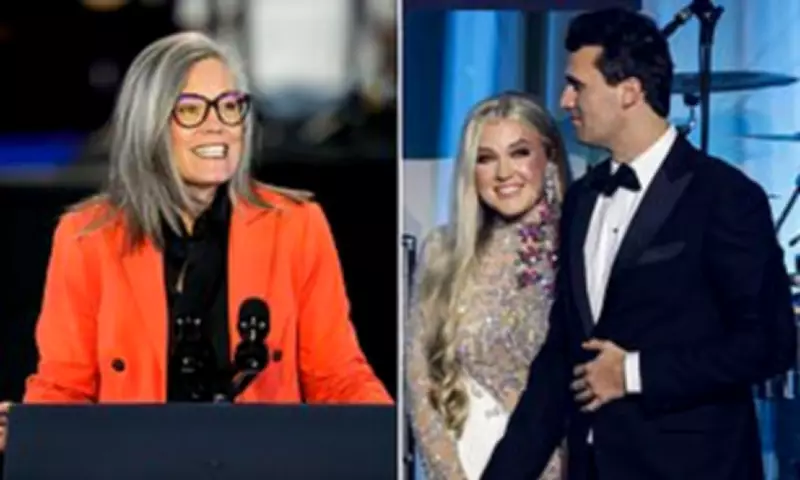
Democratic Governor Katie Hobbs of Arizona has exercised her veto power to block a bill that would have posthumously honoured the late conservative activist and Turning Point USA founder, Charlie Kirk. The legislation, which was rejected on Friday, sought to authorise a special commemorative license plate featuring Kirk's image and the TPUSA logo.
Details of the Vetoed Legislation
The proposed measure would have created a distinctive license plate displaying an image of Charlie Kirk with his fist raised in the air, alongside the Turning Point USA emblem. Under the bill's provisions, a significant portion of the fee revenue—specifically, $17 out of each $25 plate fee—would have been directed annually to the Conservative Grassroots Network Special Plate Fund.
According to the legislative text, these funds were intended to support an organisation, founded in 2012, that focuses on voter registration initiatives at high schools and college campuses across the United States. Although Turning Point USA was not explicitly named in the bill, the description aligns closely with the group's activities and mission.

Governor Hobbs' Rationale for the Veto
In her official veto letter, Governor Hobbs emphasised her commitment to maintaining nonpartisan governance. She described Kirk's assassination as a tragic and horrifying act of violence, while firmly stating that political differences should be resolved through democratic processes rather than violence.
'Charlie Kirk's assassination is tragic and a horrifying act of violence. In America, we resolve our political differences at the ballot box. No matter who it targets, political violence puts us all in harm's way and damages our sacred democratic institutions,' Hobbs wrote.
She further explained, 'I will continue working toward solutions that bring people together, but this bill falls short of that standard by inserting politics into a function of government that should remain nonpartisan.'
Legislative Support and Political Backlash
The bill had garnered substantial support in Arizona's Republican-controlled legislature, passing the state Senate with a 16-2 vote and clearing the state House by a 31-23 margin. However, Governor Hobbs' veto has sparked strong criticism from conservative figures.
State Senator Jake Hoffman, a key ally of Kirk and the primary sponsor of the legislation, condemned the governor's decision in a social media post on Friday. He accused Hobbs of exhibiting 'grotesque partisanship' and failing to demonstrate basic human decency in the aftermath of Kirk's assassination.
Tyler Bowyer, Chief Operating Officer of Turning Point USA, also voiced his disapproval on social media, suggesting that Hobbs' veto was politically motivated and urging supporters to participate in the upcoming elections.
Background on Charlie Kirk and Turning Point USA
Charlie Kirk, a prominent conservative figure, was fatally shot during a speaking engagement at Utah Valley University on September 10. Tyler Robinson, aged 22, has been charged with his murder. Kirk originally founded Turning Point USA in his parents' garage near Chicago, Illinois, before relocating the organisation's extensive campus to Arizona, where he resided.
Following Kirk's death, leadership of TPUSA has transitioned to his widow, Erika Kirk. Under her guidance, the organisation has reportedly raised millions of dollars and established dozens of new chapters, continuing its advocacy for conservative causes on educational campuses nationwide.
Political Context and Upcoming Elections
Governor Katie Hobbs is currently campaigning for re-election in this year's mid-term elections, facing a competitive field that includes Republican Congressmen Andy Biggs and David Schweikert. The veto decision is likely to feature prominently in the ongoing political discourse, highlighting the deep partisan divisions within Arizona's political landscape.
The commemorative license plate proposal, while now vetoed, had symbolised an effort to memorialise Kirk's legacy and support voter engagement initiatives. Its rejection underscores the ongoing tensions between commemorative acts and the principles of nonpartisan governance in state administration.