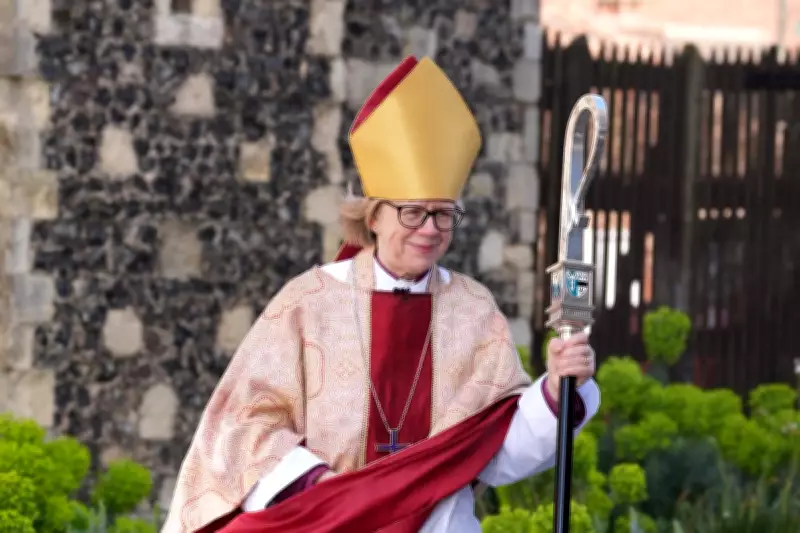
The Archbishop of Canterbury has publicly expressed solidarity with Pope Leo XIV, joining his call for peace in the Middle East, with a specific focus on the ongoing conflict in Iran. The statement, issued on Thursday, 16th April 2026, underscores a unified Christian appeal for an end to violence in the region.
A Courageous Call for Peace
Archbishop Sarah Mullally, who assumed leadership of the Church of England in January, stated she stands firmly with the pope in his "courageous call for peace." Her remarks come after Pope Leo XIV's comments drew criticism from U.S. President Donald Trump, who last weekend labelled the pontiff's stance as "terrible for foreign policy."
Human Cost of War
In her detailed statement, Archbishop Mullally highlighted the devastating human impact of the conflict. "As innocent people are killed and displaced, families torn apart, and futures destroyed, the human cost of war is incalculable," she said. She emphasised that working and praying for peace is a fundamental calling for all Christians, as well as people of other faiths and goodwill.

While not mentioning President Trump by name, the Archbishop made a pointed appeal to political authorities. She urged Christians to "urge all those entrusted with political authority to pursue every possible peaceful and just means of resolving conflict." This statement is seen as a direct response to the political tensions surrounding the pope's earlier peace initiatives.
Global Spiritual Leadership
Beyond her role as head of the Church of England, Archbishop Mullally serves as the spiritual leader of the worldwide Anglican Communion. This association includes the Episcopal Church in the United States and encompasses over 100 million members globally. Her endorsement of the pope's message amplifies its reach across a significant portion of the Christian community, reinforcing a collective voice for diplomacy and non-violent solutions in international disputes.
The Archbishop's intervention adds considerable weight to religious appeals for de-escalation in the Middle East, particularly in Iran, where conflict has led to widespread suffering. It marks a notable moment of ecumenical cooperation between Anglican and Catholic leadership in addressing a critical geopolitical crisis.