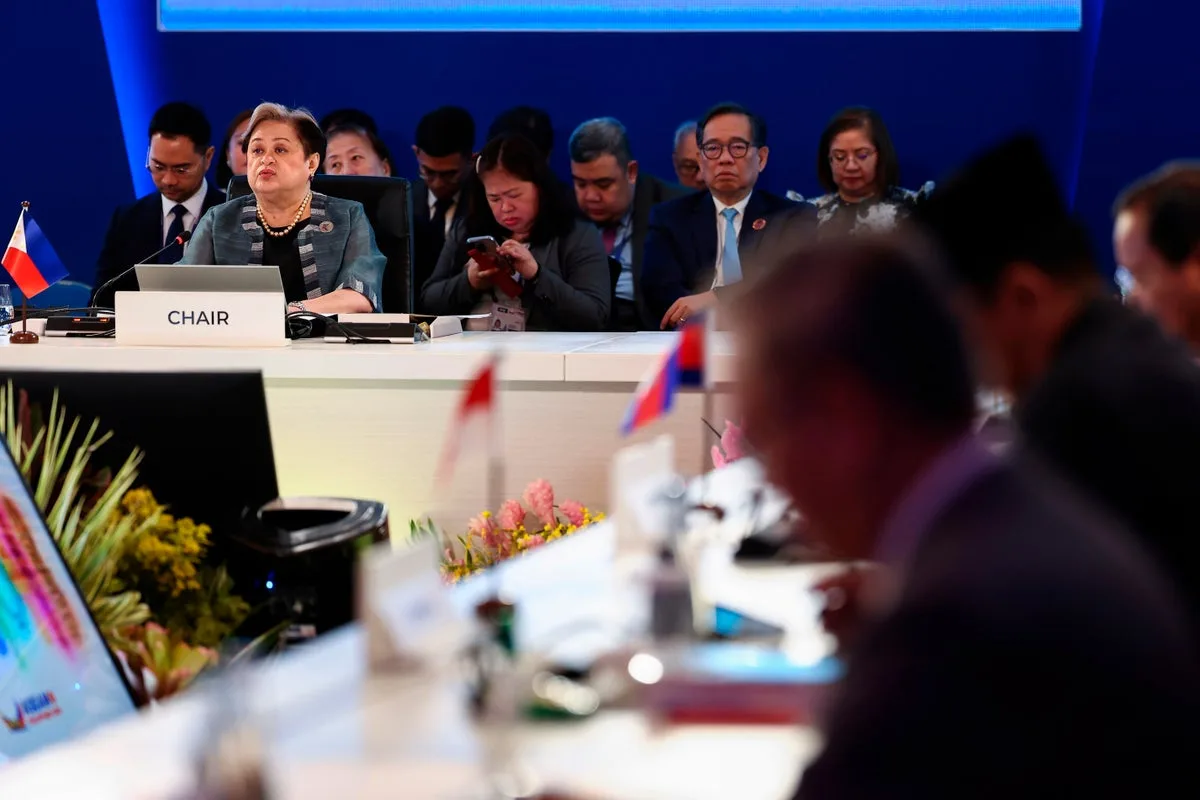
Southeast Asian leaders are set to issue a declaration that reaffirms core principles of international law, sovereignty, and freedom of navigation, in what analysts interpret as a veiled rebuke to the United States, Israel, and Iran over the Middle East conflict. The draft statement, seen by The Associated Press, will be released at the annual ASEAN summit on Friday in Cebu, Philippines.
The declaration includes a contingency plan to address energy shortages and other global disruptions caused by the war. Philippine President Ferdinand Marcos Jr., hosting the summit, said the meeting will focus on energy security, food supply, and protection of over a million Southeast Asian workers and seafarers in the Middle East. Marcos ordered the event stripped of traditional pomp due to global economic headwinds.
The draft statement emphasises the importance of upholding international law and ensuring regional cooperation anchored in dialogue, trust, and respect for sovereignty. It calls for maintaining open, transparent markets, secure sea lanes, and freedom of navigation in accordance with the 1982 UN Convention on the Law of the Sea.
ASEAN leaders have expressed serious concern over the war's global economic fallout and its impact on their citizens. Several workers from the region, including two Filipinos, have been killed, and thousands evacuated. The Asian Development Bank warned in March that prolonged disruptions could choke growth and spur inflation in Asia, which is heavily dependent on Middle Eastern oil and gas.
The contingency plan includes ratifying an emergency fuel-sharing agreement, planning a regional power grid, diversifying crude oil sources, promoting electric vehicles, and studying civilian nuclear energy. Leaders also seek a crisis communication and coordination protocol for coherent regional responses.
ASEAN comprises Brunei, Cambodia, Indonesia, Laos, Malaysia, Myanmar, the Philippines, Singapore, Thailand, Vietnam, and East Timor, which joined as a full member in October last year.