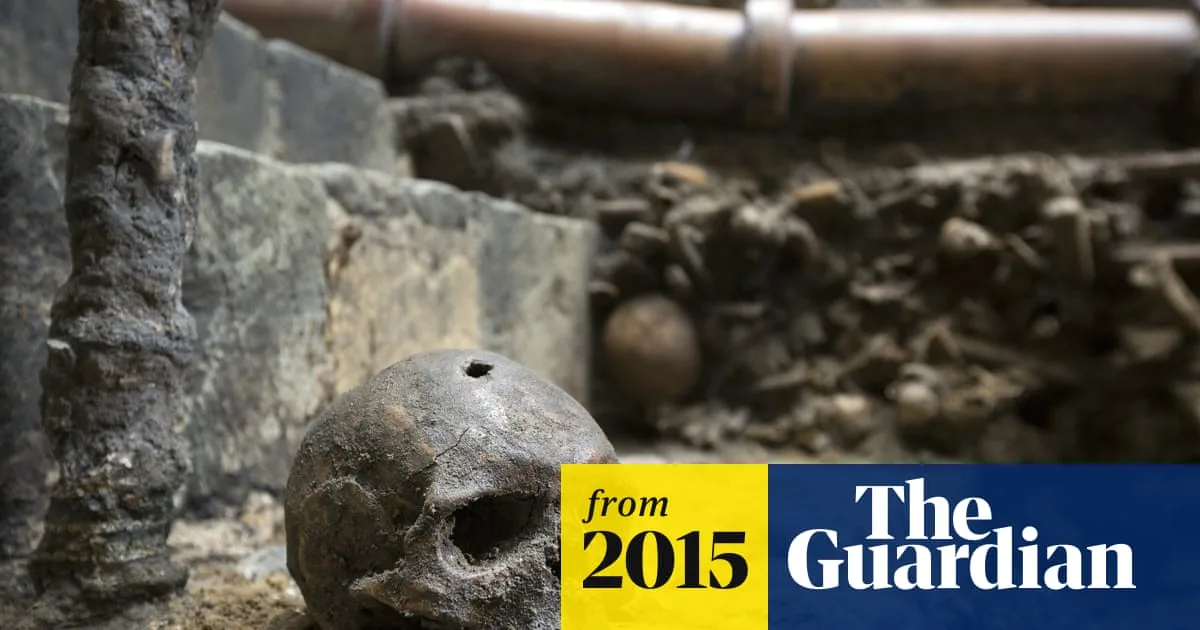
Archaeologists have discovered the remains of at least 50 individuals, dating from the 11th and early 12th centuries, beneath a former lavatory block at Westminster Abbey. The find, made during demolition work to make way for a new tower, includes the skeleton of a three-year-old child buried in a wooden coffin just outside Poet’s Corner.
Abbey archaeologist Warwick Rodwell noted the child’s presence as unusual, stating, “What the child is doing there is one of the many unanswered questions.” The child, too young to be an apprentice or servant, appears to have been of some status due to the wooden coffin. Other remains include a man buried in a grand Barnack stone coffin, whose skull was stolen by Victorian workmen.
The bones were found under Victorian drainage pipes, stacked in dense piles like firewood. These remains were originally interred in a small burial ground outside the south transept. When King Henry III demolished Edward the Confessor’s church in the 13th century to build the current abbey, the bodies were reburied beneath the masons’ yard. Some skulls still show square holes left by the pickaxes of Henry’s workmen.
Paw Jorgensen, who supervised the excavation for Pre-Construct Archaeology, explained that the highest-status individuals were buried inside the church, but these remains likely belong to senior clergy. The Victorian workmen, during Sir George Gilbert Scott’s restoration, moved the stone coffin to a brick wall and broke its lid, removing the skull.
Rodwell plans to clear debris from the coffin to search for a chalice and cover, which would indicate an abbot. The skeletons still in their graves are badly decayed from Victorian pipe leaks, but the moved bones are well-preserved and could provide insights into age, health, and origins. The burials are significant due to the early period, with few remains from the original Anglo-Saxon church, which is depicted only in the Bayeux Tapestry.