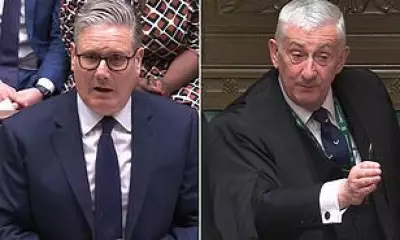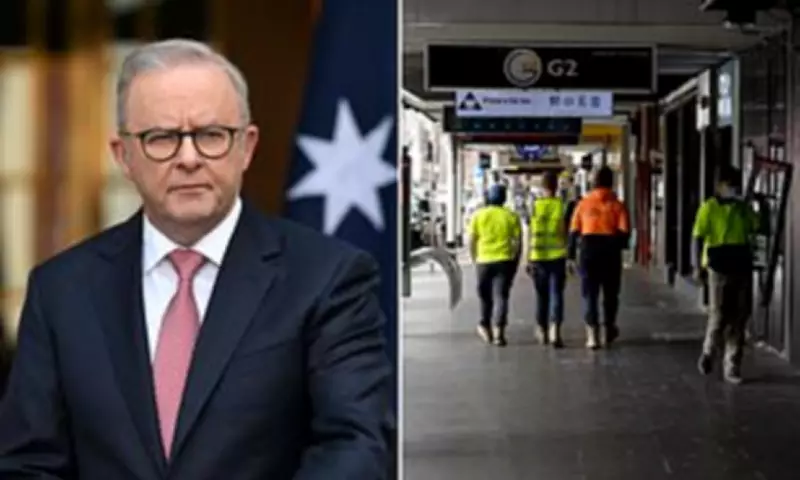
Prime Minister Anthony Albanese has faced intense scrutiny after asserting that household incomes and living standards have risen under his administration. The controversy erupted during a fiery Question Time session on Thursday, where Opposition Leader Angus Taylor directly challenged the Prime Minister's statements.
Economic Data Sparks Political Clash
Taylor pointed to newly released national accounts data from Wednesday, which revealed Australia's economy grew by 2.6 percent over the year to December. This marked an increase from the previous quarter's 2.1 percent growth, with quarterly GDP rising 0.8 percent—the fastest pace recorded in nearly three years.
Treasurer Jim Chalmers seized upon these figures, declaring them as clear evidence that living standards were indeed improving across the nation. However, Taylor countered this interpretation, arguing that the economic expansion was not driven by genuine productivity gains but rather by rapid population growth.

Albanese Accuses Opposition of Negativity
In response, Albanese firmly rejected the opposition's claims, accusing the Coalition of consistently "talking Australia down." He emphasized that the national accounts demonstrated the Australian economy was growing at its most robust rate in almost three years.
"Household incomes and living standards are going up," Albanese stated definitively. He further criticized the opposition, saying, "[The Opposition] only have two settings: tearing each other down, or talking Australia down."
Coalition Intensifies Attack on Public Spending
The Coalition escalated its criticism by highlighting that public demand was outpacing private sector growth. Shadow Treasurer Tim Wilson pressed Chalmers on whether he continued to deny "the link between spending and driving inflation higher."
Chalmers has faced persistent allegations that Labor's government spending is exacerbating inflationary pressures—an argument echoed by numerous economists and opposition members alike. Critics contend that excessive public expenditure has contributed to the Reserve Bank's latest interest rate hike in February, which brought the cash rate to 3.85 percent.
Defence Spending Defended Amid Inflation Concerns
Under Albanese's leadership, public spending has consistently ranged between 26 and 28 percent of GDP, notably above Australia's long-term average of 24 to 25 percent. The Coalition asserts this discrepancy is directly adding to inflationary pressures.
Chalmers defended the government's fiscal approach, attributing the increase primarily to defence spending. "Firstly, public demand in the quarter, the key driver of public demand was defence spending," he explained. He further noted that "private demand grew faster and contributed three times more to economic growth than public in annual terms."
The Treasurer elaborated that "within annual private demand more than tripled and public more than halved compared with 2024." On Wednesday, Chalmers described the latest GDP figures as "very encouraging," adding, "Growth in our economy is now much stronger and broader, and that's very welcome."
Real Wages Decline Despite Economic Growth
Amid the economic debate, new figures revealed a concerning trend: real wages have actually declined, meaning wage growth is failing to keep pace with inflation. Australian Bureau of Statistics data shows wages grew by 3.4 percent in the year to December, while inflation over the same period reached 3.7 percent, effectively erasing those gains.
The Coalition argues this statistical reality means the average Australian worker is financially worse off than they were a year ago. Opposition estimates suggest Australians have lost approximately $1,500 in purchasing power annually under the current Labor government, contradicting the Prime Minister's assertions about improving living standards.